Higher octane gasoline is a waste of money


Thread Starter
Registered User
Joined: Aug 2002
Posts: 168
Likes: 0
From: San Jose, CA
 Higher octane gasoline is a waste of money
Higher octane gasoline is a waste of money
It's ture guys, read this. The oil companies have you fooled. They just want your money. It's a scientific fact.
Unless your engine is knocking, buying higher octane gasoline is a waste of money, too. Premium gas costs 15 to 20 cents per gallon more than regular. That can add up to $100 or more a year in extra costs. Studies indicate that altogether, drivers may be spending hundreds of millions of dollars each year for higher octane gas than they need.
Will higher octane gasoline clean your engine better?
As a rule, high octane gasoline does not outperform regular octane in preventing engine deposits from forming, in removing them, or in cleaning your car’s engine. In fact, the U.S. Environmental Protection Agency requires that all octane grades of all brands of gasoline contain engine cleaning detergent additives to protect against the build-up of harmful levels of engine deposits during the expected life of your car.
http://www.ftc.gov/bcp/conline/pubs/autos/octane.htm
Also read this:
Consumers who were exposed to ads that claimed that Exxon high octane gasoline would reduce auto maintenance costs will get important new information from Exxon soon. In a landmark settlement of Federal Trade Commission charges that the ads were unsubstantiated and misleading, Exxon will run an extensive consumer education campaign, including television ads throughout the United States. The message of the campaign will be that the right octane for most cars is regular octane, and most cars will not benefit from more expensive high octane fuels.
http://www.ftc.gov/opa/1997/06/exxon.htm
It's ture guys, read this. The oil companies have you fooled. They just want your money. It's a scientific fact.
Unless your engine is knocking, buying higher octane gasoline is a waste of money, too. Premium gas costs 15 to 20 cents per gallon more than regular. That can add up to $100 or more a year in extra costs. Studies indicate that altogether, drivers may be spending hundreds of millions of dollars each year for higher octane gas than they need.
Will higher octane gasoline clean your engine better?
As a rule, high octane gasoline does not outperform regular octane in preventing engine deposits from forming, in removing them, or in cleaning your car’s engine. In fact, the U.S. Environmental Protection Agency requires that all octane grades of all brands of gasoline contain engine cleaning detergent additives to protect against the build-up of harmful levels of engine deposits during the expected life of your car.
http://www.ftc.gov/bcp/conline/pubs/autos/octane.htm
Also read this:
Consumers who were exposed to ads that claimed that Exxon high octane gasoline would reduce auto maintenance costs will get important new information from Exxon soon. In a landmark settlement of Federal Trade Commission charges that the ads were unsubstantiated and misleading, Exxon will run an extensive consumer education campaign, including television ads throughout the United States. The message of the campaign will be that the right octane for most cars is regular octane, and most cars will not benefit from more expensive high octane fuels.
http://www.ftc.gov/opa/1997/06/exxon.htm
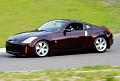
Unless your engine is knocking
Maybe that's why the 350Z manual explicitly states you should use gas 91 octane or higher. Maybe Nissan has been duped by the oil companies!
All those race car drivers that use 100+ octane gas too! If only they knew they could save money with 87 octane gasohol!
Feel free to come back when you get a clue.
My belief:
oscarmayer00 = troll
Last edited by Buub; Jul 16, 2003 at 12:21 PM.


ummm I dont buy 93 to clean my engine... I buy it because the Z has 10.3:1 compression, which is pretty high. 93octane eliminates detonation in high compression engines. octane is actually a additive that reduces gasolines ability to combust, ensuring that the cylinder is at the top of its cycle before the gasoline combusts, and no sooner.
just because a 96 civic doenst need 93 doesnt mean no car does.
just because a 96 civic doenst need 93 doesnt mean no car does.

Registered User
Joined: Jun 2003
Posts: 1,439
Likes: 0
From: Vancouver, Canada
According to Sport Compact Car (Oct 02' page 81), they dynoed the car and got 244hp, and 238 torque, that's with 91 octane in the tank. Then they switched to 100 octane, they got 249hp and 240 torque...
And due to 10+ compression ratio in the Z, I'll prefer higher octane gas
And due to 10+ compression ratio in the Z, I'll prefer higher octane gas

Registered User
Joined: Sep 2002
Posts: 4,084
Likes: 0
From: Dallas, TX
This is usually true for AVERAGE drivers. You know, the ones driving the Toyota Corollas and the monster SUVs, etc. It's true that many of these people buy higher octane gas than necessary. For example, I had a truck when I was in college and so did my room mate. All our trucks require is 87 octane, so that's what I bought, but my room mate thought that buying 89 would be better for it. Nope, but she didn't pay for her gas, so she didn't care.
Every owner's manual will tell the owner which octane fuel to use as the minimum, and obviously, high performance motors require higher octane gas. We all need our high octane fuel, so this doesn't apply to us.
Every owner's manual will tell the owner which octane fuel to use as the minimum, and obviously, high performance motors require higher octane gas. We all need our high octane fuel, so this doesn't apply to us.
Thread Starter
Registered User
Joined: Aug 2002
Posts: 168
Likes: 0
From: San Jose, CA

You guys still don't get it, unless your engine is knocking or if you want to add 1-5 mph to your top end speed you are just wasting your money. My Z's engine is not knocking and I haven't come close to the to the Z's top end. So I don't use high octane gasoline. 87 octane in No. Calif. works fine.
My 300ZX and Boxster never did either.
Buy the cheapest gasoline that doesn’t make your car engine knock. All octane does is prevent knock.
The 350Z was designed to operate at it's peak with high octane, so when was the last time you took your 350Z over 130mph?
I haven't come close to it's peak, but if you race then go ahead and buy the the high octane gasoline.
My 300ZX and Boxster never did either.
Buy the cheapest gasoline that doesn’t make your car engine knock. All octane does is prevent knock.
The 350Z was designed to operate at it's peak with high octane, so when was the last time you took your 350Z over 130mph?
I haven't come close to it's peak, but if you race then go ahead and buy the the high octane gasoline.

Registered User
Joined: Aug 2002
Posts: 95
Likes: 0
From: los angeles
Oscarmeye00, you have obviously never used 110 or 117 octane race gas in a turbocharged car. The significantly higher octane in race gas is much more resistant to detonation which allows you to run higher boost. On dyno testing turbo engines, you can easily squeeze out 30 to 50 hp more with race gas. My quarter mile times in my 300ZXTT were much faster with higher trap speed when running 110 octane race gas.
So, while there isn't a significant difference between 87 and 93 octane, you can't say that higher octane doesn't make a difference. Just try some race gas in a turbo car and you'll see.
Hell, what do you think the "witches brew" gas of Formula One was all about. FIA imposed an octane limit, but it was only measured with one test. With the use of synthetics, the fuels developed by Elf and Shell had effective octane ratings that were ridiculously high, and were reportedly good for over 100hp more compared to the less exotic race fuels. The problem was that it was too expensive for anyone but the top teams to afford, and was eventually banned.
So, while there isn't a significant difference between 87 and 93 octane, you can't say that higher octane doesn't make a difference. Just try some race gas in a turbo car and you'll see.
So, while there isn't a significant difference between 87 and 93 octane, you can't say that higher octane doesn't make a difference. Just try some race gas in a turbo car and you'll see.
Hell, what do you think the "witches brew" gas of Formula One was all about. FIA imposed an octane limit, but it was only measured with one test. With the use of synthetics, the fuels developed by Elf and Shell had effective octane ratings that were ridiculously high, and were reportedly good for over 100hp more compared to the less exotic race fuels. The problem was that it was too expensive for anyone but the top teams to afford, and was eventually banned.
So, while there isn't a significant difference between 87 and 93 octane, you can't say that higher octane doesn't make a difference. Just try some race gas in a turbo car and you'll see.
Trending Topics
Thread Starter
Registered User
Joined: Aug 2002
Posts: 168
Likes: 0
From: San Jose, CA
I'm not saying it doesn't make a difference. I'm saying if you don't race it's a waste of money. Sure some of you guys race so you need high octane gasoline for peak performance. But for non racers just driving back and forth from work you could save a little money and buy regular gasoline with no damage to your car.


Registered User
Joined: Jul 2003
Posts: 624
Likes: 0
From: Basement of the science bldg.
NO NO NO NO NO
That article is aimed at people that put high octane gas for cars that only require regular gas.
Octane determines at what temperature the fuel ignites. With a high compression engine like the Z, you need a high octane gas. YOU WILL NEVER HEAR KNOCKING FROM YOUR CAR -- NOT BECAUSE REGULAR GAS IS OK, BUT BECAUSE MODERN CARS HAVE A COMPUTER THAT WILL DETECT AND AUTOMATICALLY RETARD THE ENGINE TIMING TO PREVENT ANY KNOCKING. Bottom line is that you are reducing the performance of your engine. It will be performing INEFFICIENTLY and done over a long period of time it will cause harm.
Once again, I have seen that article you posted many, many times and it is for dummys that think they are giving their regular 87 octane gas req car a "bonus" by getting expensive fuel. Either way you are making your car run inefficiently when you give it an octane fuel other than what is required.
Octane determines at what temperature the fuel ignites. With a high compression engine like the Z, you need a high octane gas. YOU WILL NEVER HEAR KNOCKING FROM YOUR CAR -- NOT BECAUSE REGULAR GAS IS OK, BUT BECAUSE MODERN CARS HAVE A COMPUTER THAT WILL DETECT AND AUTOMATICALLY RETARD THE ENGINE TIMING TO PREVENT ANY KNOCKING. Bottom line is that you are reducing the performance of your engine. It will be performing INEFFICIENTLY and done over a long period of time it will cause harm.
Once again, I have seen that article you posted many, many times and it is for dummys that think they are giving their regular 87 octane gas req car a "bonus" by getting expensive fuel. Either way you are making your car run inefficiently when you give it an octane fuel other than what is required.
Last edited by Subbacultcha; Jul 16, 2003 at 02:39 PM.

Registered User
Joined: Apr 2003
Posts: 168
Likes: 0
From: Texarkana, TX
oscarmayer00
I think that what you mean to say is using a higher octane gasoline than what is recommended by the manufacturer is a waste of money, which is correct for a stock automobile. My Tundra uses 87 octane. Top speed has nothing to do with octane requirements; compression ratio, timing and engine load (acceleration, gearing etc.) determine octane requirements. Using lower octane will not hurt your engine, you will simply make less power when the computer retards the timing to prevent knocking.
JMS in TX
JMS in TX
Thread Starter
Registered User
Joined: Aug 2002
Posts: 168
Likes: 0
From: San Jose, CA
Peak performance will be lower, that's why car companies tell you to use high octane gas so they can post numbers like 287hp
If you use 87 octane, hp will be less than 1% lower, maybe 285hp.
So if you are not looking for peak performance regular gas is fine and it won't F*** up your engine.
Basically, all premium fuel does is resist knock. So the short answer to “Who Needs Premium?” is simply any vehicle whose engine knocks without it.
If you use 87 octane, hp will be less than 1% lower, maybe 285hp.
So if you are not looking for peak performance regular gas is fine and it won't F*** up your engine.
Basically, all premium fuel does is resist knock. So the short answer to “Who Needs Premium?” is simply any vehicle whose engine knocks without it.

Registered User
Joined: Oct 2002
Posts: 180
Likes: 0
From: NJ
Originally posted by oscarmayer00
You guys still don't get it, unless your engine is knocking or if you want to add 1-5 mph to your top end speed you are just wasting your money. My Z's engine is not knocking and I haven't come close to the to the Z's top end. So I don't use high octane gasoline. 87 octane in No. Calif. works fine.
My 300ZX and Boxster never did either.
Buy the cheapest gasoline that doesn’t make your car engine knock. All octane does is prevent knock.
The 350Z was designed to operate at it's peak with high octane, so when was the last time you took your 350Z over 130mph?
I haven't come close to it's peak, but if you race then go ahead and buy the the high octane gasoline.
You guys still don't get it, unless your engine is knocking or if you want to add 1-5 mph to your top end speed you are just wasting your money. My Z's engine is not knocking and I haven't come close to the to the Z's top end. So I don't use high octane gasoline. 87 octane in No. Calif. works fine.
My 300ZX and Boxster never did either.
Buy the cheapest gasoline that doesn’t make your car engine knock. All octane does is prevent knock.
The 350Z was designed to operate at it's peak with high octane, so when was the last time you took your 350Z over 130mph?
I haven't come close to it's peak, but if you race then go ahead and buy the the high octane gasoline.
Your posts trigger a major troll flag as far as I am concerned (nothing personal), but I am generally a nice person so I’ll go along with the thread.
A car operating at is “peak” refers to the rpm and doesn’t have much to do with speed.
Your car is equipped with what’s called a knock sensor (probably a couple of them). Its basically an accelerometer which does a pretty good job at detecting harmonic vibrations i.e. knock. It then sends a signal to your car’s computer, which adjusts the engine accordingly. In order to prevent knock, your ECU can do all kinds of weird things to your engine. Generally it involves retarding the timing. This is where you get all your performance losses. This system is closed loop – you will never know or hear anything except wonder why that civic just owned you at the stoplight (j/k). Running your car in a mode where the ECU has to constantly screw with the timing cannot be too good for engine longevity.
Another thing to think about is the fact that detonation can vary. For example, if it occurs close to the TDC it will be heard as pinging, however if detonation occurs early in compression stroke it will NOT be heard. Most people assume that detonation means something audible is heard - not true. So technically you can be driving with detonation without ever hearing it.
BTW. Detonation has a huge effect on engine wear. Good luck with the saving money thing.
If you bought a Z and haven’t come close to its peak I strongly suggest you sell it, buy something else. Assuming the car would be ok running on **** gas, why buy a 30K car and then put crappy gas in it hoping to save a few bucks?
As always, I don’t consider myself an engine guru and I am often wrong so questions/comments are appreciated.
Dmitry


Registered User
Joined: Nov 2002
Posts: 28
Likes: 0
From: Los Altos, CA
My M5 does not have a knock sensor (10:1 compression). However, I rarely heard audible detonation. When the engine was rebuilt there was damage caused by detonation. That won't happen on a modern car because of knock sensors but as many have stated the computer will retard timing and reduce power. Plus, my car was designed to run on 93 octane.
I know a bunch of E39 M5 owners ran 100 octane for a week or so and noticed a difference after the computer adjusted. Problem is that it is about $80 a tank.
I run 50% 91 and 50% 100 when I have my car on track as recommended by the guy that rebuilt the engine. If I run straight 100 octane my engine actually runs cooler as indicated by the oil temperature.
I would say the original poster is right in that it won't hurt your engine. It just won't help it either.
I know a bunch of E39 M5 owners ran 100 octane for a week or so and noticed a difference after the computer adjusted. Problem is that it is about $80 a tank.
I run 50% 91 and 50% 100 when I have my car on track as recommended by the guy that rebuilt the engine. If I run straight 100 octane my engine actually runs cooler as indicated by the oil temperature.
I would say the original poster is right in that it won't hurt your engine. It just won't help it either.
Last edited by S38; Jul 16, 2003 at 04:11 PM.
Originally posted by DmitryZ
If you bought a Z and haven’t come close to its peak I strongly suggest you sell it, buy something else. Assuming the car would be ok running on **** gas, why buy a 30K car and then put crappy gas in it hoping to save a few bucks?
As always, I don’t consider myself an engine guru and I am often wrong so questions/comments are appreciated.
Dmitry
If you bought a Z and haven’t come close to its peak I strongly suggest you sell it, buy something else. Assuming the car would be ok running on **** gas, why buy a 30K car and then put crappy gas in it hoping to save a few bucks?
As always, I don’t consider myself an engine guru and I am often wrong so questions/comments are appreciated.
Dmitry
The knock sensor will more or less retard the timing to prevent any harm from happening to the motor. Apparently, OscarMeyer has no clue about motors and the way they work. He read an article (which I have also read many times), that simply says how high-octane gas is not cracked up to what the gas-companies sell it to be. I beleive the goal of articles like this is NOT to say high-octane gas is not good, but that it is ONLY useful in cars that are designed to use it.
The Z has a high-compression, I am sure 92 octane is an important requirement for the motor to run optimally. It has nothing to do with you racing your car, it has to do with the motor's efficiency.
The same posts are being made for synthetic oils. People just fail to understand that high-priced oils, gas, and materials DO serve a purpose.. just not for "average" cars.
- Mike
Thread Starter
Registered User
Joined: Aug 2002
Posts: 168
Likes: 0
From: San Jose, CA
"I would say the original poster is right in that it won't hurt your engine. It just won't help it either".
That's my point, we have a choice and it won't hurt the engine. Never said it was better or you'd get better performance.
To many myths about low octane gasoline hurting the engine or not burning hot enough or it leaves carbon deposits.
Bottom Line:
Most newer cars, which have very sophisticated engine management systems, can run on virtually any fuel. These engine management systems actually "listen" to the sound of the engine and determine if predetonation, or pinging, is occurring or is beginning to occur. If this situation is detected, the engine management system actually retards the timing somewhat to eliminate pinging. However this situation does eliminate some of the engine’s performance and, if you purchased your vehicle for its performance it is worthwhile to use fuel that will maximize that performance.
Many of the engines in today’s cars are designed to operate effectively on the least expensive gasoline available although it’s always a good idea to purchase a quality gasoline no matter what grade you are choosing.
That's my point, we have a choice and it won't hurt the engine. Never said it was better or you'd get better performance.
To many myths about low octane gasoline hurting the engine or not burning hot enough or it leaves carbon deposits.
Bottom Line:
Most newer cars, which have very sophisticated engine management systems, can run on virtually any fuel. These engine management systems actually "listen" to the sound of the engine and determine if predetonation, or pinging, is occurring or is beginning to occur. If this situation is detected, the engine management system actually retards the timing somewhat to eliminate pinging. However this situation does eliminate some of the engine’s performance and, if you purchased your vehicle for its performance it is worthwhile to use fuel that will maximize that performance.
Many of the engines in today’s cars are designed to operate effectively on the least expensive gasoline available although it’s always a good idea to purchase a quality gasoline no matter what grade you are choosing.