


Cons to running negative rear camber?


 Cons to running negative rear camber?
What are the Pros & Cons to running negative camber in the rear? What are the trade-offs?
Application: road course driver ed. track days
Application: road course driver ed. track days

Sponsor
Performance Nissan
Performance Nissan
iTrader: (11)
Joined: Oct 2003
Posts: 8,783
Likes: 3
From: So-Cal - Ready to go?

Mainly the biggest con is straight acceleration from a stand still or slow rolling speed... Easy for the tires to break loose...
No other real con besides slightly less tire life then with 0 camber... any amount of camber is going to cause more inner tire wear... see my sticky thread in this section about rotating tires... (directional tires..)
pros... it will depend on the rest of your set up... if you have more negitive camber in the front (then stock) the car will handle even better in the corners...
No other real con besides slightly less tire life then with 0 camber... any amount of camber is going to cause more inner tire wear... see my sticky thread in this section about rotating tires... (directional tires..)
pros... it will depend on the rest of your set up... if you have more negitive camber in the front (then stock) the car will handle even better in the corners...

negative camber:
Maintains flat tire contact patch during cornering for high speed cornering.
On the street more than one degree of negative camber will prematurely wear the inside treads. Racers may use as much as negative 3 degrees.
Limits tire contact during acceleration and braking
Straight line driving is less stable.
Maintains flat tire contact patch during cornering for high speed cornering.
On the street more than one degree of negative camber will prematurely wear the inside treads. Racers may use as much as negative 3 degrees.
Limits tire contact during acceleration and braking
Straight line driving is less stable.
Last edited by davidv; Jul 17, 2006 at 06:49 PM.

I run 2.5-3.5 degrees of negative camber in the rear and in the front on alot of our cars. It helps alot for better cornering stability, but the negative aspects are alittle worse tire wear. 
If negative camber limits the contact patch during acceleration and braking, then if I normally start my braking sequence 2 markers in for a particular turn at a particular track with zero degrees camber, then should I expect to have to adjust my braking points and start sooner (1 marker in)?
Maybe that is too broad of a statement to make. Next week I'll be running at The Glen and that will be my first event ever with negative camber setup on my Z, so I wanted to understand the trade-offs and drive accordingly.
Thanks.
Maybe that is too broad of a statement to make. Next week I'll be running at The Glen and that will be my first event ever with negative camber setup on my Z, so I wanted to understand the trade-offs and drive accordingly.
Thanks.
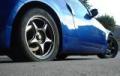
That's a pretty good street/track compromise setup that won't eat your tires too badly on the street. For ultimate handling on the track I'd go with more camber in the front and *maybe* a bit more in the rear but 1.5 isn't bad at all. I just got mine aligned with the new SPL Parts front caster/camber arms and went with 3 degrees front and 2.2 rear. 2.2 was the lowest we could get it though with the stock rear arms and the drop I have. I run 3 front and 2 rear in my z32.
You should be pretty happy with your settings unless you're a very aggressive driver.
You should be pretty happy with your settings unless you're a very aggressive driver.
Trending Topics
I am running Kinetix Racing traction arms in the rear, which allow for camber adjustment as well. They are much more "beefier" than the stock arms and seem to be of high quality build-wise. Proof is in the pudding though, so I'll wait until I get some more track days under my belt with these newly installed components and setup. Its looks promising though...


Thread
Thread Starter
Forum
Replies
Last Post
350Z Project X
Suspension
9
Oct 10, 2015 09:23 AM
