


The right ride height?


Thread Starter
Registered User
iTrader: (4)
Joined: Oct 2005
Posts: 147
Likes: 0
From: Alberta (Canada)
 The right ride height?
Does anyone have suggestions on the perfect ride height? I've got stance coilovers, however, i can seem to find the right height. I want an aggressive stance, but want it able to perform as well. Its either too low where it bottoms out once a while while driving in the city, or its too high and looks almost stock. I'm currently set about 1.6" in the front and 1.3 in the back. Any suggestions?
Thread Starter
Registered User
iTrader: (4)
Joined: Oct 2005
Posts: 147
Likes: 0
From: Alberta (Canada)
Originally Posted by Q45tech
The right ride height is usually the height which places the shocks in the midpoint of their stroke range sitting still.


Registered User
Joined: Oct 2003
Posts: 984
Likes: 0
From: Marietta, Georgia
Ride height only shifts the Center of gravity which divided by the track width creates a coefficient to multiply against the unsprung weight so 1" drop is about 1.6% less/more weight transfer to the tire.
+- 15 pounds above static at 1.0 G so 13.5 pounds at peak is 1% of peak tire load which is about 1/2% effect on handling. What ever height doesn't bottom? Is 0.9000G or 0.9045 G significant difference from ride height shift?
I am assuming you are correcting camber, caster, and bump steer [toe] to the same number at each different ride height position.
+- 15 pounds above static at 1.0 G so 13.5 pounds at peak is 1% of peak tire load which is about 1/2% effect on handling. What ever height doesn't bottom? Is 0.9000G or 0.9045 G significant difference from ride height shift?
I am assuming you are correcting camber, caster, and bump steer [toe] to the same number at each different ride height position.
Thread Starter
Registered User
iTrader: (4)
Joined: Oct 2005
Posts: 147
Likes: 0
From: Alberta (Canada)
Originally Posted by Q45tech
Ride height only shifts the Center of gravity which divided by the track width creates a coefficient to multiply against the unsprung weight so 1" drop is about 1.6% less/more weight transfer to the tire.
+- 15 pounds above static at 1.0 G so 13.5 pounds at peak is 1% of peak tire load which is about 1/2% effect on handling. What ever height doesn't bottom? Is 0.9000G or 0.9045 G significant difference from ride height shift?
I am assuming you are correcting camber, caster, and bump steer [toe] to the same number at each different ride height position.
+- 15 pounds above static at 1.0 G so 13.5 pounds at peak is 1% of peak tire load which is about 1/2% effect on handling. What ever height doesn't bottom? Is 0.9000G or 0.9045 G significant difference from ride height shift?
I am assuming you are correcting camber, caster, and bump steer [toe] to the same number at each different ride height position.
What your saying does make sense, the first time i dropped it i did my adjustments. Just doing another round of adjustments now before i go in to get it adjusted again. What i'm aiming for really is just a nice aggressive stance, but something i can use at the track as well.

Registered User
Joined: Feb 2003
Posts: 712
Likes: 0
From: redondo beach, ca
i think the spindle change is to address the change in roll center (and bump steer) when you lower a car, not just the suspension travel. if you don't lower your roll center, lowering your car could move your CG farther away away from your roll center, causing your body to roll more given the same roll stiffness.
but anyway, sounds like if you want your car that low you need higher rate springs.
but anyway, sounds like if you want your car that low you need higher rate springs.
Originally Posted by Q45tech
Ride height only shifts the Center of gravity which divided by the track width creates a coefficient to multiply against the unsprung weight so 1" drop is about 1.6% less/more weight transfer to the tire.
+- 15 pounds above static at 1.0 G so 13.5 pounds at peak is 1% of peak tire load which is about 1/2% effect on handling. What ever height doesn't bottom? Is 0.9000G or 0.9045 G significant difference from ride height shift?
I am assuming you are correcting camber, caster, and bump steer [toe] to the same number at each different ride height position.
+- 15 pounds above static at 1.0 G so 13.5 pounds at peak is 1% of peak tire load which is about 1/2% effect on handling. What ever height doesn't bottom? Is 0.9000G or 0.9045 G significant difference from ride height shift?
I am assuming you are correcting camber, caster, and bump steer [toe] to the same number at each different ride height position.
Trending Topics
Thread Starter
Registered User
iTrader: (4)
Joined: Oct 2005
Posts: 147
Likes: 0
From: Alberta (Canada)
Originally Posted by julian
i think the spindle change is to address the change in roll center (and bump steer) when you lower a car, not just the suspension travel. if you don't lower your roll center, lowering your car could move your CG farther away away from your roll center, causing your body to roll more given the same roll stiffness.
but anyway, sounds like if you want your car that low you need higher rate springs.
but anyway, sounds like if you want your car that low you need higher rate springs.
Registered User
Joined: Oct 2003
Posts: 984
Likes: 0
From: Marietta, Georgia
Those are very simple things that every suspension engineer [or modder] deal with every day. A nice text book or even HP series books on suspension show you the way.
http://www.amazon.com/Race-Car-Vehic...099113?ie=UTF8
A few hundred in text books and the eqivalent time of a few automotive engineering classes and homework [say 100 hours of study] should make you the local expert.
http://www.automotivearticles.com/Su...pensions.shtml
http://www.carbibles.com/suspension_bible.html
"Weight transfer is generally of far less practical importance than load transfer, for cars and SUVs at least. For instance in a 0.9g turn, a car with a track of 1650 mm and a CG height of 550 mm will see a load transfer of 30% of the vehicle weight, that is the outer wheels will see 60% more load than before, and the inners 60% less. At the same time, the CG of the vehicle will typically move laterally and vertically, relative to the contact patch by no more than 30 mm, leading to a weight transfer of less than 2%." from http://en.wikipedia.org/wiki/Weight_transfer
The above is for both wheels [on a side] so the static weight ratio generally applies:
30% [of sprung weight] transfer at 55/45 or 60/40 ratio.
http://www.amazon.com/Race-Car-Vehic...099113?ie=UTF8
A few hundred in text books and the eqivalent time of a few automotive engineering classes and homework [say 100 hours of study] should make you the local expert.
http://www.automotivearticles.com/Su...pensions.shtml
http://www.carbibles.com/suspension_bible.html
"Weight transfer is generally of far less practical importance than load transfer, for cars and SUVs at least. For instance in a 0.9g turn, a car with a track of 1650 mm and a CG height of 550 mm will see a load transfer of 30% of the vehicle weight, that is the outer wheels will see 60% more load than before, and the inners 60% less. At the same time, the CG of the vehicle will typically move laterally and vertically, relative to the contact patch by no more than 30 mm, leading to a weight transfer of less than 2%." from http://en.wikipedia.org/wiki/Weight_transfer
The above is for both wheels [on a side] so the static weight ratio generally applies:
30% [of sprung weight] transfer at 55/45 or 60/40 ratio.
Last edited by Q45tech; Sep 27, 2006 at 10:13 AM.
Thanks for the links.
I have my copy of the Milliken brothers books too.
I still don't understand how a 25mm drop would make a change in load transfer of less than 1%. It doesn't make sense. CG position/height is the second most influantial factor in a cars handling (according to Milliken anyways).
Unless the CG was above the car itself, which I doubt...
I have my copy of the Milliken brothers books too.
I still don't understand how a 25mm drop would make a change in load transfer of less than 1%. It doesn't make sense. CG position/height is the second most influantial factor in a cars handling (according to Milliken anyways).
Unless the CG was above the car itself, which I doubt...
Last edited by Kolia; Sep 27, 2006 at 10:31 AM.

Originally Posted by Kolia
Thanks for the links.
I have my copy of the Milliken brothers books too.
I still don't understand how a 25mm drop would make a change in load transfer of less than 1%. It doesn't make sense. CG position/height is the second most influantial factor in a cars handling (according to Milliken anyways).
Unless the CG was above the car itself, which I doubt...
I have my copy of the Milliken brothers books too.
I still don't understand how a 25mm drop would make a change in load transfer of less than 1%. It doesn't make sense. CG position/height is the second most influantial factor in a cars handling (according to Milliken anyways).
Unless the CG was above the car itself, which I doubt...

Assuming 50/50 weight balance front to back and a 3200lb car. R1 & R2 are reactions on front 2 wheels. R1x is the reaction due to change in CG of 25mm. A is the percentage of reaction difference.
Last edited by spacemn_spiff; Sep 27, 2006 at 10:51 AM.
Originally Posted by spacemn_spiff
Hope this helps.
Assuming 50/50 weight balance front to back and a 3200lb car. R1 & R2 are reactions on front 2 wheels. R1x is the reaction due to change in CG of 25mm. A is the percentage of reaction difference.
Assuming 50/50 weight balance front to back and a 3200lb car. R1 & R2 are reactions on front 2 wheels. R1x is the reaction due to change in CG of 25mm. A is the percentage of reaction difference.
thanks. The reaction at the contact patchs is a couple and not simple torque...

Originally Posted by three_fitty
Stance coilovers have a drop spindle on them though, so the stroke will always be the same. I raised it up to 1.5" in the front, and once in a while, it would bottom out. Its just the front control arm hitting the frame.

WOW! I come across a thread like this and I'm humbled by how little I actually know...
Although, perhaps good timing as I just got TEIN Flex coilovers installed yesterday and asked my mechanic to lower the ride height an inch (to start). I have a 2003 Track Ed. 350Z that I got used to run out on the track for Driver Ed. events. I still drive my Z on the street but I suspect in 3 to 5 years it will become a dedicated track car. Until then I'm looking for a setting like three_fitty, something agressive but functional for the street (i.e. speed bumps, etc.) but a decent starting point for the track.
My mechanic said that my stock ride height was all over the place. Is that normal? He said that he "leveled" the front and rear respectively and then lowered it an inch front & rear. He said that my front sits an inch lower than the rear. Does that seem right? I don't know much about this stuff yet, but that doesn't seem right to me(?). He said to try it out on the track and adjust from there (either to lower the rear another inch to equal the front or raise the front an inch to match the rear). Today it gets aligned at my local STS tire center. They are going to adjust all those other settings given the new ride height and set my camber to -2.0 front and -1.5 rear. Its agressive for the street, but that setting feels good to me out on the track. Unfortunately, that STS doesn't have scales and can't corner balance my Z, so I will need to take it to a local Porsche performance shop that can do that.
three_fitty, what did you decide on?
Thanks.
Although, perhaps good timing as I just got TEIN Flex coilovers installed yesterday and asked my mechanic to lower the ride height an inch (to start). I have a 2003 Track Ed. 350Z that I got used to run out on the track for Driver Ed. events. I still drive my Z on the street but I suspect in 3 to 5 years it will become a dedicated track car. Until then I'm looking for a setting like three_fitty, something agressive but functional for the street (i.e. speed bumps, etc.) but a decent starting point for the track.
My mechanic said that my stock ride height was all over the place. Is that normal? He said that he "leveled" the front and rear respectively and then lowered it an inch front & rear. He said that my front sits an inch lower than the rear. Does that seem right? I don't know much about this stuff yet, but that doesn't seem right to me(?). He said to try it out on the track and adjust from there (either to lower the rear another inch to equal the front or raise the front an inch to match the rear). Today it gets aligned at my local STS tire center. They are going to adjust all those other settings given the new ride height and set my camber to -2.0 front and -1.5 rear. Its agressive for the street, but that setting feels good to me out on the track. Unfortunately, that STS doesn't have scales and can't corner balance my Z, so I will need to take it to a local Porsche performance shop that can do that.
three_fitty, what did you decide on?
Thanks.
Some knowledgeable mechanic you have there...
Stock ride height calls for the front to be 20-23mm lower than the rear.
I'd be curious to know what is your weight distribution is now.
Stock ride height calls for the front to be 20-23mm lower than the rear.
I'd be curious to know what is your weight distribution is now.
Registered User
Joined: Oct 2003
Posts: 984
Likes: 0
From: Marietta, Georgia
Be sure your weight equivalent is placed into the driver's seat when adjusting.
Nissan designs for a 150 pound driver so you must redesign if you weigh more.
150 pounds can change the drivers side ride height by almost 1/2".
I keep pointing people to the Tirerack suspension tests where [spend big] they lower, stiffen, and resway reshock a BMW and gain those 1%-1.5% numbers in skid pad and other handling test.
In many ways off the self lowering with inexpensive components is like a underhood cone filter.........lots of hot air........that may hurt more than it helps.
Nissan designs for a 150 pound driver so you must redesign if you weigh more.
150 pounds can change the drivers side ride height by almost 1/2".
I keep pointing people to the Tirerack suspension tests where [spend big] they lower, stiffen, and resway reshock a BMW and gain those 1%-1.5% numbers in skid pad and other handling test.
In many ways off the self lowering with inexpensive components is like a underhood cone filter.........lots of hot air........that may hurt more than it helps.
Originally Posted by Kolia
Some knowledgeable mechanic you have there...
Stock ride height calls for the front to be 20-23mm lower than the rear.
I'd be curious to know what is your weight distribution is now.
Stock ride height calls for the front to be 20-23mm lower than the rear.
I'd be curious to know what is your weight distribution is now.

I obviously didn't know that and to be fair the guy specializes in 240SX's for years now. He gets so much business from guys who want to drift their 240's he says it is crazy. He has been up front with me about his 350Z experience and gives me a good price accordingly. If anyone can recommend a Tuner shop that specializes in 350Z's in the western suburbs of Philly; PM me.

I probably wont get my Z weighed and corner balanced until some time on Oct. I assume that I will want to take everything out of the car (spare tire, jack, passenger seat, etc.) and have it balanced that way -- right? I take all that stuff out when I go to the track.
Originally Posted by Sk8fe
Thanks!
I obviously didn't know that and to be fair the guy specializes in 240SX's for years now. He gets so much business from guys who want to drift their 240's he says it is crazy. He has been up front with me about his 350Z experience and gives me a good price accordingly. If anyone can recommend a Tuner shop that specializes in 350Z's in the western suburbs of Philly; PM me.
I probably wont get my Z weighed and corner balanced until some time on Oct. I assume that I will want to take everything out of the car (spare tire, jack, passenger seat, etc.) and have it balanced that way -- right? I take all that stuff out when I go to the track.
I obviously didn't know that and to be fair the guy specializes in 240SX's for years now. He gets so much business from guys who want to drift their 240's he says it is crazy. He has been up front with me about his 350Z experience and gives me a good price accordingly. If anyone can recommend a Tuner shop that specializes in 350Z's in the western suburbs of Philly; PM me.
I probably wont get my Z weighed and corner balanced until some time on Oct. I assume that I will want to take everything out of the car (spare tire, jack, passenger seat, etc.) and have it balanced that way -- right? I take all that stuff out when I go to the track.


Originally Posted by Kolia
Some knowledgeable mechanic you have there...
Stock ride height calls for the front to be 20-23mm lower than the rear.
I'd be curious to know what is your weight distribution is now.
Stock ride height calls for the front to be 20-23mm lower than the rear.
I'd be curious to know what is your weight distribution is now.
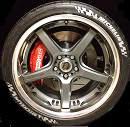
they call the roadster the road star in that pic? wtf