


what is entailed in a quick release wheel kit?


Joined: Aug 2004
Posts: 28,899
Likes: 1,906
From: Twin Cities, MN

BTW, there's an OEM steering wheel for sale in the marketplace. That's if you want to stay OEM.
As for the quick disconnect wheel, it's nice and convenient for racing applications, but that's about it.
As for the quick disconnect wheel, it's nice and convenient for racing applications, but that's about it.


buy this quick release http://www.saferacer.com/sparco-stee...FQkuaQodRkEAmw
buy one of these steering wheels http://www.saferacer.com/auto-racing...teering-wheels
and find a momo hub.
issue fixed new wheel good times.
PS...please be a organ donor I might need a new liver !!!
buy one of these steering wheels http://www.saferacer.com/auto-racing...teering-wheels
and find a momo hub.
issue fixed new wheel good times.
PS...please be a organ donor
I might need a new liver !!!

Just a thought your choice tho.


Registered User
Joined: May 2014
Posts: 2,892
Likes: 277
From: arizona
Its idiots who dont understand the safety behind these mods and just slaps them on silly nilly is what is turning the 350z into the new vivic. Just a thought.


Registered User
Joined: Jan 2014
Posts: 23
Likes: 1
From: ontario
I mean really I do agree with the safety stuff^^. It's not a necessity to have a cage and harness and stuff to put a q/r in. (It's is beneficial and smart to have but not necessary).
That's like saying u NEED to have coilovers or ur car MUST be lowered to put aftermarket rims on.
That's like saying u NEED to have coilovers or ur car MUST be lowered to put aftermarket rims on.
Registered User
Joined: May 2014
Posts: 2,892
Likes: 277
From: arizona
I mean really I do agree with the safety stuff^^. It's not a necessity to have a cage and harness and stuff to put a q/r in. (It's is beneficial and smart to have but not necessary).
That's like saying u NEED to have coilovers or ur car MUST be lowered to put aftermarket rims on.
That's like saying u NEED to have coilovers or ur car MUST be lowered to put aftermarket rims on.
Long story short, the seat belts allows you to lean forward during a crash INTO the air bags. In an event of a roll over the seats are design to collapse so your head doesnt smack the roof and get cruch.
Without an airbag and just a qdc wheel, during a crash youre being force into the wheel which can cause major damage even death.

Do you know how our seat belts, seats and air bags works in conjunction with each other? Im guessing you dont if you dont understand why all the items mentions ARE NEEDED with a qdc wheels.
Long story short, the seat belts allows you to lean forward during a crash INTO the air bags. In an event of a roll over the seats are design to collapse so your head doesnt smack the roof and get cruch.
Without an airbag and just a qdc wheel, during a crash youre being force into the wheel which can cause major damage even death.
Long story short, the seat belts allows you to lean forward during a crash INTO the air bags. In an event of a roll over the seats are design to collapse so your head doesnt smack the roof and get cruch.
Without an airbag and just a qdc wheel, during a crash youre being force into the wheel which can cause major damage even death.
Save your breath, let'em find out the hard way.


Registered User
Joined: Oct 2008
Posts: 1,244
Likes: 31
From: Vancouver B C
Do you know how our seat belts, seats and air bags works in conjunction with each other? Im guessing you dont if you dont understand why all the items mentions ARE NEEDED with a qdc wheels.
Long story short, the seat belts allows you to lean forward during a crash INTO the air bags. In an event of a roll over the seats are design to collapse so your head doesnt smack the roof and get cruch.
Long story short, the seat belts allows you to lean forward during a crash INTO the air bags. In an event of a roll over the seats are design to collapse so your head doesnt smack the roof and get cruch.
Registered User
Joined: May 2014
Posts: 2,892
Likes: 277
From: arizona
Turboed, you have some misconceptions about how the safety systems operate in a Z. The same signals that cause the airbags to deploy also fire a pyrotechnic device in the seat belt retractor. This pulls the occupants firmly back into the seat. It’s important that the seat is firmly attached and does not deform or collapse. This is to prevent a common condition where a person can slip under (submarine) the lap part of the seatbelt. In the case of a collision it’s most important to keep the passengers firmly in the seats and not tossed about like a rag dolls.
In a standard collision, the seat belts DO firm up but have you ever brake hard? The belts also firm up, yet you still lean forward. Thats where the air bag comes in. Its the design of all stock seat belts. The belt locks, but you still lean forward.
Now lets look at harness and rollcage. There is little to no wiggle room when braking/crashing. Thats the purpose of the harness, it keeps you upright and plantedin your seats with little to no wiggle room.
Registered User
Joined: Oct 2008
Posts: 1,244
Likes: 31
From: Vancouver B C
I am talking about a roll over where seat "breaks" lean as far back as possible so you have room between your head and the roof.
In a standard collision, the seat belts DO firm up but have you ever brake hard? The belts also firm up, yet you still lean forward. Thats where the air bag comes in. Its the design of all stock seat belts. The belt locks, but you still lean forward.
Now lets look at harness and rollcage. There is little to no wiggle room when braking/crashing. Thats the purpose of the harness, it keeps you upright and plantedin your seats with little to no wiggle room.
In a standard collision, the seat belts DO firm up but have you ever brake hard? The belts also firm up, yet you still lean forward. Thats where the air bag comes in. Its the design of all stock seat belts. The belt locks, but you still lean forward.
Now lets look at harness and rollcage. There is little to no wiggle room when braking/crashing. Thats the purpose of the harness, it keeps you upright and plantedin your seats with little to no wiggle room.
I searched and searched for any Nissan reference for a controlled design mechanism to cause the seatbacks to automatically break free in the case of a rollover and didn’t find anything. Do you have a link? NHTSA's rollover ratings found at .safercar.gov. do not reference anything like that.
The operator’s manual in most every car cautions not to completely recline the seatback in a moving car as the passenger will not be correctly restrained by the seat belt in the case of an accident. This is vitally important in a rollover, as it’s critical that you are not thrown about or ejected from the car.
You can find a wealth of rollover information and mandated standard requirements in the Federal Motor Vehicle safety rollover standard 216, (2009 revision). It also states that a vehicle roof must be able to withstand a force equal to three times the weight of the vehicle applied to the sides and top of the roof with out bending so far that it would touch the head of a standard test dummy properly strapped into an upright seat.
Registered User
Joined: May 2014
Posts: 2,892
Likes: 277
From: arizona
Turboed, I don’t mean to be a b!tch about this, but I think you’re still confusing the simple inertia lock in the seatbelt spool (limits forward motion under heavy braking) with the Z’s powered seatbelt retractors. These retractors are a single use mechanism triggered by the same crash sensor that launches the airbags.
I searched and searched for any Nissan reference for a controlled design mechanism to cause the seatbacks to automatically break free in the case of a rollover and didn’t find anything. Do you have a link? NHTSA's rollover ratings found at .safercar.gov. do not reference anything like that.
The operator’s manual in most every car cautions not to completely recline the seatback in a moving car as the passenger will not be correctly restrained by the seat belt in the case of an accident. This is vitally important in a rollover, as it’s critical that you are not thrown about or ejected from the car.
You can find a wealth of rollover information and mandated standard requirements in the Federal Motor Vehicle safety rollover standard 216, (2009 revision). It also states that a vehicle roof must be able to withstand a force equal to three times the weight of the vehicle applied to the sides and top of the roof with out bending so far that it would touch the head of a standard test dummy properly strapped into an upright seat.
I searched and searched for any Nissan reference for a controlled design mechanism to cause the seatbacks to automatically break free in the case of a rollover and didn’t find anything. Do you have a link? NHTSA's rollover ratings found at .safercar.gov. do not reference anything like that.
The operator’s manual in most every car cautions not to completely recline the seatback in a moving car as the passenger will not be correctly restrained by the seat belt in the case of an accident. This is vitally important in a rollover, as it’s critical that you are not thrown about or ejected from the car.
You can find a wealth of rollover information and mandated standard requirements in the Federal Motor Vehicle safety rollover standard 216, (2009 revision). It also states that a vehicle roof must be able to withstand a force equal to three times the weight of the vehicle applied to the sides and top of the roof with out bending so far that it would touch the head of a standard test dummy properly strapped into an upright seat.
That said, have you seen crash tests with dummies? Even when buckled in, the dummy still leans forward and right into the path of the air bag. Without the air back, the dummy would hit the dash/steering wheel.
And the reclining seats to "break" i could be wrong about. But i dont think can withstand 3x the force of the weight of the car. Ive seen roll overs, the cars are pancakes. I can see how the roof wont collapse if you put the car in its roof. But i dont see how it can withstand a roll over without re-enforcement in the term of a roll cage.
Registered User
Joined: Jan 2014
Posts: 23
Likes: 1
From: ontario
I do know how they work. And I'm saying it is not needed u can CAN literally put a quick release in without it. It 100% possible, doable and been done. Is it smart to do and have I told people not to do it? Of course it's a bad idea and anyone I've seen with them I've tried to explain the above mentioned problems/hazards and again whether they listen or not is there choice
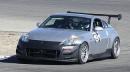


Funny thing about the track talk, I don't run a QR on my track car. Using my wheel to help me get in and out of the car is a mush with the race seats.
OEM seatbelt function. Aside from the retractor, the design is you move slightly forward against the shoulder strap, as you move fwd the shoulder strap causes the lap belt to tighten preventing you from sliding under. Being a single should strap, it cause you to have a slight twist and with a major roof collapse will let you pivot to the inside protecting you from the roof ( a harness does not allow this, the ASM system slightly allows it. )
The seat on the other side, made to keep you in place. Will bend in a major impact to lessen the load on the body sitting in it. Race seats don't do that, they are just made to keep you in place and from bouncing around and off your cage.
Street car, IMO, keep the factory safety gear in place. Track car, use a proper safety system ( harness, cage, helmet and Hans)
OEM seatbelt function. Aside from the retractor, the design is you move slightly forward against the shoulder strap, as you move fwd the shoulder strap causes the lap belt to tighten preventing you from sliding under. Being a single should strap, it cause you to have a slight twist and with a major roof collapse will let you pivot to the inside protecting you from the roof ( a harness does not allow this, the ASM system slightly allows it. )
The seat on the other side, made to keep you in place. Will bend in a major impact to lessen the load on the body sitting in it. Race seats don't do that, they are just made to keep you in place and from bouncing around and off your cage.
Street car, IMO, keep the factory safety gear in place. Track car, use a proper safety system ( harness, cage, helmet and Hans)
Registered User
Joined: May 2014
Posts: 2,892
Likes: 277
From: arizona
Funny thing about the track talk, I don't run a QR on my track car. Using my wheel to help me get in and out of the car is a mush with the race seats.
OEM seatbelt function. Aside from the retractor, the design is you move slightly forward against the shoulder strap, as you move fwd the shoulder strap causes the lap belt to tighten preventing you from sliding under. Being a single should strap, it cause you to have a slight twist and with a major roof collapse will let you pivot to the inside protecting you from the roof ( a harness does not allow this, the ASM system slightly allows it. )
The seat on the other side, made to keep you in place. Will bend in a major impact to lessen the load on the body sitting in it. Race seats don't do that, they are just made to keep you in place and from bouncing around and off your cage.
Street car, IMO, keep the factory safety gear in place. Track car, use a proper safety system ( harness, cage, helmet and Hans)
OEM seatbelt function. Aside from the retractor, the design is you move slightly forward against the shoulder strap, as you move fwd the shoulder strap causes the lap belt to tighten preventing you from sliding under. Being a single should strap, it cause you to have a slight twist and with a major roof collapse will let you pivot to the inside protecting you from the roof ( a harness does not allow this, the ASM system slightly allows it. )
The seat on the other side, made to keep you in place. Will bend in a major impact to lessen the load on the body sitting in it. Race seats don't do that, they are just made to keep you in place and from bouncing around and off your cage.
Street car, IMO, keep the factory safety gear in place. Track car, use a proper safety system ( harness, cage, helmet and Hans)
Registered User
Joined: Oct 2008
Posts: 1,244
Likes: 31
From: Vancouver B C
Terrasmak, I did a search, and then an advanced search of both the US Department of Transportation and the National Highway Traffic Safety Administration looking for a specification regulating the desirability of a seat that as you put it will, “bend in a major impact to lessen the load on the body sitting in it”. (I’ve got a stack of tedious work to do tonight, so I decided to do this instead.)
What I found was the complete opposite, reams and reams of specifications relating to the minimum allowable strength (6,327Nm) and yield point of every facet of the seating. Attachment strength, yield, breakage and angular rotation from initial position of the seat back and about a zillion more specs. Dozens of examples of actual production seats were tested in the lab, and in every case seats that were stronger and provided resistance to bending, deforming, etc were praised as superior designs.
Once a car is spinning wildly out of control, taking hits on the front, sides and especially from the rear, the fate of a racecar driver and a street car driver are very similar. Keep the driver firmly attached to the seat and prevent her from banging her head and extremities against unfriendly objects.
In the example Turboed gave of a rollover event, he wants the seat to bend/break out of the way to provide more space away from the roof that is collapsing. This isn’t really logical. If I screw up at high speed and flip a car on to its roof I”M UPSIDE DOWN being flung against a roof that is being smashed in towards me! I want my seat to give every shred of its structural life to try and hold the roof panel away from my head bone. Even an extra inch could be crucial.
There is no Z here anymore, but stored in the garage is a Porsche 911 GTS, like the mighty GT3 there are no rear jump seats for kids, just a lightened and stripped out area. Because of this, these cars can be ordered with a light, super strong, one-piece high backed, (non-folding) bucket seat that will not willing yield in any direction. This car though, has the standard sports seats that do recline and fold forward. However there is no flex or give in these seats (or the hinge or latching mechanism). The rigid tops (integrated headrest) come up within two inches of the headliner. A hard read end collision will not break, twist or bend these seats. Throw in a front head-on crash, a bunch of rollovers and these seats will be unharmed, as hopefully will be the poor passenger strapped into it.
I’m still not allowed anywhere near the keys to this car; I can’t imagine why not!
What I found was the complete opposite, reams and reams of specifications relating to the minimum allowable strength (6,327Nm) and yield point of every facet of the seating. Attachment strength, yield, breakage and angular rotation from initial position of the seat back and about a zillion more specs. Dozens of examples of actual production seats were tested in the lab, and in every case seats that were stronger and provided resistance to bending, deforming, etc were praised as superior designs.
Once a car is spinning wildly out of control, taking hits on the front, sides and especially from the rear, the fate of a racecar driver and a street car driver are very similar. Keep the driver firmly attached to the seat and prevent her from banging her head and extremities against unfriendly objects.
In the example Turboed gave of a rollover event, he wants the seat to bend/break out of the way to provide more space away from the roof that is collapsing. This isn’t really logical. If I screw up at high speed and flip a car on to its roof I”M UPSIDE DOWN being flung against a roof that is being smashed in towards me! I want my seat to give every shred of its structural life to try and hold the roof panel away from my head bone. Even an extra inch could be crucial.
There is no Z here anymore, but stored in the garage is a Porsche 911 GTS, like the mighty GT3 there are no rear jump seats for kids, just a lightened and stripped out area. Because of this, these cars can be ordered with a light, super strong, one-piece high backed, (non-folding) bucket seat that will not willing yield in any direction. This car though, has the standard sports seats that do recline and fold forward. However there is no flex or give in these seats (or the hinge or latching mechanism). The rigid tops (integrated headrest) come up within two inches of the headliner. A hard read end collision will not break, twist or bend these seats. Throw in a front head-on crash, a bunch of rollovers and these seats will be unharmed, as hopefully will be the poor passenger strapped into it.
I’m still not allowed anywhere near the keys to this car; I can’t imagine why not!
Registered User
Joined: May 2014
Posts: 2,892
Likes: 277
From: arizona
Terrasmak, I did a search, and then an advanced search of both the US Department of Transportation and the National Highway Traffic Safety Administration looking for a specification regulating the desirability of a seat that as you put it will, “bend in a major impact to lessen the load on the body sitting in it”. (I’ve got a stack of tedious work to do tonight, so I decided to do this instead.)
What I found was the complete opposite, reams and reams of specifications relating to the minimum allowable strength (6,327Nm) and yield point of every facet of the seating. Attachment strength, yield, breakage and angular rotation from initial position of the seat back and about a zillion more specs. Dozens of examples of actual production seats were tested in the lab, and in every case seats that were stronger and provided resistance to bending, deforming, etc were praised as superior designs.
Once a car is spinning wildly out of control, taking hits on the front, sides and especially from the rear, the fate of a racecar driver and a street car driver are very similar. Keep the driver firmly attached to the seat and prevent her from banging her head and extremities against unfriendly objects.
In the example Turboed gave of a rollover event, he wants the seat to bend/break out of the way to provide more space away from the roof that is collapsing. This isn’t really logical. If I screw up at high speed and flip a car on to its roof I”M UPSIDE DOWN being flung against a roof that is being smashed in towards me! I want my seat to give every shred of its structural life to try and hold the roof panel away from my head bone. Even an extra inch could be crucial.
There is no Z here anymore, but stored in the garage is a Porsche 911 GTS, like the mighty GT3 there are no rear jump seats for kids, just a lightened and stripped out area. Because of this, these cars can be ordered with a light, super strong, one-piece high backed, (non-folding) bucket seat that will not willing yield in any direction. This car though, has the standard sports seats that do recline and fold forward. However there is no flex or give in these seats (or the hinge or latching mechanism). The rigid tops (integrated headrest) come up within two inches of the headliner. A hard read end collision will not break, twist or bend these seats. Throw in a front head-on crash, a bunch of rollovers and these seats will be unharmed, as hopefully will be the poor passenger strapped into it.
I’m still not allowed anywhere near the keys to this car; I can’t imagine why not!
What I found was the complete opposite, reams and reams of specifications relating to the minimum allowable strength (6,327Nm) and yield point of every facet of the seating. Attachment strength, yield, breakage and angular rotation from initial position of the seat back and about a zillion more specs. Dozens of examples of actual production seats were tested in the lab, and in every case seats that were stronger and provided resistance to bending, deforming, etc were praised as superior designs.
Once a car is spinning wildly out of control, taking hits on the front, sides and especially from the rear, the fate of a racecar driver and a street car driver are very similar. Keep the driver firmly attached to the seat and prevent her from banging her head and extremities against unfriendly objects.
In the example Turboed gave of a rollover event, he wants the seat to bend/break out of the way to provide more space away from the roof that is collapsing. This isn’t really logical. If I screw up at high speed and flip a car on to its roof I”M UPSIDE DOWN being flung against a roof that is being smashed in towards me! I want my seat to give every shred of its structural life to try and hold the roof panel away from my head bone. Even an extra inch could be crucial.
There is no Z here anymore, but stored in the garage is a Porsche 911 GTS, like the mighty GT3 there are no rear jump seats for kids, just a lightened and stripped out area. Because of this, these cars can be ordered with a light, super strong, one-piece high backed, (non-folding) bucket seat that will not willing yield in any direction. This car though, has the standard sports seats that do recline and fold forward. However there is no flex or give in these seats (or the hinge or latching mechanism). The rigid tops (integrated headrest) come up within two inches of the headliner. A hard read end collision will not break, twist or bend these seats. Throw in a front head-on crash, a bunch of rollovers and these seats will be unharmed, as hopefully will be the poor passenger strapped into it.
I’m still not allowed anywhere near the keys to this car; I can’t imagine why not!
Im just gonna say one last thing, professional race cars are some of the safest cars designed. But the equipment use are not dot approve, ie, not street legal. Theres a reason race car uses fix bucket seats, harness and roll cage. If it aint broken dont fix it. All these safety feature works in conjunctionwith each other, removing one component, in this case, the air bags, youre asking for trouble.