


Photos w/ new wheels/rubber


Thread Starter
Registered User
iTrader: (23)
Joined: Aug 2007
Posts: 2,249
Likes: 0
From: SP, Maryland
 Photos w/ new wheels/rubber
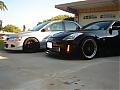
Just installed the following on the car:
Rota P45R 18x9.5 +25
Falken FK452 275/35/18 All around
Clear Corners
License Plate cover
Springs coming later this week. (3/4" drop)
Let me know what you think.
EDIT: I am looking for suggestions and criticism about my photography. Im trying to improve my shots. HENCE WHY THIS IS IN THE PHOTOGRAPHY SECTION.
(Camera: Sony A100 DSLR)


Rota P45R 18x9.5 +25
Falken FK452 275/35/18 All around
Clear Corners
License Plate cover
Springs coming later this week. (3/4" drop)
Let me know what you think.
EDIT: I am looking for suggestions and criticism about my photography. Im trying to improve my shots. HENCE WHY THIS IS IN THE PHOTOGRAPHY SECTION.
(Camera: Sony A100 DSLR)
Last edited by sbZenth; Aug 19, 2008 at 12:39 PM.

Thread Starter
Registered User
iTrader: (23)
Joined: Aug 2007
Posts: 2,249
Likes: 0
From: SP, Maryland
Originally Posted by _NIZMO_
PHOTOGRAPHY THREAD ....this is not the general media section
im looking for suggestions and pointers about my photography
I can read. Thanks. I am smart enough to realize i posted it under the photography thread. I took these photos and I used a DSLR. SO HENCE WHY THIS IS IN HERE.
Last edited by sbZenth; Aug 16, 2008 at 06:28 PM.
Thread Starter
Registered User
iTrader: (23)
Joined: Aug 2007
Posts: 2,249
Likes: 0
From: SP, Maryland
Originally Posted by _NIZMO_
FINE THEN

 you guys

First exposure is overexposed. I still see you're using manual mode... which, unless you know what you're doing, is just making it hard on yourself. There is really no need to use this mode at this point, unless you want to try strobes (flashes). It also didn't help that your lights were on, which can fool the camera's meter if you're not careful where you meter, and what metering mode you're using.
Again, try Av mode and from there, you have creative control of your aperture, which controls depth of field (out of focus background and foreground). I typically select the widest aperture the lens allows, if the situation allows it (ie, bright, sunny days won't allow you to use the widest apertures). Make sure you meter the correct parts of the car.
For your color, since it's dark, do a -1EV exposure compensation and fine tune from there. Then I would just meter the paint where there is no reflections and do a meter lock on it. Recompose, focus lock, then release the shutter.
Find a better location also, as the background is not the best. A wide aperture that would give the background more blur would have helped immensely when the background is something like you have...
Keep going though, you're on the right track.
Again, try Av mode and from there, you have creative control of your aperture, which controls depth of field (out of focus background and foreground). I typically select the widest aperture the lens allows, if the situation allows it (ie, bright, sunny days won't allow you to use the widest apertures). Make sure you meter the correct parts of the car.
For your color, since it's dark, do a -1EV exposure compensation and fine tune from there. Then I would just meter the paint where there is no reflections and do a meter lock on it. Recompose, focus lock, then release the shutter.
Find a better location also, as the background is not the best. A wide aperture that would give the background more blur would have helped immensely when the background is something like you have...
Keep going though, you're on the right track.
Trending Topics

my personal advice is.............
...........First exposure is overexposed. I still see you're using manual mode... which, unless you know what you're doing, is just making it hard on yourself. There is really no need to use this mode at this point, unless you want to try strobes (flashes). It also didn't help that your lights were on, which can fool the camera's meter if you're not careful where you meter, and what metering mode you're using.
Again, try Av mode and from there, you have creative control of your aperture, which controls depth of field (out of focus background and foreground). I typically select the widest aperture the lens allows, if the situation allows it (ie, bright, sunny days won't allow you to use the widest apertures). Make sure you meter the correct parts of the car.
For your color, since it's dark, do a -1EV exposure compensation and fine tune from there. Then I would just meter the paint where there is no reflections and do a meter lock on it. Recompose, focus lock, then release the shutter.
Find a better location also, as the background is not the best. A wide aperture that would give the background more blur would have helped immensely when the background is something like you have...
Keep going though, you're on the right track.

...........First exposure is overexposed. I still see you're using manual mode... which, unless you know what you're doing, is just making it hard on yourself. There is really no need to use this mode at this point, unless you want to try strobes (flashes). It also didn't help that your lights were on, which can fool the camera's meter if you're not careful where you meter, and what metering mode you're using.
Again, try Av mode and from there, you have creative control of your aperture, which controls depth of field (out of focus background and foreground). I typically select the widest aperture the lens allows, if the situation allows it (ie, bright, sunny days won't allow you to use the widest apertures). Make sure you meter the correct parts of the car.
For your color, since it's dark, do a -1EV exposure compensation and fine tune from there. Then I would just meter the paint where there is no reflections and do a meter lock on it. Recompose, focus lock, then release the shutter.
Find a better location also, as the background is not the best. A wide aperture that would give the background more blur would have helped immensely when the background is something like you have...
Keep going though, you're on the right track.
Thread Starter
Registered User
iTrader: (23)
Joined: Aug 2007
Posts: 2,249
Likes: 0
From: SP, Maryland
Originally Posted by ctwentytwo
First exposure is overexposed. I still see you're using manual mode... which, unless you know what you're doing, is just making it hard on yourself. There is really no need to use this mode at this point, unless you want to try strobes (flashes). It also didn't help that your lights were on, which can fool the camera's meter if you're not careful where you meter, and what metering mode you're using.
Again, try Av mode and from there, you have creative control of your aperture, which controls depth of field (out of focus background and foreground). I typically select the widest aperture the lens allows, if the situation allows it (ie, bright, sunny days won't allow you to use the widest apertures). Make sure you meter the correct parts of the car.
For your color, since it's dark, do a -1EV exposure compensation and fine tune from there. Then I would just meter the paint where there is no reflections and do a meter lock on it. Recompose, focus lock, then release the shutter.
Find a better location also, as the background is not the best. A wide aperture that would give the background more blur would have helped immensely when the background is something like you have...
Keep going though, you're on the right track.
Again, try Av mode and from there, you have creative control of your aperture, which controls depth of field (out of focus background and foreground). I typically select the widest aperture the lens allows, if the situation allows it (ie, bright, sunny days won't allow you to use the widest apertures). Make sure you meter the correct parts of the car.
For your color, since it's dark, do a -1EV exposure compensation and fine tune from there. Then I would just meter the paint where there is no reflections and do a meter lock on it. Recompose, focus lock, then release the shutter.
Find a better location also, as the background is not the best. A wide aperture that would give the background more blur would have helped immensely when the background is something like you have...
Keep going though, you're on the right track.
Thanks a lot again. Whenever I used Av it kept giving me either over exposed or underexposed and i could never get it right. thats why i switched to manual.
How can you tell that they are on manual?


Originally Posted by sbZenth
Thanks a lot again. Whenever I used Av it kept giving me either over exposed or underexposed and i could never get it right. thats why i switched to manual.
How can you tell that they are on manual?
How can you tell that they are on manual?
Your camera has a light meter. It measures light and adjusts the exposure time (in Av) or aperture (in Tv) to compensate what was chosen. So say you are in Av mode and chose an aperture of f/6.3, the camera would then calculate the needed exposure time to get a correctly exposed picture.
But the meter has a weakness. It tries to average the given scene to an 18% gray. The area of what the camera meters depends on what metering mode you choose. If you choose Spot, it'll measure the light from a small part of the scene, usually within the circle that encompasses the center focus point.
If that area is not a midtone... close to an 18% gray, then the exposure will be off. If that area is dark, then the camera will say it's too dark, and will try to lighten it closer to that 18% gray. If it's too light, obviously, it'll darken it closer to that 18% gray. Thats why some serious photographers have separate light meters as they measure light differently, and some use an 18% gray card, which is just that, a gray card colored to a specific tone of gray, that, when metered within the light of the subject you are going to shoot, will render a more accurate exposure and white balance.
http://en.wikipedia.org/wiki/Metering_mode
Please also read your manual for a more in depth explanation of the various metering modes available for your camera.
SO AGAIN, IT IS IMPORTANT THAT YOU KNOW WHAT METERING MODE YOU'RE IN, AND WHAT YOU ARE METERING.
Also, read in the manual how to do an exposure lock, so you can meter off a part of your car that is not too dark, and not too light, and you can recompose. Everytime you press the shutter half way, you are locking your metered value. There is a way to press another button, so you can lock it without using the shutter button. This is important because you need to use the shutter button to focus.
LASTLY, IF YOU HAVE BEEN READING CAREFULLY, YOU HAVE A DARK CAR. A DARK CAR WILL OFTEN YIELD AN EXPOSURE THAT IS OVEREXPOSED... CAUSE IT'S TOO DARK, THE CAMERA WILL TRY TO LIGHTEN IT TO 18% GRAY (IF YOU ARE SPOTMETERING YOUR PAINT). USE -1EV EXPOSURE COMPENSATION AND FINE TUNE THE ADJUSMENTS FROM THERE.
Read the manual on "exposure compensation."
Thread Starter
Registered User
iTrader: (23)
Joined: Aug 2007
Posts: 2,249
Likes: 0
From: SP, Maryland
Originally Posted by ctwentytwo
There's data embedded in the .jpg... called exif and shows the various settings.
Your camera has a light meter. It measures light and adjusts the exposure time (in Av) or aperture (in Tv) to compensate what was chosen. So say you are in Av mode and chose an aperture of f/6.3, the camera would then calculate the needed exposure time to get a correctly exposed picture.
But the meter has a weakness. It tries to average the given scene to an 18% gray. The area of what the camera meters depends on what metering mode you choose. If you choose Spot, it'll measure the light from a small part of the scene, usually within the circle that encompasses the center focus point.
If that area is not a midtone... close to an 18% gray, then the exposure will be off. If that area is dark, then the camera will say it's too dark, and will try to lighten it closer to that 18% gray. If it's too light, obviously, it'll darken it closer to that 18% gray. Thats why some serious photographers have separate light meters as they measure light differently, and some use an 18% gray card, which is just that, a gray card colored to a specific tone of gray, that, when metered within the light of the subject you are going to shoot, will render a more accurate exposure and white balance.
http://en.wikipedia.org/wiki/Metering_mode
Please also read your manual for a more in depth explanation of the various metering modes available for your camera.
SO AGAIN, IT IS IMPORTANT THAT YOU KNOW WHAT METERING MODE YOU'RE IN, AND WHAT YOU ARE METERING.
Also, read in the manual how to do an exposure lock, so you can meter off a part of your car that is not too dark, and not too light, and you can recompose. Everytime you press the shutter half way, you are locking your metered value. There is a way to press another button, so you can lock it without using the shutter button. This is important because you need to use the shutter button to focus.
LASTLY, IF YOU HAVE BEEN READING CAREFULLY, YOU HAVE A DARK CAR. A DARK CAR WILL OFTEN YIELD AN EXPOSURE THAT IS OVEREXPOSED... CAUSE IT'S TOO DARK, THE CAMERA WILL TRY TO LIGHTEN IT TO 18% GRAY (IF YOU ARE SPOTMETERING YOUR PAINT). USE -1EV EXPOSURE COMPENSATION AND FINE TUNE THE ADJUSMENTS FROM THERE.
Read the manual on "exposure compensation."
Your camera has a light meter. It measures light and adjusts the exposure time (in Av) or aperture (in Tv) to compensate what was chosen. So say you are in Av mode and chose an aperture of f/6.3, the camera would then calculate the needed exposure time to get a correctly exposed picture.
But the meter has a weakness. It tries to average the given scene to an 18% gray. The area of what the camera meters depends on what metering mode you choose. If you choose Spot, it'll measure the light from a small part of the scene, usually within the circle that encompasses the center focus point.
If that area is not a midtone... close to an 18% gray, then the exposure will be off. If that area is dark, then the camera will say it's too dark, and will try to lighten it closer to that 18% gray. If it's too light, obviously, it'll darken it closer to that 18% gray. Thats why some serious photographers have separate light meters as they measure light differently, and some use an 18% gray card, which is just that, a gray card colored to a specific tone of gray, that, when metered within the light of the subject you are going to shoot, will render a more accurate exposure and white balance.
http://en.wikipedia.org/wiki/Metering_mode
Please also read your manual for a more in depth explanation of the various metering modes available for your camera.
SO AGAIN, IT IS IMPORTANT THAT YOU KNOW WHAT METERING MODE YOU'RE IN, AND WHAT YOU ARE METERING.
Also, read in the manual how to do an exposure lock, so you can meter off a part of your car that is not too dark, and not too light, and you can recompose. Everytime you press the shutter half way, you are locking your metered value. There is a way to press another button, so you can lock it without using the shutter button. This is important because you need to use the shutter button to focus.
LASTLY, IF YOU HAVE BEEN READING CAREFULLY, YOU HAVE A DARK CAR. A DARK CAR WILL OFTEN YIELD AN EXPOSURE THAT IS OVEREXPOSED... CAUSE IT'S TOO DARK, THE CAMERA WILL TRY TO LIGHTEN IT TO 18% GRAY (IF YOU ARE SPOTMETERING YOUR PAINT). USE -1EV EXPOSURE COMPENSATION AND FINE TUNE THE ADJUSMENTS FROM THERE.
Read the manual on "exposure compensation."
Thread Starter
Registered User
iTrader: (23)
Joined: Aug 2007
Posts: 2,249
Likes: 0
From: SP, Maryland
Originally Posted by MR_X
