


Varis/Titek Duct Performance Gains?


Ive got a titek air duct i didnt notice a gain it looks badass though lol!!
i did mine in 30min i love it!!!
crappy cell phone pic!!

i did mine in 30min i love it!!!
crappy cell phone pic!!
Last edited by 350zDex; Apr 26, 2009 at 04:14 PM.

Thread Starter
Registered User
Joined: May 2008
Posts: 548
Likes: 2
From: Tulsa, OK
Well I got mine and installed it yesterday. I have a legal brief to write up for tomorrow, so I don't know when I'll be able to test it out. A preliminary run showed the intake temp much closer to ambient while driving, but I can't say anything conclusive yet. I'll probably be able to run a proper test tomorrow evening.
Here's a quick pic. I don't know if you were asking him because his car is red... but here's mine. Black is faster anyway

Here's a quick pic. I don't know if you were asking him because his car is red... but here's mine. Black is faster anyway

i personally think this is a good thread...all of what you guys are saying makes sense but i see a minimal gain at best..a buddy of mine is giving me one of these things for free and i plan on cutting away with a box cutter...will it help any?idk but its worth a try..keep in mine that many Zs do the same stuff because of new trends..many do the same just because its the new "it" thing or even worse because its "JDM"..not that i have anything against JDM product but yeah more of just trends than actual logic


Well I got mine and installed it yesterday. I have a legal brief to write up for tomorrow, so I don't know when I'll be able to test it out. A preliminary run showed the intake temp much closer to ambient while driving, but I can't say anything conclusive yet. I'll probably be able to run a proper test tomorrow evening.
Here's a quick pic. I don't know if you were asking him because his car is red... but here's mine. Black is faster anyway
Here's a quick pic. I don't know if you were asking him because his car is red... but here's mine. Black is faster anyway


the hole-in-bumper will be harder to quantify if you don't have the correct tools.
for those that have the hole already cut, there are a couple of way in which they can justify it's benefits.
1. cover up the hole with tape
2. take intake temp readings from the MAF using an OBD2 reader
3. drive at various speeds , 20, 40, 60, 80, 100, etc and take readings.
4. if you have a gsensor of some type. althought i high untrust the readings, take whatever HP rating it says
5. repeat ~ 5 times.
repeat test with the hole uncovered and compare.
the way that the duct is designed, or any hole in the front of the car, follows simple aerodynamic principles for an object in an air stream, and that is usually there is a high pressure zone infont of an object and that typically when there is an opening, air will go where-ever it is directed. either this is to an intake box, or brake duct, or radiator, usually the front grill is where the highest pressure is.
now, with a duct of this shape (i rather like the mine's dual HR version) it will allow the air flowing upwards the nose to enter the inlet and be directed to the hole through the radiator frame and into the intake box or pop charger or short ram or whatever is there.
i would suspect that it does allow easier air flow access to those areas while at speed, but depends on the opening size.. there will be some speed unknown Xmph that may cause airflow to stall or simply not be directed into the duct due to the design... you can only check this out if you do like some fancy computational flow analysis, or tape 'stall yarns' on the nose and watch it from a car driving along side of you. (better yet, tape a yarn at the opening and see if it goes inside the duct!)
i personally think that the ducting does improve cooling of the airflow, however you could probably get the same effect if you put a hose a little lower and just routed it up to the hole through the radiator frame, and get the same effect, w/o phyiscally cutting up the stock bumper.
for those that have the hole already cut, there are a couple of way in which they can justify it's benefits.
1. cover up the hole with tape
2. take intake temp readings from the MAF using an OBD2 reader
3. drive at various speeds , 20, 40, 60, 80, 100, etc and take readings.
4. if you have a gsensor of some type. althought i high untrust the readings, take whatever HP rating it says
5. repeat ~ 5 times.
repeat test with the hole uncovered and compare.
the way that the duct is designed, or any hole in the front of the car, follows simple aerodynamic principles for an object in an air stream, and that is usually there is a high pressure zone infont of an object and that typically when there is an opening, air will go where-ever it is directed. either this is to an intake box, or brake duct, or radiator, usually the front grill is where the highest pressure is.
now, with a duct of this shape (i rather like the mine's dual HR version) it will allow the air flowing upwards the nose to enter the inlet and be directed to the hole through the radiator frame and into the intake box or pop charger or short ram or whatever is there.
i would suspect that it does allow easier air flow access to those areas while at speed, but depends on the opening size.. there will be some speed unknown Xmph that may cause airflow to stall or simply not be directed into the duct due to the design... you can only check this out if you do like some fancy computational flow analysis, or tape 'stall yarns' on the nose and watch it from a car driving along side of you. (better yet, tape a yarn at the opening and see if it goes inside the duct!)
i personally think that the ducting does improve cooling of the airflow, however you could probably get the same effect if you put a hose a little lower and just routed it up to the hole through the radiator frame, and get the same effect, w/o phyiscally cutting up the stock bumper.
Last edited by Chebosto; Apr 23, 2009 at 03:40 PM.
Thread Starter
Registered User
Joined: May 2008
Posts: 548
Likes: 2
From: Tulsa, OK
I just got back from an Army training management seminar, and I don't have finals until Thursday. I'm planning to do some runs tonight, collect some data, and have results by tomorrow.
Here's the plan (please give me advice, if there's something I should do differently):
[Each test is performed under separate conditions - Duct Covered and Duct Uncovered.]
1. Idle intake temperature increase rate.
- Get the air intake temperature to a certain level relative to ambient. Stop car and allow to idle. Begin timing to determine how long it takes to increase to a set temperature. Perform 3 times.
2. Driving intake temperature decrease rate.
- From intake temperature peak, moderately accelerate to 50 mph, and time how long it takes to reach a set temperature.
3. Cruising temperature comparison.
- Drive at 65mph until intake temperature settles at final low temperature. Compare temperature under both circumstances relative to ambient and determine difference.
4. Max Mass Airflow
- Drive full throttle up to 70mph and compare the max Mass Air Flow in gm/s.
So yeah, that's the plan right now. Let me know if you have any more suggestions. I'm somewhat limited by my knowledge of Cipher and ability to measure parameters.
EDIT: SCRATCH THIS. I THINK THERE MIGHT BE A BETTER WAY TO TEST THIS - CIPHER IS A MUCH MORE COMPREHENSIVE PROGRAM THAN I THOUGHT.
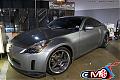
Here's a picture of my car I took the other night . I'll post the results of the testing as soon as I can.

Here's the plan (please give me advice, if there's something I should do differently):
[Each test is performed under separate conditions - Duct Covered and Duct Uncovered.]
1. Idle intake temperature increase rate.
- Get the air intake temperature to a certain level relative to ambient. Stop car and allow to idle. Begin timing to determine how long it takes to increase to a set temperature. Perform 3 times.
2. Driving intake temperature decrease rate.
- From intake temperature peak, moderately accelerate to 50 mph, and time how long it takes to reach a set temperature.
3. Cruising temperature comparison.
- Drive at 65mph until intake temperature settles at final low temperature. Compare temperature under both circumstances relative to ambient and determine difference.
4. Max Mass Airflow
- Drive full throttle up to 70mph and compare the max Mass Air Flow in gm/s.
So yeah, that's the plan right now. Let me know if you have any more suggestions. I'm somewhat limited by my knowledge of Cipher and ability to measure parameters.
EDIT: SCRATCH THIS. I THINK THERE MIGHT BE A BETTER WAY TO TEST THIS - CIPHER IS A MUCH MORE COMPREHENSIVE PROGRAM THAN I THOUGHT.
Here's a picture of my car I took the other night
. I'll post the results of the testing as soon as I can.
Last edited by onagao; Apr 27, 2009 at 06:53 AM.
Thread Starter
Registered User
Joined: May 2008
Posts: 548
Likes: 2
From: Tulsa, OK
the hole-in-bumper will be harder to quantify if you don't have the correct tools.
for those that have the hole already cut, there are a couple of way in which they can justify it's benefits.
1. cover up the hole with tape
2. take intake temp readings from the MAF using an OBD2 reader
3. drive at various speeds , 20, 40, 60, 80, 100, etc and take readings.
4. if you have a gsensor of some type. althought i high untrust the readings, take whatever HP rating it says
5. repeat ~ 5 times.
repeat test with the hole uncovered and compare.
the way that the duct is designed, or any hole in the front of the car, follows simple aerodynamic principles for an object in an air stream, and that is usually there is a high pressure zone infont of an object and that typically when there is an opening, air will go where-ever it is directed. either this is to an intake box, or brake duct, or radiator, usually the front grill is where the highest pressure is.
now, with a duct of this shape (i rather like the mine's dual HR version) it will allow the air flowing upwards the nose to enter the inlet and be directed to the hole through the radiator frame and into the intake box or pop charger or short ram or whatever is there.
i would suspect that it does allow easier air flow access to those areas while at speed, but depends on the opening size.. there will be some speed unknown Xmph that may cause airflow to stall or simply not be directed into the duct due to the design... you can only check this out if you do like some fancy computational flow analysis, or tape 'stall yarns' on the nose and watch it from a car driving along side of you. (better yet, tape a yarn at the opening and see if it goes inside the duct!)
i personally think that the ducting does improve cooling of the airflow, however you could probably get the same effect if you put a hose a little lower and just routed it up to the hole through the radiator frame, and get the same effect, w/o phyiscally cutting up the stock bumper.
for those that have the hole already cut, there are a couple of way in which they can justify it's benefits.
1. cover up the hole with tape
2. take intake temp readings from the MAF using an OBD2 reader
3. drive at various speeds , 20, 40, 60, 80, 100, etc and take readings.
4. if you have a gsensor of some type. althought i high untrust the readings, take whatever HP rating it says
5. repeat ~ 5 times.
repeat test with the hole uncovered and compare.
the way that the duct is designed, or any hole in the front of the car, follows simple aerodynamic principles for an object in an air stream, and that is usually there is a high pressure zone infont of an object and that typically when there is an opening, air will go where-ever it is directed. either this is to an intake box, or brake duct, or radiator, usually the front grill is where the highest pressure is.
now, with a duct of this shape (i rather like the mine's dual HR version) it will allow the air flowing upwards the nose to enter the inlet and be directed to the hole through the radiator frame and into the intake box or pop charger or short ram or whatever is there.
i would suspect that it does allow easier air flow access to those areas while at speed, but depends on the opening size.. there will be some speed unknown Xmph that may cause airflow to stall or simply not be directed into the duct due to the design... you can only check this out if you do like some fancy computational flow analysis, or tape 'stall yarns' on the nose and watch it from a car driving along side of you. (better yet, tape a yarn at the opening and see if it goes inside the duct!)
i personally think that the ducting does improve cooling of the airflow, however you could probably get the same effect if you put a hose a little lower and just routed it up to the hole through the radiator frame, and get the same effect, w/o phyiscally cutting up the stock bumper.
Hopefully, I'll be able to get some other runs to get the full spectrum of effect this does or doesn't have. I'll post the results of the preliminary runs below in just a minute. Cipher is an amazing program.
Thread Starter
Registered User
Joined: May 2008
Posts: 548
Likes: 2
From: Tulsa, OK
Here's a quick overlay of the two 0-60 runs. Granted, with 0-60 runs, there are numerous variables in play, such as possible heat soak over time and general driving consistency. This is by no means perfect, but it's the best I could create out of a couple of 0-60 runs.
These two runs were almost back to back. I took a 1 mile lap around a certain road to get air flowing in the engine bay, stopped, started the program, and took off. I tried to get things as close as possible.
The uncovered run was 5.19 while the covered run was 5.4. I think the launch on the covered run was worse, though I tried to drop in from 3K rpm each time. (As a side note, I'm thinking that these runs were faster, because a large portion of the data recording has time running, but speed = 0 mph. I'll have to look into this. For the time being, just treat them as 0.2s apart for whatever reason.) This also resulted in the data being somewhat off at the very end on the chart.

So far, the difference is slim, and possibly relevant, but nothing from this is conclusive - there are still too many variables. I need to do more testing.
These two runs were almost back to back. I took a 1 mile lap around a certain road to get air flowing in the engine bay, stopped, started the program, and took off. I tried to get things as close as possible.
The uncovered run was 5.19 while the covered run was 5.4. I think the launch on the covered run was worse, though I tried to drop in from 3K rpm each time. (As a side note, I'm thinking that these runs were faster, because a large portion of the data recording has time running, but speed = 0 mph. I'll have to look into this. For the time being, just treat them as 0.2s apart for whatever reason.) This also resulted in the data being somewhat off at the very end on the chart.
So far, the difference is slim, and possibly relevant, but nothing from this is conclusive - there are still too many variables. I need to do more testing.
Last edited by onagao; Apr 26, 2009 at 08:23 PM.

Interesting. When this thread first started, I thought 2 things: 1) No, there will not be any performance gains, and if there are, they will be very small 2) This guy is going to get flamed for all the right reasons!!!
Well, you have proven me wrong on atleast the second one, you have saved yourself nicely! As for the performance gains, you are going through alot of work to prove minimal gains, but I commend your efforts. Keep up the good work.
Well, you have proven me wrong on atleast the second one, you have saved yourself nicely! As for the performance gains, you are going through alot of work to prove minimal gains, but I commend your efforts. Keep up the good work.



Here's a quick overlay of the two 0-60 runs. Granted, with 0-60 runs, there are numerous variables in play, such as possible heat soak over time and general driving consistency. This is by no means perfect, but it's the best I could create out of a couple of 0-60 runs.
These two runs were almost back to back. I took a 1 mile lap around a certain road to get air flowing in the engine bay, stopped, started the program, and took off. I tried to get things as close as possible.
The uncovered run was 5.19 while the covered run was 5.4. I think the launch on the covered run was worse, though I tried to drop in from 3K rpm each time. (As a side note, I'm thinking that these runs were faster, because a large portion of the data recording has time running, but speed = 0 mph. I'll have to look into this. For the time being, just treat them as 0.2s apart for whatever reason.) This also resulted in the data being somewhat off at the very end on the chart.
So far, the difference is slim, and possibly relevant, but nothing from this is conclusive - there are still too many variables. I need to do more testing.
These two runs were almost back to back. I took a 1 mile lap around a certain road to get air flowing in the engine bay, stopped, started the program, and took off. I tried to get things as close as possible.
The uncovered run was 5.19 while the covered run was 5.4. I think the launch on the covered run was worse, though I tried to drop in from 3K rpm each time. (As a side note, I'm thinking that these runs were faster, because a large portion of the data recording has time running, but speed = 0 mph. I'll have to look into this. For the time being, just treat them as 0.2s apart for whatever reason.) This also resulted in the data being somewhat off at the very end on the chart.
So far, the difference is slim, and possibly relevant, but nothing from this is conclusive - there are still too many variables. I need to do more testing.
Now log 1 thru 5 of what chebosto says
Thread Starter
Registered User
Joined: May 2008
Posts: 548
Likes: 2
From: Tulsa, OK
Thanks. I think I can isolate some variables by eliminating shifting. I think I might be able to get better/more reliable data by doing some 3rd gear 20-80 (or 90) mph runs. That way, I get a broad range of data and can eliminate any user error - all I have to do is just floor it. The last thing I want to do is get in the way of data. Also, that way I can get values at 20,30,40, etc. as was suggested earlier. Also, I should be able to see time differences to see if one is faster than the other (which, if there's any high-speed performance gain, that's where it would most likely show).
Then, I'll measure cruising temperatures to see if being open really does make the engine bay closer to ambient (it did when I was just eyeballing it). Beyond that, I think I'd just want to be able to measure how quickly it cools down once it starts driving, which is completely doable, as well.
I just need the time....
Then, I'll measure cruising temperatures to see if being open really does make the engine bay closer to ambient (it did when I was just eyeballing it). Beyond that, I think I'd just want to be able to measure how quickly it cools down once it starts driving, which is completely doable, as well.
I just need the time....


Thanks. I think I can isolate some variables by eliminating shifting. I think I might be able to get better/more reliable data by doing some 3rd gear 20-80 (or 90) mph runs. That way, I get a broad range of data and can eliminate any user error - all I have to do is just floor it. The last thing I want to do is get in the way of data. Also, that way I can get values at 20,30,40, etc. as was suggested earlier. Also, I should be able to see time differences to see if one is faster than the other (which, if there's any high-speed performance gain, that's where it would most likely show).
Then, I'll measure cruising temperatures to see if being open really does make the engine bay closer to ambient (it did when I was just eyeballing it). Beyond that, I think I'd just want to be able to measure how quickly it cools down once it starts driving, which is completely doable, as well.
I just need the time....
Then, I'll measure cruising temperatures to see if being open really does make the engine bay closer to ambient (it did when I was just eyeballing it). Beyond that, I think I'd just want to be able to measure how quickly it cools down once it starts driving, which is completely doable, as well.
I just need the time....
Trying to measure that power , well thats a PITA
Thread Starter
Registered User
Joined: May 2008
Posts: 548
Likes: 2
From: Tulsa, OK
I think I could do that, but gosh it would take forever... I'd have to wait until intake air temps got back up to the high level (90-100 degrees) between each run.