


Stroker Kit Ii Visit To Aebs Pics


Registered User
Joined: Apr 2004
Posts: 2
Likes: 0
From: san diego

Responses to many of your questions are answered here.
The formula for piston speed ( feet per minute ) is:
stroke (millimeters) x rpm (engine speed) / 153
The formula for kinetic energy is 0.5 x M x V^2, where M is the mass of the piston and connecting rods assembly, and V is the speed of the piston and Connecting rod assembly.
I will list the general guide for piston speeds. It is general because there are factors in involved with regard to the weight of the pistons and connecting rods ( kinetic energy ).
With forged (standard steel ) it is recommended that you do not exceed 4400 feet per minute for endurance road racing, and 6000 feet per minute for drag racing.
Now you need to examine the construction of the forged crankshafts. How much overlap is there between the bearing journals, how thick is the material between the journals, how much counterweights are used for properly dampening the destructive harmonic frequencies, what is the diameter of the bearing journals ( the larger the more oil cushion it creates, thus preventing metal to metal contact ). For instance, the Honda NSX has only 0.140 inches of material between the first two connecting rod bearing journals, and at high horsepower above 1000 it breaks at this junction. Two of current high profile drag racers in the import scene have been battling this problem. The v-6 Toyotas and GM's have this problem too. The Nissan VQ35 does not have this problem at this junction because it is 0.710 inches thick between the first two connection rod journals.
The piston speed ultimately depend on the kinetic energy of the moving assembly. Yes, lighter is better like using Titanium connecting rods. The piston is 101.5 mm (3.996 inches) for the naturally aspirated application. For turbo it is 100 mm. The NA piston is extremely light for reasons mentioned above with many secret features built in. I don't know how many of you follow nascar, but for many years they have been running 3.5 inches ( 88.9 millimeters ) stroke with pistons well above 4.00 inches in diameter. Their engines speeds were all in the 9000 rpm range. The rpm limiting factors on these engines were more due to the flexing of the rocker arms push rods. Yes these engines did have billet crankshaft. In the same way, the AEBS crankshaft is made from 9325 billet steel, the same material used in today's 6000 plus horsepower topfuel, and funny drag racing engines. The conventional (still very strong ) steel is 4340 cromoly steel.
With regard to the rod ratio's, these have both their pro's and con's. A long rod ratio creates a longer piston dwelling at TDC, which benefits Naturally aspirated drag racing engines for high rpm horsepower but sometimes at the expense of low to mid range horsepower. It could be detrimental for Forced Induction, since a longer dwell time creates extremely high chances of Detonation at TDC due to overprolonged pressures, this was discovered by the Funny Car and Top Fuel racing engines 20 years ago ( as you see, technology is often nothing new because we are often reinventing the wheel).
Many IRL's have reduced their rod ratio's becaused they suffered from mid range torque coming out of the corners.
A shorter rod ratio has a longer piston dwell at BDC.
The Nissan VQ35 block is constructed from a high pressure die casting procedure and it consists from high density Aluminum using 4 bolt mains with a longitudinal girdle to support the main caps. With the AEBS sleeves, you can push over 1500 horsepower easily. These sleeve designs are exclusive to AEBS since they own the U.S. Patten rights. Imagine this, AEBS has pushed 1200 horsepower on 4 cylinder 2.2 liter prelude motors with similar designed blocks and sleeves. On top on that , the Honda Prelude block do not even have 4 bolt mains.
The Toyota 2JZ crankshaft is an inline 6 style and whenever number 1 cylinder fires, the crankshaft undergoes serious flexing when this power is transferred to the flywheel. That's why you will never see an inline 8 Topfuel or Funny Car racing engine, just horrible flexing with detrimental harmonic vibrations.
Furthermore, just with Top fuel racing engines, the blocks are made from Aluminum to absorp harmonic vibrations thus reducing cracking, the Toyota 2jz is made from cast iron.
If any of you are really serious about high performance, you should consider running bigger oversize intake and exhaust valves for higher flow, porting the cylinder heads, replacing the valve guides and seats with nickel aluminum bronze machined ones that dissipate the heat faster and reduces the friction.
Also, use aftermarket camshafts that use Genuine Nissan motor corporation camcores such As Tomei. All these parts an processes are available through AEBS. Many aftermarket camshafts that use Chilled cast cores are known for breaking and cracking.
In conclusion, If you are not really interested in engine performance, knowing the how and whats, just ignore this whole message. It was not intended to bore you, just to add some common basic elementary engine information to you wizzards on this forum , it was probably information that you already knew a long time ago.
Nisseng
The formula for piston speed ( feet per minute ) is:
stroke (millimeters) x rpm (engine speed) / 153
The formula for kinetic energy is 0.5 x M x V^2, where M is the mass of the piston and connecting rods assembly, and V is the speed of the piston and Connecting rod assembly.
I will list the general guide for piston speeds. It is general because there are factors in involved with regard to the weight of the pistons and connecting rods ( kinetic energy ).
With forged (standard steel ) it is recommended that you do not exceed 4400 feet per minute for endurance road racing, and 6000 feet per minute for drag racing.
Now you need to examine the construction of the forged crankshafts. How much overlap is there between the bearing journals, how thick is the material between the journals, how much counterweights are used for properly dampening the destructive harmonic frequencies, what is the diameter of the bearing journals ( the larger the more oil cushion it creates, thus preventing metal to metal contact ). For instance, the Honda NSX has only 0.140 inches of material between the first two connecting rod bearing journals, and at high horsepower above 1000 it breaks at this junction. Two of current high profile drag racers in the import scene have been battling this problem. The v-6 Toyotas and GM's have this problem too. The Nissan VQ35 does not have this problem at this junction because it is 0.710 inches thick between the first two connection rod journals.
The piston speed ultimately depend on the kinetic energy of the moving assembly. Yes, lighter is better like using Titanium connecting rods. The piston is 101.5 mm (3.996 inches) for the naturally aspirated application. For turbo it is 100 mm. The NA piston is extremely light for reasons mentioned above with many secret features built in. I don't know how many of you follow nascar, but for many years they have been running 3.5 inches ( 88.9 millimeters ) stroke with pistons well above 4.00 inches in diameter. Their engines speeds were all in the 9000 rpm range. The rpm limiting factors on these engines were more due to the flexing of the rocker arms push rods. Yes these engines did have billet crankshaft. In the same way, the AEBS crankshaft is made from 9325 billet steel, the same material used in today's 6000 plus horsepower topfuel, and funny drag racing engines. The conventional (still very strong ) steel is 4340 cromoly steel.
With regard to the rod ratio's, these have both their pro's and con's. A long rod ratio creates a longer piston dwelling at TDC, which benefits Naturally aspirated drag racing engines for high rpm horsepower but sometimes at the expense of low to mid range horsepower. It could be detrimental for Forced Induction, since a longer dwell time creates extremely high chances of Detonation at TDC due to overprolonged pressures, this was discovered by the Funny Car and Top Fuel racing engines 20 years ago ( as you see, technology is often nothing new because we are often reinventing the wheel).
Many IRL's have reduced their rod ratio's becaused they suffered from mid range torque coming out of the corners.
A shorter rod ratio has a longer piston dwell at BDC.
The Nissan VQ35 block is constructed from a high pressure die casting procedure and it consists from high density Aluminum using 4 bolt mains with a longitudinal girdle to support the main caps. With the AEBS sleeves, you can push over 1500 horsepower easily. These sleeve designs are exclusive to AEBS since they own the U.S. Patten rights. Imagine this, AEBS has pushed 1200 horsepower on 4 cylinder 2.2 liter prelude motors with similar designed blocks and sleeves. On top on that , the Honda Prelude block do not even have 4 bolt mains.
The Toyota 2JZ crankshaft is an inline 6 style and whenever number 1 cylinder fires, the crankshaft undergoes serious flexing when this power is transferred to the flywheel. That's why you will never see an inline 8 Topfuel or Funny Car racing engine, just horrible flexing with detrimental harmonic vibrations.
Furthermore, just with Top fuel racing engines, the blocks are made from Aluminum to absorp harmonic vibrations thus reducing cracking, the Toyota 2jz is made from cast iron.
If any of you are really serious about high performance, you should consider running bigger oversize intake and exhaust valves for higher flow, porting the cylinder heads, replacing the valve guides and seats with nickel aluminum bronze machined ones that dissipate the heat faster and reduces the friction.
Also, use aftermarket camshafts that use Genuine Nissan motor corporation camcores such As Tomei. All these parts an processes are available through AEBS. Many aftermarket camshafts that use Chilled cast cores are known for breaking and cracking.
In conclusion, If you are not really interested in engine performance, knowing the how and whats, just ignore this whole message. It was not intended to bore you, just to add some common basic elementary engine information to you wizzards on this forum , it was probably information that you already knew a long time ago.
Nisseng
Registered User
Joined: Sep 2003
Posts: 790
Likes: 0
From: Del Rio, Texas
Originally posted by nisseng
With the AEBS sleeves, you can push over 1500 horsepower easily.
With the AEBS sleeves, you can push over 1500 horsepower easily.
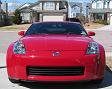
(Sorry, couldn't find a legal one. Actually, there's a good story, that's me following my best friend's new C5. We had just been passed by an RSX while we were, uh, draining fluids, by the side of the road in New Mexico. He honked and flipped us off, so we caught up in short order.)


Charter Member #34
Joined: May 2002
Posts: 1,228
Likes: 0
From: -
Originally posted by nisseng
In conclusion, If you are not really interested in engine performance, knowing the how and whats, just ignore this whole message. It was not intended to bore you, just to add some common basic elementary engine information to you wizzards on this forum , it was probably information that you already knew a long time ago.
Nisseng
In conclusion, If you are not really interested in engine performance, knowing the how and whats, just ignore this whole message. It was not intended to bore you, just to add some common basic elementary engine information to you wizzards on this forum , it was probably information that you already knew a long time ago.
Nisseng
should have put this first

j/k... good information... i enjoyed reading it!
m

Registered User
Joined: Apr 2004
Posts: 416
Likes: 0
From: Houston, Tx
There is already a 1700 hp 3.5 liter 350z. They mentioned it but no technial information about it. Ice said it on maxima.org
It is in the June issue of turbo magazine.
I think the VQ will be the next super engine like the RB and 2JZ.
It is in the June issue of turbo magazine.
I think the VQ will be the next super engine like the RB and 2JZ.


Registered User
Joined: Jul 2002
Posts: 4,052
Likes: 1
From: Charlotte, NC
Am I correct in understanding this would upgrade the motor to 4.3L? Did I read that correctly???
Hmm... me thinks I see stage 2 for Frankenstein. Must... save... money... for next year...
4.3L ... 8.5:1... more boost... sweeeeeeet
Hmm... me thinks I see stage 2 for Frankenstein. Must... save... money... for next year...
4.3L ... 8.5:1... more boost... sweeeeeeet

Thread Starter
Registered User
Joined: Oct 2003
Posts: 345
Likes: 0
From: ca
Originally posted by mcduck
Am I correct in understanding this would upgrade the motor to 4.3L? Did I read that correctly???
Hmm... me thinks I see stage 2 for Frankenstein. Must... save... money... for next year...
4.3L ... 8.5:1... more boost... sweeeeeeet
Am I correct in understanding this would upgrade the motor to 4.3L? Did I read that correctly???
Hmm... me thinks I see stage 2 for Frankenstein. Must... save... money... for next year...
4.3L ... 8.5:1... more boost... sweeeeeeet

Thread Starter
Registered User
Joined: Oct 2003
Posts: 345
Likes: 0
From: ca
Originally posted by Grommit
Hmm... let's see here:
Brand new 2004 Yamaha YZF-R1 or this stroker kit for my Z?
Choices choices... *sigh*
Hmm... let's see here:
Brand new 2004 Yamaha YZF-R1 or this stroker kit for my Z?
Choices choices... *sigh*
No brainer R1! Im getting the R6 special edition to match my silver chrome................man That R1 is one bad a$$ liter bike


New Member
Joined: Apr 2003
Posts: 1,114
Likes: 0
From: In my car, Arkansas
LOL, upgrade your car instead of get a bike, cause you can drive the car all the time, not just during great weather.
Lot of excitement in this trend, would like to know some hard numbers that are behind this mod. If you have a TT already, this is something you can get after your stock internals give out. And if you have the means, you can get them both right now. Still don't know though, if you could have one or the other, I think I might rather have the TT, then upgrade the internals when I NEED to.
Lot of excitement in this trend, would like to know some hard numbers that are behind this mod. If you have a TT already, this is something you can get after your stock internals give out. And if you have the means, you can get them both right now. Still don't know though, if you could have one or the other, I think I might rather have the TT, then upgrade the internals when I NEED to.
Last edited by little_rod; Apr 15, 2004 at 07:15 PM.

With this kind of power .... who is gonna reinforce the driveline .... I don't think these halfshafts are gonna hold up for 800whp ... not that anyone knows yet ... do they? and our tranny? clutch?
i know the stocker is giving out on the TT guys with 420whp ...
either way ... this next year looks to be an awesome time for VQ35 development and establishment as one heck of a motor
i am again happy i bought the Z .... not that i ever wasnt ... things are just getting better and better now
i know the stocker is giving out on the TT guys with 420whp ...
either way ... this next year looks to be an awesome time for VQ35 development and establishment as one heck of a motor
i am again happy i bought the Z .... not that i ever wasnt ... things are just getting better and better now


Registered User
Joined: May 2003
Posts: 186
Likes: 0
From: In my car
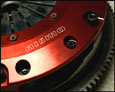
Yeah i'm very curious as to who's going to come out with a clutch that can support the union of FI and the stroker. I know the JWT one i have does to like 550 but theres no way those two wont surpase that. I'll look into what all would need to be changed and get back to you all.


That doesn't sound right that he is dissing the 2JZ for "lack of balance" when straight sixes are naturally balanced... and said to be able to rev over 8k-9k if it weren't for the oiling...
I would like him to explain why there are so many 1000+hp Supras running around with stock cranks (typically only change pistons and rods)...
The 2JZ is a straight six... the vibrations aren't as prevolent as a V6... thus I would imagine reducing the need to dampen them.
That is interesting considering at the end he says this kit will support 26psi...
I've never heard of someone stroking a motor to make it rev better... they may have strengthened it enough that it can do both... but the stroke shouldn't be the reason for higher revs.
It is an interesting read... but I am not sure of his reasoning. What does everyone else think?
If it does what he says it does... I guess it's a good price for what you get.
The Toyota 2JZ crankshaft is an inline 6 style and whenever number 1 cylinder fires, the crankshaft undergoes serious flexing when this power is transferred to the flywheel. That's why you will never see an inline 8 Topfuel or Funny Car racing engine, just horrible flexing with detrimental harmonic vibrations.
Furthermore, just with Top fuel racing engines, the blocks are made from Aluminum to absorb harmonic vibrations thus reducing cracking, the Toyota 2jz is made from cast iron.
Furthermore, just with Top fuel racing engines, the blocks are made from Aluminum to absorb harmonic vibrations thus reducing cracking, the Toyota 2jz is made from cast iron.
The 2JZ is a straight six... the vibrations aren't as prevolent as a V6... thus I would imagine reducing the need to dampen them.
It could be detrimental for Forced Induction, since a longer dwell time creates extremely high chances of Detonation at TDC due to over prolonged pressures, this was discovered by the Funny Car and Top Fuel racing engines 20 years ago ( as you see, technology is often nothing new because we are often reinventing the wheel).
I've never heard of someone stroking a motor to make it rev better... they may have strengthened it enough that it can do both... but the stroke shouldn't be the reason for higher revs.
It is an interesting read... but I am not sure of his reasoning. What does everyone else think?
If it does what he says it does... I guess it's a good price for what you get.