


how would you go about converting to dual TBs and Dual MAFs???


Thread Starter
Registered User
iTrader: (8)
Joined: Apr 2003
Posts: 3,869
Likes: 4
From: Vero Beach, Florida
 how would you go about converting to dual TBs and Dual MAFs???
I have been kicking around some ideas on a dual TB manifold for the DE motor. I know that SpeedForce has accomplished it already, but does anyone else have any ideas on how to make it work with the stock ECU controlling the DBW?
thanks,
Andrew
thanks,
Andrew

Thread Starter
Registered User
iTrader: (8)
Joined: Apr 2003
Posts: 3,869
Likes: 4
From: Vero Beach, Florida
hehehehe..........not exactl the answer I was looking for.....
 I was hoping for an answer on how to get the ecu to drive both TBs....and how to split the MAF signal. I wuld imagine that some sort of module might need to be created to do this task.... ..dunno?

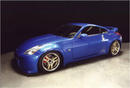
I know this dosnt answer your question but check out the "Ultimate" z33, has a quick blurb about what they did.
http://www.jdm-option.com/eng/featur...2/z33_v35.html
http://www.jdm-option.com/eng/featur...2/z33_v35.html


Maybe you just need to figure out which wires drive the motor and just tap into those to drive the second TB and let the original TB take care any of the feedback signals so the ECU still thinks it is only driving one.
Of course this would depend on whether you are only using one MAF and it is metering all of the air, if you want to do 2 intakes and 2 MAF's then it would get complicated.
Or if you want to use two intakes but only one MAF maybe something like Uprev/Osiris could scale the MAF signal down in half??
Of course this would depend on whether you are only using one MAF and it is metering all of the air, if you want to do 2 intakes and 2 MAF's then it would get complicated.
Or if you want to use two intakes but only one MAF maybe something like Uprev/Osiris could scale the MAF signal down in half??
Thread Starter
Registered User
iTrader: (8)
Joined: Apr 2003
Posts: 3,869
Likes: 4
From: Vero Beach, Florida
this is what that snippet said:
"The custom surge tank was fabricated to fit the twin throttle bodies. Stock throttle bodies and a air flow meter are each installed on the pipings. Since the ECU is stock, and the voltage was split from 0-5 volts to 2.5 volts each on the air flow meter, the injectors operate at half its capability at full throttle. Because of this, Nismo 480cc injectors were installed to make up for the lack of fuel.
The vehicle was completed right before the event. It's surprising that it even runs this well. The future of this machine should have lots of potential."
Since I am running a UTEC,I really only need to figure out the part throttle driving and MAF characteristics. This may be accomplished by only using 1 MAF and just adjusting the 0% column in the UTEC map so that it doesn't scale back for the larger than stock injectors. From that snippet, that seems pretty much like what they did on that car, too.
"The custom surge tank was fabricated to fit the twin throttle bodies. Stock throttle bodies and a air flow meter are each installed on the pipings. Since the ECU is stock, and the voltage was split from 0-5 volts to 2.5 volts each on the air flow meter, the injectors operate at half its capability at full throttle. Because of this, Nismo 480cc injectors were installed to make up for the lack of fuel.
The vehicle was completed right before the event. It's surprising that it even runs this well. The future of this machine should have lots of potential."
Since I am running a UTEC,I really only need to figure out the part throttle driving and MAF characteristics. This may be accomplished by only using 1 MAF and just adjusting the 0% column in the UTEC map so that it doesn't scale back for the larger than stock injectors. From that snippet, that seems pretty much like what they did on that car, too.

Trending Topics


Assuming dual throttle bodies in parallel so that the voltage is the same as the output signal and across both motors.
To drive the motors:
You might want to look into a simple opamp/pnp-npn transistor motor driver. You can take the input signal and spread it across two motors with the transistor network being your current source.
Tricky part is:
-heat will be an enemy
-you need a +12 and -12 source
-the output curve is fairly linear, you lose about .7 volts from the output signal to drive the transistors so keep that in mind
Feedback from the tb:
I havent looked into the control setup or output signals of the TB but it could be an analog feedback for closed look control. You could risk it an only take feedback from only one TB but you run the risk of having uneven TB openings.
I believe this would be the hardest part since the ECU only allots for 1 feedback signal. You may have to add in the feedback control for the extra TB with a PID controller and some more op-amps. Its doable but will be a tricky circuit. The PID controller would have to match the stock TB as well...........PITA
Interface the maf:
Same issue as the feedback from the TB......only one pin on the ECU.
A mechanical solution is probably the best.
To drive the motors:
You might want to look into a simple opamp/pnp-npn transistor motor driver. You can take the input signal and spread it across two motors with the transistor network being your current source.
Tricky part is:
-heat will be an enemy
-you need a +12 and -12 source
-the output curve is fairly linear, you lose about .7 volts from the output signal to drive the transistors so keep that in mind
Feedback from the tb:
I havent looked into the control setup or output signals of the TB but it could be an analog feedback for closed look control. You could risk it an only take feedback from only one TB but you run the risk of having uneven TB openings.
I believe this would be the hardest part since the ECU only allots for 1 feedback signal. You may have to add in the feedback control for the extra TB with a PID controller and some more op-amps. Its doable but will be a tricky circuit. The PID controller would have to match the stock TB as well...........PITA
Interface the maf:
Same issue as the feedback from the TB......only one pin on the ECU.
A mechanical solution is probably the best.

I would consider a much simpler design for 2 reasons:
1) Ease of implementation.
2) Part throttle response.
I would have one throttle body doing all the work until a threshold voltage is reached (say 4.5 volts) and then simply open the 2nd throttle body fully. Essentially the 2nd air intake would only be utilized for WOT usage. I think you would get the performance benefit you're looking for, the part-throttle response of a stock setup, and a greatly simplified circuit design. No feedback, no MAF - just need to adjust fueling at WOT.
With the Haltech, this would be simple - just use the programmable output to trigger the 2nd throttle body to open fully based on certain conditions (TPS, boost, etc.). You would need to have some shared post-IC piping so that air could be routed to a single TB until full flow is needed.
1) Ease of implementation.
2) Part throttle response.
I would have one throttle body doing all the work until a threshold voltage is reached (say 4.5 volts) and then simply open the 2nd throttle body fully. Essentially the 2nd air intake would only be utilized for WOT usage. I think you would get the performance benefit you're looking for, the part-throttle response of a stock setup, and a greatly simplified circuit design. No feedback, no MAF - just need to adjust fueling at WOT.
With the Haltech, this would be simple - just use the programmable output to trigger the 2nd throttle body to open fully based on certain conditions (TPS, boost, etc.). You would need to have some shared post-IC piping so that air could be routed to a single TB until full flow is needed.
Last edited by rcdash; Nov 17, 2008 at 10:29 AM.

subscribed.
im recently researching this also since i am building a big setup for my car and going to run a CJM intake manifold and build a twin inlet plenum if i can sort this issue out.
im recently researching this also since i am building a big setup for my car and going to run a CJM intake manifold and build a twin inlet plenum if i can sort this issue out.
this is what that snippet said:
"The custom surge tank was fabricated to fit the twin throttle bodies. Stock throttle bodies and a air flow meter are each installed on the pipings. Since the ECU is stock, and the voltage was split from 0-5 volts to 2.5 volts each on the air flow meter, the injectors operate at half its capability at full throttle. Because of this, Nismo 480cc injectors were installed to make up for the lack of fuel.
The vehicle was completed right before the event. It's surprising that it even runs this well. The future of this machine should have lots of potential."
Since I am running a UTEC,I really only need to figure out the part throttle driving and MAF characteristics. This may be accomplished by only using 1 MAF and just adjusting the 0% column in the UTEC map so that it doesn't scale back for the larger than stock injectors. From that snippet, that seems pretty much like what they did on that car, too.
"The custom surge tank was fabricated to fit the twin throttle bodies. Stock throttle bodies and a air flow meter are each installed on the pipings. Since the ECU is stock, and the voltage was split from 0-5 volts to 2.5 volts each on the air flow meter, the injectors operate at half its capability at full throttle. Because of this, Nismo 480cc injectors were installed to make up for the lack of fuel.
The vehicle was completed right before the event. It's surprising that it even runs this well. The future of this machine should have lots of potential."
Since I am running a UTEC,I really only need to figure out the part throttle driving and MAF characteristics. This may be accomplished by only using 1 MAF and just adjusting the 0% column in the UTEC map so that it doesn't scale back for the larger than stock injectors. From that snippet, that seems pretty much like what they did on that car, too.
1) If somewhere along the way you upgrade to the HKS F-CON V Pro, you can completely eliminate the MAF sensor (which Japtrix presently is in the process of doing on my car). The F-CON V Pro has option voltage outputs. You can use one of these option voltage outputs to simulate the MAF sensor output based on a manifold absolute pressure (MAP) vs. RPM map, and this can be feed into the ECU. On the 2003-2005 G's and Z's, pin 51 is the MAF sensor input into the ECU.
2) Using a UTEC, it may be easier to get your car to idle correctly if you use two MAF sensors. The ECU is controlling idle, even if you have an EMS. Thus, the ECU needs to receive a good MAF input signal. You can accomplish this using a simple op amp voltage adder circuit to add the output of the two MAFs. The resulting output will be (MAF1 + MAF2). This should work assuming there is a linear correspondence between Mass Air Flow and the MAF sensor outputs. Also, you can easily adjust the gain of the op amp for fine tuning using a potentiometer, and apply any offset voltages that may be needed.
If your air flow is closely balanced between the two sides of the engine, you may be able to get away with one MAF sensor, and then apply any necessary gain or voltage offset with the op amp circuit.
The circuit for this is very simple. When you get closer, PM me and I'll sketch a circuit diagram for you. You can get the parts you need from Radio Shack for probably less than $20.
Last edited by ttg35fort; Nov 17, 2008 at 03:46 PM.


For the throttle body I would wire a mosfet to trigger off the OEM TB. The signal is PWM so you shouldn't have to worry about voltage drops.
The feedback output is an analog 0-5vdc. You could add the two together (actually four as they are redundent) and then divide them in half to average them. You could also ignore the feedback of the 2nd TB as it really isn't necesarry for driving (only for detecting problems with the system).
The MAF sensor may be a bit more difficult. I would start with flow testing the MAF to see how linear it is. If it is fairly linear you can do the same thing as I mentioned above - add them together and then divide them in half. If it isn't linear you may want to consider trying to find a pair of MAFs that are better suited for the range you are operating in.
Let me know if you need any help!
The feedback output is an analog 0-5vdc. You could add the two together (actually four as they are redundent) and then divide them in half to average them. You could also ignore the feedback of the 2nd TB as it really isn't necesarry for driving (only for detecting problems with the system).
The MAF sensor may be a bit more difficult. I would start with flow testing the MAF to see how linear it is. If it is fairly linear you can do the same thing as I mentioned above - add them together and then divide them in half. If it isn't linear you may want to consider trying to find a pair of MAFs that are better suited for the range you are operating in.
Let me know if you need any help!
Thread Starter
Registered User
iTrader: (8)
Joined: Apr 2003
Posts: 3,869
Likes: 4
From: Vero Beach, Florida
For the throttle body I would wire a mosfet to trigger off the OEM TB. The signal is PWM so you shouldn't have to worry about voltage drops.
The feedback output is an analog 0-5vdc. You could add the two together (actually four as they are redundent) and then divide them in half to average them. You could also ignore the feedback of the 2nd TB as it really isn't necesarry for driving (only for detecting problems with the system).
The MAF sensor may be a bit more difficult. I would start with flow testing the MAF to see how linear it is. If it is fairly linear you can do the same thing as I mentioned above - add them together and then divide them in half. If it isn't linear you may want to consider trying to find a pair of MAFs that are better suited for the range you are operating in.
Let me know if you need any help!
The feedback output is an analog 0-5vdc. You could add the two together (actually four as they are redundent) and then divide them in half to average them. You could also ignore the feedback of the 2nd TB as it really isn't necesarry for driving (only for detecting problems with the system).
The MAF sensor may be a bit more difficult. I would start with flow testing the MAF to see how linear it is. If it is fairly linear you can do the same thing as I mentioned above - add them together and then divide them in half. If it isn't linear you may want to consider trying to find a pair of MAFs that are better suited for the range you are operating in.
Let me know if you need any help!
There are a couple of different options:
1) If somewhere along the way you upgrade to the HKS F-CON V Pro, you can completely eliminate the MAF sensor (which Japtrix presently is in the process of doing on my car). The F-CON V Pro has option voltage outputs. You can use one of these option voltage outputs to simulate the MAF sensor output based on a manifold absolute pressure (MAP) vs. RPM map, and this can be feed into the ECU. On the 2003-2005 G's and Z's, pin 51 is the MAF sensor input into the ECU.
2) Using a UTEC, it may be easier to get your car to idle correctly if you use two MAF sensors. The ECU is controlling idle, even if you have an EMS. Thus, the ECU needs to receive a good MAF input signal. You can accomplish this using a simple op amp voltage adder circuit to add the output of the two MAFs. The resulting output will be (MAF1 + MAF2). This should work assuming there is a linear correspondence between Mass Air Flow and the MAF sensor outputs. Also, you can easily adjust the gain of the op amp for fine tuning using a potentiometer, and apply any offset voltages that may be needed.
If your air flow is closely balanced between the two sides of the engine, you may be able to get away with one MAF sensor, and then apply any necessary gain or voltage offset with the op amp circuit.
The circuit for this is very simple. When you get closer, PM me and I'll sketch a circuit diagram for you. You can get the parts you need from Radio Shack for probably less than $20.
1) If somewhere along the way you upgrade to the HKS F-CON V Pro, you can completely eliminate the MAF sensor (which Japtrix presently is in the process of doing on my car). The F-CON V Pro has option voltage outputs. You can use one of these option voltage outputs to simulate the MAF sensor output based on a manifold absolute pressure (MAP) vs. RPM map, and this can be feed into the ECU. On the 2003-2005 G's and Z's, pin 51 is the MAF sensor input into the ECU.
2) Using a UTEC, it may be easier to get your car to idle correctly if you use two MAF sensors. The ECU is controlling idle, even if you have an EMS. Thus, the ECU needs to receive a good MAF input signal. You can accomplish this using a simple op amp voltage adder circuit to add the output of the two MAFs. The resulting output will be (MAF1 + MAF2). This should work assuming there is a linear correspondence between Mass Air Flow and the MAF sensor outputs. Also, you can easily adjust the gain of the op amp for fine tuning using a potentiometer, and apply any offset voltages that may be needed.
If your air flow is closely balanced between the two sides of the engine, you may be able to get away with one MAF sensor, and then apply any necessary gain or voltage offset with the op amp circuit.
The circuit for this is very simple. When you get closer, PM me and I'll sketch a circuit diagram for you. You can get the parts you need from Radio Shack for probably less than $20.
Nonetheless, the MAF signal is still needed by the factory ECU in order to control idle, but the ECU only has a single MAF sensor input. Thus, the question is how to get the ECU to operate properly as though it is receiving MAF signals from both sides of the twin intake system. Unless the F-CON V Pro has an output that adds the two MAF inputs (I don't think it does, but I could be wrong), the simplest solution is to generate an output voltage that mimics the MAF sensors, as I described above.
In my car, we are eliminating the MAF housing, and thus the MAF sensor, in order to improve the airflow between the IC and the throttle body.
Last edited by ttg35fort; Nov 18, 2008 at 04:00 AM.
I was telling QuadCam the other day that I have a rough prototype of a Nissan throttle body controller sitting on my bench. I got bored one day and had a throttle body laying around and started messing with it.
In its current state it just opens and closes the TB based on a 0-5vdc input (like the pedal). My original intention was to create a map for it so that you could adjust the opening speed/angle and completely tweak it.
I also never fully added the logic to monitor the feedback - it wouldn't take much to do that.
I would love to work on a project like this, I'll definately keep thinking about it and watching this thread.
In its current state it just opens and closes the TB based on a 0-5vdc input (like the pedal). My original intention was to create a map for it so that you could adjust the opening speed/angle and completely tweak it.
I also never fully added the logic to monitor the feedback - it wouldn't take much to do that.
I would love to work on a project like this, I'll definately keep thinking about it and watching this thread.
The F-CON does indeed support two MAF sensors. However, the stock MAF sensor for the VQ35's does not have adequate range for FI applications, and thus the F-CON fuel and ignition maps for FI VQ35's are typically based on manifold absolute pressure (MAP) vs. RPM, not MAF. Thus, the F-CON is not using the MAF signal for FI VQ35's.
Nonetheless, the MAF signal is still needed by the factory ECU in order to control idle, but the ECU only has a single MAF sensor input. Thus, the question is how to get the ECU to operate properly as though it is receiving MAF signals from both sides of the twin intake system. Unless the F-CON V Pro has an output that adds the two MAF inputs (I don't think it does, but I could be wrong), the simplest solution is to generate an output voltage that mimics the MAF sensors, as I described above.
In my car, we are eliminating the MAF housing, and thus the MAF sensor, in order to improve the airflow between the IC and the throttle body.
Nonetheless, the MAF signal is still needed by the factory ECU in order to control idle, but the ECU only has a single MAF sensor input. Thus, the question is how to get the ECU to operate properly as though it is receiving MAF signals from both sides of the twin intake system. Unless the F-CON V Pro has an output that adds the two MAF inputs (I don't think it does, but I could be wrong), the simplest solution is to generate an output voltage that mimics the MAF sensors, as I described above.
In my car, we are eliminating the MAF housing, and thus the MAF sensor, in order to improve the airflow between the IC and the throttle body.
 .
.You could still use the fake MAF output if running the dual MAFs.