


WHP vs. Crank HP ??


Thread Starter
Registered User
Joined: Feb 2007
Posts: 908
Likes: 5
From: UK
 WHP vs. Crank HP ??
Guys this a debate that i have talked about with people on out UK Nissansportz forum and not really got a good answer.
Im posting this because I have just been reading a post by sharif saying "a 600hp car would not make 475WHP on our dyno dynamics".
I was always under the idea that drivetrain loss was a % not a fixed number. so my car made 237WHP NA and is 286CHP this is 11.16 drive train loss.
So if my car made 500WHP on the same dyno it would be around 558CHP?
Some people argue to say that DTL (drive train loss) has to be a constant figure around 35bhp but i dont understand how you guys quote cars at 600WHP being near 700CHP?
Any one have a view on this ??
Im posting this because I have just been reading a post by sharif saying "a 600hp car would not make 475WHP on our dyno dynamics".
I was always under the idea that drivetrain loss was a % not a fixed number. so my car made 237WHP NA and is 286CHP this is 11.16 drive train loss.
So if my car made 500WHP on the same dyno it would be around 558CHP?
Some people argue to say that DTL (drive train loss) has to be a constant figure around 35bhp but i dont understand how you guys quote cars at 600WHP being near 700CHP?
Any one have a view on this ??

If I'm not mistaken, the average for most OEM cars is up to 25% power loss at the wheels. So for example, a 300bhp car will, assuming a 20% power loss, make about 240whp.
Now, for modded vehicles the percentage will probably not be that high, because of tuning, stuff like that. But hopefully this helps some.
Now, for modded vehicles the percentage will probably not be that high, because of tuning, stuff like that. But hopefully this helps some.
Last edited by dmroberson; Dec 19, 2009 at 01:42 AM.

Yeah but there are way too many variables to make the loss a standard %. Just like 3 cars in stock form completely identical can put up 3 different #'s on the same dyno. Also in a controlled test using the same car on 3 different dynos all 3 results will be different. Imo people have become too involved with dyno results rather than what the ultimate goal was. Dyno queens
Also in recent years it seems we are not using the crank hp # as much either, only ones using it are automakers for marketing purposes. Once you have established your #'s at the wheels does it really matter how much is at the crank. What counts is the # being put down on the pavement also known as the bottom line #. Crank hp to me is only good for engine builders using engine dynos. If we were using both figures to cut down on drive train loss that would be another story

I had this same argument on another forum the other day too. BHP is senseless and is nothing more than an inflated number that sounds good. I have heard everything from 15-25% loss.
No two engines are the same.That factory rating may not always be 100% accurate from engine to engine especially when it starts getting into higher mileage
BTW. I came up with 17.13% drivetrain loss
No two engines are the same.That factory rating may not always be 100% accurate from engine to engine especially when it starts getting into higher mileage
BTW. I came up with 17.13% drivetrain loss
Last edited by 1GR8350Z; Dec 19, 2009 at 03:12 AM.

Example a: We put a 200 horsepower motor in a car. Wheel horsepower is 180 with a drive train loss of 20 horsepower.
Example b. We put a 300 horsepower motor in the same car. No changes have been made to the drive train. We now have 280 horsepower at the wheels with a drive train loss of 20 horsepower. Same drive train - consuming the same amount of energy - same loss.
So where does this percentage loss thing come into play? Well in examples a and b we kept speed (RPM) constant. Say 6,000 RPM. Had we tested at 2,000 and 7,000 RPM, the 20 horsepower loss is no longer valid.
Energy made by the motor must go somewhere? If not the drive train then where? The energy made by the motor is converted into heat. More heat at 7,000 than 2,000 RPM - more loss. So our loss throughout the power range varies. To make matters simple we just say “Drive train loss is approximately 10 percent.”
Example b. We put a 300 horsepower motor in the same car. No changes have been made to the drive train. We now have 280 horsepower at the wheels with a drive train loss of 20 horsepower. Same drive train - consuming the same amount of energy - same loss.
So where does this percentage loss thing come into play? Well in examples a and b we kept speed (RPM) constant. Say 6,000 RPM. Had we tested at 2,000 and 7,000 RPM, the 20 horsepower loss is no longer valid.
Energy made by the motor must go somewhere? If not the drive train then where? The energy made by the motor is converted into heat. More heat at 7,000 than 2,000 RPM - more loss. So our loss throughout the power range varies. To make matters simple we just say “Drive train loss is approximately 10 percent.”

Stock everything even wheels Baseline
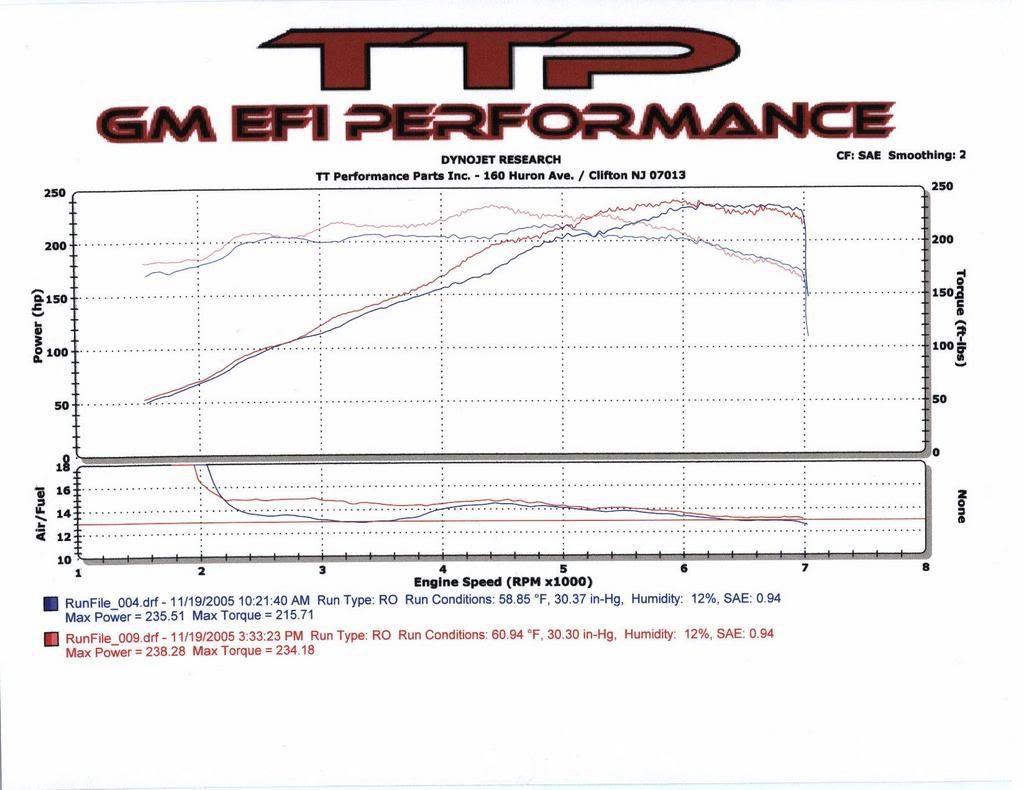
I have a Revup which i suppose to be 298HP from Factory
I have a 21% Drivetrain loss
My Last dyno tune session I put down 457WHP which would make it 553HP @ the crank.
The number to crank is calculated with the 21% drivetrain loss I have for my car from when I did my baseline.
Pretty simple don't you think
I have a Revup which i suppose to be 298HP from Factory
I have a 21% Drivetrain loss
My Last dyno tune session I put down 457WHP which would make it 553HP @ the crank.
The number to crank is calculated with the 21% drivetrain loss I have for my car from when I did my baseline.
Pretty simple don't you think
Trending Topics

You're not taking into account that when you put more force through a geartrain, the gears themselves produce more friction, lateral, and axial force on the gearshafts. This puts more load on the gear teeth and bearings, absorbing more power.
This is why you will see the drivetrain loss % go up at higher HP levels.
This is why you will see the drivetrain loss % go up at higher HP levels.


You're not taking into account that when you put more force through a geartrain, the gears themselves produce more friction, lateral, and axial force on the gearshafts. This puts more load on the gear teeth and bearings, absorbing more power.
This is why you will see the drivetrain loss % go up at higher HP levels.
This is why you will see the drivetrain loss % go up at higher HP levels.
To give you a conversion for Sharif's DD a 287chp Z puts down about 220 on his dyno so use that for the basis for his. Just multiply the crank hp * .77 for Sharif's Dyno Dynamics. 600chp * .77 = 462whp

Registered User
Joined: Oct 2009
Posts: 39
Likes: 0
From: Christchurch, New Zealand
It's all bollocks marketing. An attempt to prove that I'm a better dyno tuner than someone else simply by inflating figures. If I can produce an inflated figure that's higher than the competition some of the lesser informed will state that I can produce more HP in my tune. It's simply untrue.
21% drivetrain loss... yeah righto! Seriously you are talking about 71kw of heat or sound generated from loss alone! I'd suspect more likely to be 8-10% of whp and your revup never produced what was factory stated (that was probably not driving accessories and probably ran a very light oil for the factory tests).
By your calculations my 519whp stock internals engine produces 628 SAE HP, again on stock internals. I'm sure I would have snapped rods and burned pistons at that peak hp.
The only real meter is WHP, even then it will alter between dynos. I'll never use hp comparitives to compare engines. I'll use WHP to check changes in peak HP on one engine when I've altered something. And that's all I ever consider it worth.
21% drivetrain loss... yeah righto! Seriously you are talking about 71kw of heat or sound generated from loss alone! I'd suspect more likely to be 8-10% of whp and your revup never produced what was factory stated (that was probably not driving accessories and probably ran a very light oil for the factory tests).
By your calculations my 519whp stock internals engine produces 628 SAE HP, again on stock internals. I'm sure I would have snapped rods and burned pistons at that peak hp.
The only real meter is WHP, even then it will alter between dynos. I'll never use hp comparitives to compare engines. I'll use WHP to check changes in peak HP on one engine when I've altered something. And that's all I ever consider it worth.


I had my car on a dyno that calculates crank horsepower by measuring the rolling resistance during deceleration. It made 228 at the wheels and calculated to be 263 at the crank. That's a 13% loss through the powertrain.
I thought the power was a bit low, but the guy said you have to replicate perfect conditions to get the same power the factory claims.
This was done at 1008mBar and 25oC. If you had higher air pressure (or lower, i cant remember) and another 15 degrees cooler you would see much better power numbers, probably close to what the manufacturer claims.
I thought the power was a bit low, but the guy said you have to replicate perfect conditions to get the same power the factory claims.
This was done at 1008mBar and 25oC. If you had higher air pressure (or lower, i cant remember) and another 15 degrees cooler you would see much better power numbers, probably close to what the manufacturer claims.
Last edited by ReV2Red; Dec 19, 2009 at 10:44 AM.

Nissans crank numbers are a tad high for the 350Z the engine was run with out accesorries so the crank number they got/published was/is higher than most people can replicate.
Registered User
Joined: Oct 2009
Posts: 39
Likes: 0
From: Christchurch, New Zealand
I had my car on a dyno that calculates crank horsepower by measuring the rolling resistance during deceleration. It made 228 at the wheels and calculated to be 263 at the crank. That's a 13% loss through the powertrain.
I thought the power was a bit low, but the guy said you have to replicate perfect conditions to get the same power the factory claims.
This was done at 1008mBar and 25oC. If you had higher air pressure (or lower, i cant remember) and another 15 degrees cooler you would see much better power numbers, probably close to what the manufacturer claims.
I thought the power was a bit low, but the guy said you have to replicate perfect conditions to get the same power the factory claims.
This was done at 1008mBar and 25oC. If you had higher air pressure (or lower, i cant remember) and another 15 degrees cooler you would see much better power numbers, probably close to what the manufacturer claims.

Great info in here....this past April, my car put down 248whp on SP's Dyno. That was with Fast Intentions CB, Berk HFC, MD 5/16 ISO spacer, K&N Filter, Stillen Grounding Kit and my 5AT.
Using the 21% PT loss formula Glex posted ^ ^ that would mean my car output about 300chp including the 5AT parasitic loss.....
What would my baseline numbers be if I ran a 6MT instead of a 5AT?
Using the 21% PT loss formula Glex posted ^ ^ that would mean my car output about 300chp including the 5AT parasitic loss.....
What would my baseline numbers be if I ran a 6MT instead of a 5AT?
Last edited by tiguy99; Dec 19, 2009 at 01:49 PM.
Thread Starter
Registered User
Joined: Feb 2007
Posts: 908
Likes: 5
From: UK
Thanks for the replys guys.
Some people are missing the point of this thread. Im not arsed about dyno numbers at all im trying to work out if drive train loss increases with engine power output.
Im sure this thread will help people understand it too!
Some people are missing the point of this thread. Im not arsed about dyno numbers at all im trying to work out if drive train loss increases with engine power output.
Im sure this thread will help people understand it too!
I think the only way to truly know is to put the engine on a engine dyno then install the motor in the car and then put it on the rollers

Registered User
Joined: Oct 2009
Posts: 39
Likes: 0
From: Christchurch, New Zealand
Using the 21% listed above my stock internal engine produces 628 flywheel hp... bollocks.