


Shortblock Build


I dont think anyone has reached the limit of the HR gasket yet, with L19's they can be as strong as any other gasket IMO, theres a dude running 9's with HR gasket and L19.
The best part about the HR gasket is the coolant passages, they are evenly distributed to all cylinder, vs. the DE which is on one cylinder. Plus its cheaper than any other gasket.
If i were to do my build again, I would have put L19's. I went with HR head bolts which should be good to about low 600's(there was headlift on someons motor north of 600whp). on my FWD I wont really have much usable power passed that, not even at 500. So im not THAT regretful but I still would have done the stronger studs just to know that i CAN make more power without worrying about head lift, in your case, try going with the strongest studs l19
The best part about the HR gasket is the coolant passages, they are evenly distributed to all cylinder, vs. the DE which is on one cylinder. Plus its cheaper than any other gasket.
If i were to do my build again, I would have put L19's. I went with HR head bolts which should be good to about low 600's(there was headlift on someons motor north of 600whp). on my FWD I wont really have much usable power passed that, not even at 500. So im not THAT regretful but I still would have done the stronger studs just to know that i CAN make more power without worrying about head lift, in your case, try going with the strongest studs l19
 Ive already got the L19s as well. Will it be obvious to the machinist what changes to make when using the HR gaskets? Head gasket is the LAST place to skimp out but if the L19s are what makes the difference then i should be ok.

No the machinist wont know what to do as far as modifying, the HR gasket drops in just like anyother gasket, you dont have to modify anything to make the gasket fit, but you do have to increase the flow to the head n gasket.
JWT describes exactly what to do, read this: http://www.jimwolftechnology.com/wol...HEAD_BOLTS.pdf
and they also compare the HR with the DE gaskets and their differences.
ur welcome lol


Registered User
Joined: Feb 2010
Posts: 42
Likes: 0
From: WA
You guys calculate a % for drivetrain loss?
So if I dyno a stock Z and get 220 (average) at the wheels and the factory says its 287 at the crank then I've lost 67 horsepower or roughly 23% of my power.
If I then build the bottom end and turbo it and dyno at 769whp how does my % loss go down to 15% with a loss of 131hp?
Assuming a new clutch, lighter rods and pistons etc the system should be more efficient than stock therefore it should also have less parasitic loss. It should lose less than the original 67hp lost in the first dyno, not more.
The same system is being used yet we are calculating more loss at a higher output? Makes no sense.
Am I missing something?
769whp + 67hp loss = 836hp = 8% loss
You guys calculate a % for drivetrain loss?
So if I dyno a stock Z and get 220 (average) at the wheels and the factory says its 287 at the crank then I've lost 67 horsepower or roughly 23% of my power.
If I then build the bottom end and turbo it and dyno at 769whp how does my % loss go down to 15% with a loss of 131hp?
Assuming a new clutch, lighter rods and pistons etc the system should be more efficient than stock therefore it should also have less parasitic loss. It should lose less than the original 67hp lost in the first dyno, not more.
The same system is being used yet we are calculating more loss at a higher output? Makes no sense.
Am I missing something?
769whp + 67hp loss = 836hp = 8% loss
So if I dyno a stock Z and get 220 (average) at the wheels and the factory says its 287 at the crank then I've lost 67 horsepower or roughly 23% of my power.
If I then build the bottom end and turbo it and dyno at 769whp how does my % loss go down to 15% with a loss of 131hp?
Assuming a new clutch, lighter rods and pistons etc the system should be more efficient than stock therefore it should also have less parasitic loss. It should lose less than the original 67hp lost in the first dyno, not more.
The same system is being used yet we are calculating more loss at a higher output? Makes no sense.
Am I missing something?
769whp + 67hp loss = 836hp = 8% loss

Yep. Rented my block plate from Shariff when I had mine bored and honed. My machine shop said that our blocks were very good as it wasn't off by much without the block plate, but he was glad that there was one available to use.

Registered User
Joined: Oct 2007
Posts: 1,891
Likes: 1
From: Chicago
OMG wow.
The only way to measure actual engine brake horsepower (thats the horsepower at the flywheel) is to have the engine on an engine dyno (very expensive).
The power that actually matters is the power hitting the ground (rear wheel horsepower, for rear wheel drive car).
The concesus is that the 6spd's generally lose about 15% of power through the drivetrain (this comes from rotating the flywheel, clutch, transmission, driveshaft, halfshafts, wheels, etc. Also from friction in the gears of the trans and diff. Also from angle changes in the driveshaft).
So My car made 769 rear wheel horspower. 769/.85 = 904 horsepower at the flywheel (again its making an assumption that the car is using 15% of the power in the drivetrain which is pretty much a universal agreement).
Tom
The only way to measure actual engine brake horsepower (thats the horsepower at the flywheel) is to have the engine on an engine dyno (very expensive).
The power that actually matters is the power hitting the ground (rear wheel horsepower, for rear wheel drive car).
The concesus is that the 6spd's generally lose about 15% of power through the drivetrain (this comes from rotating the flywheel, clutch, transmission, driveshaft, halfshafts, wheels, etc. Also from friction in the gears of the trans and diff. Also from angle changes in the driveshaft).
So My car made 769 rear wheel horspower. 769/.85 = 904 horsepower at the flywheel (again its making an assumption that the car is using 15% of the power in the drivetrain which is pretty much a universal agreement).
Tom
You guys calculate a % for drivetrain loss?
So if I dyno a stock Z and get 220 (average) at the wheels and the factory says its 287 at the crank then I've lost 67 horsepower or roughly 23% of my power.
If I then build the bottom end and turbo it and dyno at 769whp how does my % loss go down to 15% with a loss of 131hp?
Assuming a new clutch, lighter rods and pistons etc the system should be more efficient than stock therefore it should also have less parasitic loss. It should lose less than the original 67hp lost in the first dyno, not more.
The same system is being used yet we are calculating more loss at a higher output? Makes no sense.
Am I missing something?
769whp + 67hp loss = 836hp = 8% loss
So if I dyno a stock Z and get 220 (average) at the wheels and the factory says its 287 at the crank then I've lost 67 horsepower or roughly 23% of my power.
If I then build the bottom end and turbo it and dyno at 769whp how does my % loss go down to 15% with a loss of 131hp?
Assuming a new clutch, lighter rods and pistons etc the system should be more efficient than stock therefore it should also have less parasitic loss. It should lose less than the original 67hp lost in the first dyno, not more.
The same system is being used yet we are calculating more loss at a higher output? Makes no sense.
Am I missing something?
769whp + 67hp loss = 836hp = 8% loss

We get your calculation methods Thom00, we just disagree with drivetrain losses increasing. It takes 60-70 horses to drive the wheels, losses with all things in the drivetrain unchanged should remain constant. Regardless good job on building some serious power.
Registered User
Joined: Oct 2007
Posts: 1,891
Likes: 1
From: Chicago
I've often wondered the same thing.......but others have shown (not on here) it is not a constant. I don't think it correlates to 15% across the board, but it is the accepted calculation.
Tom
Tom
Armlocker, watch-out with the decking of the block. Sure its is a great thing to do but the way the engine is made doesn't allow for much material to be removed. It has the timing cover that fits only tight clearances, so if you get an agressive deck now and then have to rebuild in the future and have warpage you could have a problem.
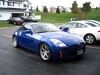
Does it make sense that my Honda fit makes 117 bhp but puts down 95 whp? Why does it take my honda only 22 hp to turn the wheels and it takes my Z, upwards of 60 or more? Is my honda just that more efficient? If you look at the 22 vs 60 hp numbers, one could make the argument that it is. But if you look at the % lost, the same argument could not be made
Last edited by Zivman; Mar 5, 2010 at 12:33 PM.
I wish, i'm near Toronto Canada. haha. Still trying to find a shop up here with a VQ torque plate.
I WANT to do as little as possible, just wanted to hear from people who have done previous builds if there is something they wish they did the first time.
I'm not set on a specific headgasket yet, whats the power limitation of the HR gasket?
I WANT to do as little as possible, just wanted to hear from people who have done previous builds if there is something they wish they did the first time.
I'm not set on a specific headgasket yet, whats the power limitation of the HR gasket?
Sharif will ship the plate to you. I live in MN and had him ship to my machine shop
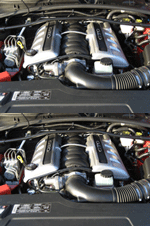

For best results on a shortblock, contact a shop that builds engines (better if they have experience with VQs) tell them what your whp goals are and them let them tell you what components to get and what needs to be done.
I learned the hard way on this. The best results are found when you let the engine builders do what they do best. The steps are simple:
1. Reseach, contact and then decide on a shop
2. Show up with a deposit and drop off the block
3. Show up with final payment and take home the assembled shortblock with a full spec sheet
I learned the hard way on this. The best results are found when you let the engine builders do what they do best. The steps are simple:
1. Reseach, contact and then decide on a shop
2. Show up with a deposit and drop off the block
3. Show up with final payment and take home the assembled shortblock with a full spec sheet
For best results on a shortblock, contact a shop that builds engines (better if they have experience with VQs) tell them what your whp goals are and them let them tell you what components to get and what needs to be done.
I learned the hard way on this. The best results are found when you let the engine builders do what they do best. The steps are simple:
1. Reseach, contact and then decide on a shop
2. Show up with a deposit and drop off the block
3. Show up with final payment and take home the assembled shortblock with a full spec sheet
I learned the hard way on this. The best results are found when you let the engine builders do what they do best. The steps are simple:
1. Reseach, contact and then decide on a shop
2. Show up with a deposit and drop off the block
3. Show up with final payment and take home the assembled shortblock with a full spec sheet
What ever happened to car enthusiast working on their own cars, and building their own engines. Gotta start somewhere. Most ofcourse have the money to just let a good shop do it all and build anything, but whats the fun in that?
some however are not mechanically inclined and just want to do a build, thats understandable but if someone wants to do the work themselves, nothing wrong with them being a newb asking all the questions and doing research.
Does it make sense that my Honda fit makes 117 bhp but puts down 95 whp? Why does it take my honda only 22 hp to turn the wheels and it takes my Z, upwards of 60 or more? Is my honda just that more efficient? If you look at the 22 vs 60 hp numbers, one could make the argument that it is. But if you look at the % lost, the same argument could not be made
Armlocker, on the head gasket do your research...I don't think its worth the additional hassle for an NA motor. The additional cooling capacity is nice but the engine and stock raditor hold up pretty well with out FI. However, I would suggest putting an oil cooler on with the money you save on mod'ing for the HR head gasket.
Armlocker, on the head gasket do your research...I don't think its worth the additional hassle for an NA motor. The additional cooling capacity is nice but the engine and stock raditor hold up pretty well with out FI. However, I would suggest putting an oil cooler on with the money you save on mod'ing for the HR head gasket.
Are there any actual machinists on these boards that do engine work for a living?
Actually it does make sense why a FWD/Front Engine car will generally lose less power through the drivetrain. It doesn't have a differential case and the additional gears, shafts and weight losses associated with sending the power away from the engine's mounting location. Not to mention it doesn't require the "heft" that a car with 2-3 times the power will need. But I don't want to argue and steal this guy's thread. We will just have to agree to disagree.
It works on a percentage, not a constant number.
I got ya, i have seen a couple of threads on the proceedure and it doesn't seem too hard, but I don't like the idea of modifying the head if there is no problem with cooling showing. As far as the short-block is concerned I can't think of much to watch out for if your not stroking the motor. Just take your time on the installation and the internals.
so why did my stratus R/T coupe (FWD, auto) rated at 200bhp, only put down 142 whp. we are now back near 60 hp just to turn the wheels. Same fwd auto configuration as my honda, but takes 2.5-3 times the power just to turn the wheels.
It works on a percentage, not a constant number.
It works on a percentage, not a constant number.

Registered User
Joined: Oct 2007
Posts: 1,891
Likes: 1
From: Chicago
Well quite honestly, on an auto, the Tourque converter means as much as the trans itselft......a "loose converter" and a "tight converter" will have DRASTIC variations on whp...
Tom
Tom
so why did my stratus R/T coupe (FWD, auto) rated at 200bhp, only put down 142 whp. we are now back near 60 hp just to turn the wheels. Same fwd auto configuration as my honda, but takes 2.5-3 times the power just to turn the wheels.
It works on a percentage, not a constant number.
It works on a percentage, not a constant number.