


SSR/SFR Equal Length Manifolds *pics*


Thread Starter
Registered User
Joined: Sep 2003
Posts: 401
Likes: 0
From: Phoenix, AZ
 SSR/SFR Equal Length Manifolds *pics*
Hey guys here are some update pics of our twin turbo system and the plans for our N/A packages. We are now including equal length stainless steel manifolds with our twin turbo systems, also we are working on a single FMIC set-up for 350z's which should retail for about 7,200-7,500.


Last edited by SSR Engineering; Oct 28, 2004 at 03:13 PM.
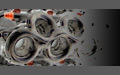
looks nice...
are they manufactured in the USA or sent over seas?
what is the wall thickness on the tubing and what grade of stainless is it?
i might recommend moving to mild steel just for the flange... it is less likely to tear out an exhaust manifold stud over time and with the right fill rod you can get a excellent weld to the stainless. it will also cut your flange costs in half reducing the price of the manifolds.
unless that is some very thick wall tubing, might i recommend a brace that maybe bolts up to some of the trans bolts or something? There will be a lot of flex in those manifolds especially with the turbo so far back... and keep in mind a lot of exhaust systems get rid of the flex sections (such as the borla). To aid in longevity of the manifolds, a brace to absorb the weight of the turbo and eliminate flex in the manifolds would be a great idea... and as you know easy to fabricate.
are they manufactured in the USA or sent over seas?
what is the wall thickness on the tubing and what grade of stainless is it?
i might recommend moving to mild steel just for the flange... it is less likely to tear out an exhaust manifold stud over time and with the right fill rod you can get a excellent weld to the stainless. it will also cut your flange costs in half reducing the price of the manifolds.
unless that is some very thick wall tubing, might i recommend a brace that maybe bolts up to some of the trans bolts or something? There will be a lot of flex in those manifolds especially with the turbo so far back... and keep in mind a lot of exhaust systems get rid of the flex sections (such as the borla). To aid in longevity of the manifolds, a brace to absorb the weight of the turbo and eliminate flex in the manifolds would be a great idea... and as you know easy to fabricate.


Registered User
Joined: Jan 2004
Posts: 433
Likes: 0
From: Long beach, CA
Nice piece. Although I'm still surprised to see companies selling header style manifolds with TT systems with all of the structural integrity issues that come with them. Maybe I'm wrong or just misinformed but I've always been under the impression that using a standard cast or inconel manifold is the better way to go for their strength, longevity and better heat dissipation properties.

Registered User
Joined: Jul 2003
Posts: 125
Likes: 0
From: coral gables
Speedform,
You are correct, you cant beat good castiron thick heavy manifolds holds boost for days and no worry about welds cracking, and hey if they break by some miracle of 35lbs of boost or so just get a new one they cost about half the price of the other stuff
You are correct, you cant beat good castiron thick heavy manifolds holds boost for days and no worry about welds cracking, and hey if they break by some miracle of 35lbs of boost or so just get a new one they cost about half the price of the other stuff
Thread Starter
Registered User
Joined: Sep 2003
Posts: 401
Likes: 0
From: Phoenix, AZ
Originally posted by phunk
looks nice...
are they manufactured in the USA or sent over seas?
what is the wall thickness on the tubing and what grade of stainless is it?
i might recommend moving to mild steel just for the flange... it is less likely to tear out an exhaust manifold stud over time and with the right fill rod you can get a excellent weld to the stainless. it will also cut your flange costs in half reducing the price of the manifolds.
unless that is some very thick wall tubing, might i recommend a brace that maybe bolts up to some of the trans bolts or something? There will be a lot of flex in those manifolds especially with the turbo so far back... and keep in mind a lot of exhaust systems get rid of the flex sections (such as the borla). To aid in longevity of the manifolds, a brace to absorb the weight of the turbo and eliminate flex in the manifolds would be a great idea... and as you know easy to fabricate.
looks nice...
are they manufactured in the USA or sent over seas?
what is the wall thickness on the tubing and what grade of stainless is it?
i might recommend moving to mild steel just for the flange... it is less likely to tear out an exhaust manifold stud over time and with the right fill rod you can get a excellent weld to the stainless. it will also cut your flange costs in half reducing the price of the manifolds.
unless that is some very thick wall tubing, might i recommend a brace that maybe bolts up to some of the trans bolts or something? There will be a lot of flex in those manifolds especially with the turbo so far back... and keep in mind a lot of exhaust systems get rid of the flex sections (such as the borla). To aid in longevity of the manifolds, a brace to absorb the weight of the turbo and eliminate flex in the manifolds would be a great idea... and as you know easy to fabricate.
The good thing is that you don't have to worry about our manifolds cracking, if it does we'll replace it for free for life.
Thread Starter
Registered User
Joined: Sep 2003
Posts: 401
Likes: 0
From: Phoenix, AZ
Originally posted by speedform
Nice piece. Although I'm still surprised to see companies selling header style manifolds with TT systems with all of the structural integrity issues that come with them. Maybe I'm wrong or just misinformed but I've always been under the impression that using a standard cast or inconel manifold is the better way to go for their strength, longevity and better heat dissipation properties.
Nice piece. Although I'm still surprised to see companies selling header style manifolds with TT systems with all of the structural integrity issues that come with them. Maybe I'm wrong or just misinformed but I've always been under the impression that using a standard cast or inconel manifold is the better way to go for their strength, longevity and better heat dissipation properties.
Our structural integrity is aided by the help of turbo mounts, to offset the heavy weight of the turbo and balance the setup. As you can see in the picture below, the turbo is securely mounted

Last edited by SSR Engineering; Oct 30, 2004 at 03:08 PM.
Trending Topics


Registered User
Joined: Nov 2003
Posts: 76
Likes: 0
From: Herndon, VA
I am happy to see that a company moved towards tubular manifolds instead of cast iron. I agree that manufacturing in mass quanities is cheaper if you use cast iron but the beauty of stainless steel is sooooo much better. Especially if you back it for life.
Keep it up SSR, it looks beautiful.
Keep it up SSR, it looks beautiful.

Registered User
Joined: Aug 2002
Posts: 560
Likes: 0
From: austin
Originally posted by SSR Engineering
Heat dissipation is horrible with cast manifolds, thats why you have to coat them if you don't want all of your heat escaping out into the rest of the engine bay.
Our structural integrity is aided by the help of turbo mounts, to offset the heavy weight of the turbo and balance the setup. As you can see in the picture below, the turbo is securely mounted
Heat dissipation is horrible with cast manifolds, thats why you have to coat them if you don't want all of your heat escaping out into the rest of the engine bay.
Our structural integrity is aided by the help of turbo mounts, to offset the heavy weight of the turbo and balance the setup. As you can see in the picture below, the turbo is securely mounted
where is the turbo mounting bracket in that picture?
at the bottom left of the pic you can see the bracket bolting the compressor housing to the trans.
assuming that the jig for the manifolds is perfect and there is no preload in the manifold for torqueing down that bracket... the manifolds should be able to hold up for a long time like that since that thick mild steel bracket is going to move the torqueing stress point to the downpipe.
assuming that the jig for the manifolds is perfect and there is no preload in the manifold for torqueing down that bracket... the manifolds should be able to hold up for a long time like that since that thick mild steel bracket is going to move the torqueing stress point to the downpipe.
SSR good to see you back up here. The manifolds look great. And you don't talk to me anymore on AOL (Gen3Seven) about the stuff you are coming up with haha, whats up with that. Goodluck on the rest of the turbo stuff though.
Registered User
Joined: Aug 2002
Posts: 560
Likes: 0
From: austin
Originally posted by phunk
at the bottom left of the pic you can see the bracket bolting the compressor housing to the trans.
assuming that the jig for the manifolds is perfect and there is no preload in the manifold for torqueing down that bracket... the manifolds should be able to hold up for a long time like that since that thick mild steel bracket is going to move the torqueing stress point to the downpipe.
at the bottom left of the pic you can see the bracket bolting the compressor housing to the trans.
assuming that the jig for the manifolds is perfect and there is no preload in the manifold for torqueing down that bracket... the manifolds should be able to hold up for a long time like that since that thick mild steel bracket is going to move the torqueing stress point to the downpipe.
The bracket seems like a good way to prevent stress fractures in the manifold. The cast manifolds, as mentioned previously, are not impervious to cracks -- and they definitely are not an ideal solution, given the unequal length of the runners.
Depending on the turbo selection, this SSR kit could be a nice prospect. I really like the turbos selected by APS. If SSR chooses something in the same range (and not something puny, like PE or JWT), I'd definitely have to consider the SSR kit.
Thread Starter
Registered User
Joined: Sep 2003
Posts: 401
Likes: 0
From: Phoenix, AZ
Originally posted by 002-M-P
SSR good to see you back up here. The manifolds look great. And you don't talk to me anymore on AOL (Gen3Seven) about the stuff you are coming up with haha, whats up with that. Goodluck on the rest of the turbo stuff though.
SSR good to see you back up here. The manifolds look great. And you don't talk to me anymore on AOL (Gen3Seven) about the stuff you are coming up with haha, whats up with that. Goodluck on the rest of the turbo stuff though.

Originally posted by azrael
Thanks.. sometimes it's hard to figure out what you're looking at when the picture is so close to the turbo that there isn't much of a larger picture to use as a reference. When pictures are taken underneath the car, it's hard to figure out the orientation.
The bracket seems like a good way to prevent stress fractures in the manifold. The cast manifolds, as mentioned previously, are not impervious to cracks -- and they definitely are not an ideal solution, given the unequal length of the runners.
Depending on the turbo selection, this SSR kit could be a nice prospect. I really like the turbos selected by APS. If SSR chooses something in the same range (and not something puny, like PE or JWT), I'd definitely have to consider the SSR kit.
Thanks.. sometimes it's hard to figure out what you're looking at when the picture is so close to the turbo that there isn't much of a larger picture to use as a reference. When pictures are taken underneath the car, it's hard to figure out the orientation.
The bracket seems like a good way to prevent stress fractures in the manifold. The cast manifolds, as mentioned previously, are not impervious to cracks -- and they definitely are not an ideal solution, given the unequal length of the runners.
Depending on the turbo selection, this SSR kit could be a nice prospect. I really like the turbos selected by APS. If SSR chooses something in the same range (and not something puny, like PE or JWT), I'd definitely have to consider the SSR kit.
I can't tell from memory and the pics what the oil level is going to be like but I imagine with them being so rear mounted and whatnot it may be a consideration. Either way, I'd give 'em a whirl myself.

T3 flanged setup is the way to go to play with different setups and get the turbos customized to what the Z likes and the customer wants.
Mark
www.Quantum-Racing.com
Home of the Dynapack Dyno
Thread Starter
Registered User
Joined: Sep 2003
Posts: 401
Likes: 0
From: Phoenix, AZ
Originally posted by QuantumZ
Well the beauty of their kit is it is a T3 flanged setup. That means about anything Garrett that you would ever consider installing on the VQ35 will fit. Anything from an APS-like GT30R, HKS style 3037S, a pair of nasty drag GT35R's, or cheap 'ole T3/T4 turbos to keep the costs down at first. The only thing I wonder about is sumping the oil out of the turbos.
I can't tell from memory and the pics what the oil level is going to be like but I imagine with them being so rear mounted and whatnot it may be a consideration. Either way, I'd give 'em a whirl myself.
T3 flanged setup is the way to go to play with different setups and get the turbos customized to what the Z likes and the customer wants.
Mark
www.Quantum-Racing.com
Home of the Dynapack Dyno
Well the beauty of their kit is it is a T3 flanged setup. That means about anything Garrett that you would ever consider installing on the VQ35 will fit. Anything from an APS-like GT30R, HKS style 3037S, a pair of nasty drag GT35R's, or cheap 'ole T3/T4 turbos to keep the costs down at first. The only thing I wonder about is sumping the oil out of the turbos.
I can't tell from memory and the pics what the oil level is going to be like but I imagine with them being so rear mounted and whatnot it may be a consideration. Either way, I'd give 'em a whirl myself.
T3 flanged setup is the way to go to play with different setups and get the turbos customized to what the Z likes and the customer wants.
Mark
www.Quantum-Racing.com
Home of the Dynapack Dyno
Originally posted by SSR Engineering
Yep, we include twin mocal scavange pumps with our kit.
Yep, we include twin mocal scavange pumps with our kit.
BTW, I how are you guys doing your coolant lines? IIRC from the APS installation destructions, they run a series setup for the coolant through the two turbos (dumb idea). ie., first through one and then through the other.
Additionally, have you flow tested your intake manifold to check flow balance at high turbo flow apps? I swear if you painted that thing black and put a white cross on it...


Any ideas on loss of spool threshold by adding the extra ~8" of piping over other kits? I take it you have plenty of room for compressor housings? How do you route your intakes for the turbos?
Sorry for the Q's.
Mark
www.Quantum-Racing.com
Home of the Dynapack Dyno

Thread
Thread Starter
Forum
Replies
Last Post
Colombo
Forced Induction
35
Nov 9, 2020 10:27 AM
