


Cams & Compression Ratio


Because his dynamic compression can never be higher than static the answer to whether his compression could be higher than the static 10.3 the answer is no. However his dynamic compression could be higher with different cams than with the stock cams. Since the cams are more aggresive, more than likely the dynamic compression would be lower since there would be more overlap.
Aggressive cams aren't necessarily going to lower the dynamic compression. They are going to shift the peak compression from lower in the powerband to higher in the powerband where it can make more useful horsepower by taking advange of the higher rpms.
If you read that article that was linked, the larger overlap only causes HP loss at low rpms because air flows back out of the cylinder on the compression stroke. However, at higher rpms you make MORE power because the momentum of the air keeps forcing more air into the cylinder even as the pistion is compressing. The fact rpms are higher means that all the air coming in doesn't have time to escape. Since more air is entering your engine, you make more power.

FWIW
for those intersted, here is a very good thread specific to the topic I initially asked about... it hits all the questions and reason for the questions I asked: cams profile/valve timing - DCR - high octane fuel/race gas:
http://speedtalk.com/forum/viewtopic...er=asc&start=0
http://speedtalk.com/forum/viewtopic...er=asc&start=0
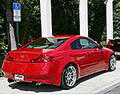


I just hope the most recent decision ends up being worthwhile (it will never be cost justified, but hopefully self justified)... I'll find out in a few days

Long Live NA Power!!!


Registered User
Joined: Oct 2003
Posts: 984
Likes: 0
From: Marietta, Georgia
Compression ratio was an engineering term coopted by marketing to try to sell high performance.
Engineers use BMEP the absolute peak pressure that occurs at 14-16 degrees after top dead center..................at peak torque rpm where the absolute greatest air gulp per filling occurs where VE is maximum.
Engineers use BMEP the absolute peak pressure that occurs at 14-16 degrees after top dead center..................at peak torque rpm where the absolute greatest air gulp per filling occurs where VE is maximum.
Compression ratio was an engineering term coopted by marketing to try to sell high performance.
Engineers use BMEP the absolute peak pressure that occurs at 14-16 degrees after top dead center..................at peak torque rpm where the absolute greatest air gulp per filling occurs where VE is maximum.
Engineers use BMEP the absolute peak pressure that occurs at 14-16 degrees after top dead center..................at peak torque rpm where the absolute greatest air gulp per filling occurs where VE is maximum.

My knowledge on the subject isn't anywhere near Q45tech, but I'll try to answer. I don't believe the max BMEP value changes much without some serious modification to the runners, ports and bottom end. Highest BMEP value should occur at max VE, ie max torque RPM, a change in cam profiles would shift the peak VE RPM higher or lower. The result would be the max BMEP value occuring at the new max VE RPM. The actual BMEP max value, "shouldn't" change much, keyword "shouldn't."
This is my understanding thus far, but I could be wrong.
TK
This is my understanding thus far, but I could be wrong.
TK
My knowledge on the subject isn't anywhere near Q45tech, but I'll try to answer. I don't believe the max BMEP value changes much without some serious modification to the runners, ports and bottom end. Highest BMEP value should occur at max VE, ie max torque RPM, a change in cam profiles would shift the peak VE RPM higher or lower. The result would be the max BMEP value occuring at the new max VE RPM. The actual BMEP max value, "shouldn't" change much, keyword "shouldn't."
This is my understanding thus far, but I could be wrong.
TK
This is my understanding thus far, but I could be wrong.
TK
In retrospect it’s a dead issue (personally)… the car is doing what its doing – it has responded reasonably well to the changes I made – not drastically and not even enough to warrant cost. A few more tweaks are in the works (simple, but still in the red on the bang for the buck scale)…
My original question about compression from cams and other mods as it relates to race gas has been answered (from my own research and experience) – and will always be my secret since there are those that feel the mods I’ve done don’t warrant the concerns I had (see you at the track)


BTW - thank you T_K for you input (my last statement is not directed at you)
but is to many/most others
my bottom end is stock... however, intake runners have been machined - but heads remain stock... air intake to the combustion chamber has been increased no doubt... fuel has been added and ignition & cam timing has been advance to account for changes... I imagine cylinder pressure is higher than stock... but I'm not an engineer nor advanced enough as an enthusiasts to know if this changes compression ratio (as originally questioned) or BMEP as recently discussed.
In retrospect it’s a dead issue (personally)… the car is doing what its doing – it has responded reasonably well to the changes I made – not drastically and not even enough to warrant cost. A few more tweaks are in the works (simple, but still in the red on the bang for the buck scale)…
My original question about compression from cams and other mods as it relates to race gas has been answered (from my own research and experience) – and will always be my secret since there are those that feel the mods I’ve done don’t warrant the concerns I had (see you at the track)
BTW - thank you T_K for you input (my last statement is not directed at you)
but is to many/most others
In retrospect it’s a dead issue (personally)… the car is doing what its doing – it has responded reasonably well to the changes I made – not drastically and not even enough to warrant cost. A few more tweaks are in the works (simple, but still in the red on the bang for the buck scale)…
My original question about compression from cams and other mods as it relates to race gas has been answered (from my own research and experience) – and will always be my secret since there are those that feel the mods I’ve done don’t warrant the concerns I had (see you at the track)
BTW - thank you T_K for you input (my last statement is not directed at you)
but is to many/most others
TK

Registered User
Joined: Dec 2008
Posts: 12
Likes: 0
From: charlotte
http://weblog.xanga.com/AussieGSR/63...mpression.html
will take a few times of reading to digest it, but it's a worthwhile read
will take a few times of reading to digest it, but it's a worthwhile read
Registered User
Joined: Oct 2003
Posts: 984
Likes: 0
From: Marietta, Georgia
The intake runner length is tuned [at torque peak rpm] so that just before intake valve closes a final " boost" of fulling occurs from the 2nd, 3rd, 4th harmonic of Helmholtz resonated system.
Over a narrow range of rpm the VE can exceed 100%, thus the dynamic compression can/might exceed the static CR by up to 5% depending upon a perfect alignment of rpm, air density - temperature.
Over a narrow range of rpm the VE can exceed 100%, thus the dynamic compression can/might exceed the static CR by up to 5% depending upon a perfect alignment of rpm, air density - temperature.
if the exhaust valve lash is slightly loose (which I'm almost positive mine is) how much of a negative affect will it have?... granted its probably milliseconds (Maybe nanoseconds) late opening, but much of what is being discussed is minute anyway... will it defeat increased BMEP or possible increased DCR?

Thread
Thread Starter
Forum
Replies
Last Post
Colombo
Forced Induction
35
Nov 9, 2020 10:27 AM
B Esquire
Autocross/Road
0
Sep 24, 2015 07:52 AM
bmep, cam, camshaft, compression, dcr, jwt, motorcycles, my350z, ocg35, pistion, ratio, s2, timing, understanding, vq35de
