


JWT TT Install in my '05 G35


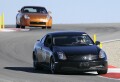


Stock JWT kit, which is 6.8; however, the thin atmosphere in Colorado Springs (~6000 feet altitude) makes it absolute pressure of about 3.2, which equates to about 6.0 or so.
Still very nice though!
Dave
Still very nice though!
Dave

Registered User
Joined: Dec 2004
Posts: 1,658
Likes: 1
From: Colorado Springs, CO
Congrats on the awesome Kit Dave. So it finally got done on Sat night. I wish I could have stayed and seen the car finished.
Would definitely love a ride in that thing!
I've always wondered how the boost thing worked in CO. So even though the stock boost is 6.8, the actual boost is only 6.0 because of the thinner air. Not sure how the controllers work, but I thought they would just keep it at the 6.8.
So if I am correct you would have to set the boost to about 10 psi to equal a car at sea level boosting 6.8 psi. (10.0 psi equals effective boost of about 8.4 which covers the 6.8 stock boost, plus an additional 1.6 Psi to cover the Denver atmospheric pressure loss).
That might be way too complicated to try to convey over the forum.
Would definitely love a ride in that thing!
I've always wondered how the boost thing worked in CO. So even though the stock boost is 6.8, the actual boost is only 6.0 because of the thinner air. Not sure how the controllers work, but I thought they would just keep it at the 6.8.
So if I am correct you would have to set the boost to about 10 psi to equal a car at sea level boosting 6.8 psi. (10.0 psi equals effective boost of about 8.4 which covers the 6.8 stock boost, plus an additional 1.6 Psi to cover the Denver atmospheric pressure loss).
That might be way too complicated to try to convey over the forum.

Originally Posted by Starchecker
Congrats on the awesome Kit Dave. So it finally got done on Sat night. I wish I could have stayed and seen the car finished.
Would definitely love a ride in that thing!
I've always wondered how the boost thing worked in CO. So even though the stock boost is 6.8, the actual boost is only 6.0 because of the thinner air. Not sure how the controllers work, but I thought they would just keep it at the 6.8.
So if I am correct you would have to set the boost to about 10 psi to equal a car at sea level boosting 6.8 psi. (10.0 psi equals effective boost of about 8.4 which covers the 6.8 stock boost, plus an additional 1.6 Psi to cover the Denver atmospheric pressure loss).
That might be way too complicated to try to convey over the forum.
Would definitely love a ride in that thing!
I've always wondered how the boost thing worked in CO. So even though the stock boost is 6.8, the actual boost is only 6.0 because of the thinner air. Not sure how the controllers work, but I thought they would just keep it at the 6.8.
So if I am correct you would have to set the boost to about 10 psi to equal a car at sea level boosting 6.8 psi. (10.0 psi equals effective boost of about 8.4 which covers the 6.8 stock boost, plus an additional 1.6 Psi to cover the Denver atmospheric pressure loss).
That might be way too complicated to try to convey over the forum.
A racing engine like used for the Pikes Peak Hill Climb, might use a MAP sensor instead to run boost based on the manifold pressure. If the wastegates are run off this pressure, then the turbos will be allowed to provide more boost as atmo pressure drops to maintain the same manifold pressure. Of course, as the boost changes, so does the compressor efficiency, so it will never be a perfect substitute for lower elevation. But pretty close.
Will
No, the UTEC uses a MAP sensor, which is what I am using.
What ends up happening is that absolute pressure is equal to about 3.2 psi or so, which is about 6 psi over the ambient pressure here in the Springs. The wastegates should be good to 6.8, so the calculations might be a bit off, bit it's still good.
Dave
What ends up happening is that absolute pressure is equal to about 3.2 psi or so, which is about 6 psi over the ambient pressure here in the Springs. The wastegates should be good to 6.8, so the calculations might be a bit off, bit it's still good.
Dave

Registered User
Joined: Dec 2004
Posts: 1,658
Likes: 1
From: Colorado Springs, CO
Originally Posted by Dave 90TT
No, the UTEC uses a MAP sensor, which is what I am using.
What ends up happening is that absolute pressure is equal to about 3.2 psi or so, which is about 6 psi over the ambient pressure here in the Springs. The wastegates should be good to 6.8, so the calculations might be a bit off, bit it's still good.
Dave
What ends up happening is that absolute pressure is equal to about 3.2 psi or so, which is about 6 psi over the ambient pressure here in the Springs. The wastegates should be good to 6.8, so the calculations might be a bit off, bit it's still good.
Dave
Since its using internal wastegates, I imagine the actuators are run off the compressor outlet for safety reasons. Thinking about it, either a MAP or MAF would have some compensation for altitude. If the wastegate was set for 6.8 lbs of boost it would be based on an absolute pressure of 21.5 psi in the compressor outlet. Of course, that actuator would have less pressure acting on the other side to keep it closed against the boost, so the thinner air would allow it to open earlier. So.. I guess that's another reason to run the actuator off of manifold pressure, besides better boost threshhold.
Will
Will
Originally Posted by Starchecker
Do you have to install new BOV's to get up to 8 or 9 PSI? I thought you could do that with that stock kit. I wouldn't want to go any higher than that on a stock motor.
I think you meant the wastegates. They control the flow of exhaust energy around the turbine, and therefore dictates the amount of boost the compressor makes.
Will
Registered User
Joined: Dec 2004
Posts: 1,658
Likes: 1
From: Colorado Springs, CO
Originally Posted by Resolute
The BOV don't have anything to do with boost control. When the throttle closes, they vent the return surge of air in order to prevent it from reaching the compressor vanes and causing damage. In a MAF system, it should be recirculated, but people like the "psssh" sound.
I think you meant the wastegates. They control the flow of exhaust energy around the turbine, and therefore dictates the amount of boost the compressor makes.
Will
I think you meant the wastegates. They control the flow of exhaust energy around the turbine, and therefore dictates the amount of boost the compressor makes.
Will
The TT shootout article had the JWT TT kit at 7.8 PSI doing 432 RWHP SAE. Most kits at stock boost seem to be around 380 with exhaust, so I was hoping the kit would compensate for the lower pressure at Denver and you could get non corrected RWHP close to those numbers.
So if I am understanding correctly:
To get an actual 380 at the wheels here in Denver you would have to set the boost to 9.3. (12.2 PSI actual pressure in Denver + 9.3 PSI to equal the 21.5 absolute pressure the stock kits get at sea level.)
I guess this makes sense, Juztin has his TT kit set to 9 psi and he is showing 452 at the wheels corrected which is about 380 non corrected. It just seems dangerous running 9 psi of boost and seeing 452 rwhp on a stock motor. But I guess the engine would only "feel" 6.8 PSI boost and 380 rwhp.
My goal is to get about 390 rwhp non corrected up here in Denver on a stock engine, so I am just trying to get it all figured out.
Originally Posted by Starchecker
Thanks Will for the info and the correction. I knew there had to be something I was missing.
The TT shootout article had the JWT TT kit at 7.8 PSI doing 432 RWHP SAE. Most kits at stock boost seem to be around 380 with exhaust, so I was hoping the kit would compensate for the lower pressure at Denver and you could get non corrected RWHP close to those numbers.
So if I am understanding correctly:
To get an actual 380 at the wheels here in Denver you would have to set the boost to 9.3. (12.2 PSI actual pressure in Denver + 9.3 PSI to equal the 21.5 absolute pressure the stock kits get at sea level.)
I guess this makes sense, Juztin has his TT kit set to 9 psi and he is showing 452 at the wheels corrected which is about 380 non corrected. It just seems dangerous running 9 psi of boost and seeing 452 rwhp on a stock motor. But I guess the engine would only "feel" 6.8 PSI boost and 380 rwhp.
My goal is to get about 390 rwhp non corrected up here in Denver on a stock engine, so I am just trying to get it all figured out.
The TT shootout article had the JWT TT kit at 7.8 PSI doing 432 RWHP SAE. Most kits at stock boost seem to be around 380 with exhaust, so I was hoping the kit would compensate for the lower pressure at Denver and you could get non corrected RWHP close to those numbers.
So if I am understanding correctly:
To get an actual 380 at the wheels here in Denver you would have to set the boost to 9.3. (12.2 PSI actual pressure in Denver + 9.3 PSI to equal the 21.5 absolute pressure the stock kits get at sea level.)
I guess this makes sense, Juztin has his TT kit set to 9 psi and he is showing 452 at the wheels corrected which is about 380 non corrected. It just seems dangerous running 9 psi of boost and seeing 452 rwhp on a stock motor. But I guess the engine would only "feel" 6.8 PSI boost and 380 rwhp.
My goal is to get about 390 rwhp non corrected up here in Denver on a stock engine, so I am just trying to get it all figured out.
Will

Originally Posted by Starchecker
Thanks Will for the info and the correction. I knew there had to be something I was missing.
The TT shootout article had the JWT TT kit at 7.8 PSI doing 432 RWHP SAE. Most kits at stock boost seem to be around 380 with exhaust, so I was hoping the kit would compensate for the lower pressure at Denver and you could get non corrected RWHP close to those numbers.
So if I am understanding correctly:
To get an actual 380 at the wheels here in Denver you would have to set the boost to 9.3. (12.2 PSI actual pressure in Denver + 9.3 PSI to equal the 21.5 absolute pressure the stock kits get at sea level.)
I guess this makes sense, Juztin has his TT kit set to 9 psi and he is showing 452 at the wheels corrected which is about 380 non corrected. It just seems dangerous running 9 psi of boost and seeing 452 rwhp on a stock motor. But I guess the engine would only "feel" 6.8 PSI boost and 380 rwhp.
My goal is to get about 390 rwhp non corrected up here in Denver on a stock engine, so I am just trying to get it all figured out.
The TT shootout article had the JWT TT kit at 7.8 PSI doing 432 RWHP SAE. Most kits at stock boost seem to be around 380 with exhaust, so I was hoping the kit would compensate for the lower pressure at Denver and you could get non corrected RWHP close to those numbers.
So if I am understanding correctly:
To get an actual 380 at the wheels here in Denver you would have to set the boost to 9.3. (12.2 PSI actual pressure in Denver + 9.3 PSI to equal the 21.5 absolute pressure the stock kits get at sea level.)
I guess this makes sense, Juztin has his TT kit set to 9 psi and he is showing 452 at the wheels corrected which is about 380 non corrected. It just seems dangerous running 9 psi of boost and seeing 452 rwhp on a stock motor. But I guess the engine would only "feel" 6.8 PSI boost and 380 rwhp.
My goal is to get about 390 rwhp non corrected up here in Denver on a stock engine, so I am just trying to get it all figured out.
b.t.w., my uncorrected hp on the 452 run was 368. for 390 uncorrected hp you will most likely need to be in the very high 400's.
Last edited by Juztin; Nov 13, 2006 at 12:42 PM.

Actually, on a serious note, it looks like my injectors (stock, with stock fuel pump) are running near max (88% duty cycle or thereabouts) and before I raise the boost, I will be getting bigger injectors, a Walbro 255/lph fuel pump, and maybe a AAM return fuel rail.
Dave
Dave

They are stock (which I believe are 370's) So to raise the boost all that much you need to go to bigger injectors.
On the other hand, if you go to much higher than that, you start getting rougher idle. Not too bad with 550's or so, but any of the huge injectors can get a rather rough idle.
I will probably go with 550's, but I am not exatly sure yet.
Dave
On the other hand, if you go to much higher than that, you start getting rougher idle. Not too bad with 550's or so, but any of the huge injectors can get a rather rough idle.
I will probably go with 550's, but I am not exatly sure yet.
Dave
Registered User
Joined: Dec 2004
Posts: 1,658
Likes: 1
From: Colorado Springs, CO
Originally Posted by Juztin
b.t.w., my uncorrected hp on the 452 run was 368. for 390 uncorrected hp you will most likely need to be in the very high 400's.
If you get the exhaust kit and your SAE number goes to the high 400's and you never blow your engine, then we will know it's the uncorrected number that matters!
Last edited by Starchecker; Nov 22, 2006 at 07:44 PM.
