When you click on links to various merchants on this site and make a purchase, this can result in this site earning a commission. Affiliate programs and affiliations include, but are not limited to, the eBay Partner Network.
Thanks for the added detail on the Revup VQ vs. standard DE. I never heard about the exhaust cam vvt gear spring causing a problem on these before. Under what conditions could this potentially happen? (Ex: Lack of oil change services, excessive redlining or over-revving the engine?)
Are you sure about the speedo sensor pick-up? I've tried to research this myself and what I was able to find all pointed to a sensor at the transmission, not the rear ABS sensors. I could be wrong, as I know many late model vehicles on the market rely upon the ABS (wheel speed) sensors to calculate the vehicle's speed. But I'm not positive the 350Z falls into that category. I might need to dig out the FSM for this one.
Cheers!
-Icer
I dont know that there is a specific reason and if Im being intellictually honest I will acknowledge that there are few cases and I couldnt call it a trend other than it does happen. I suspect it’s running the car excessively hard and I suspect having aftermarket cams/springs has a role in the failure of the internal spring.
I am not 100% sure on where the speedo takes a reading, but it’s logical that the ecu takes a reading from the wheel speed sensors. I believe the speedometer is CAN-based where the crankshaft position sesnor is an analog 0-5v output. Last - Think of all the issues people have had with the crank shaft postion sensor but no issues with speedometer output reading. I’ll dig into the FSM as well, if you find an answer please let me know!
The Z is well balanced from factory but I still haven't regret any mods outside of the CAI.
If I wasn't planning on supercharging i would have done a FD/LSD a long time ago.
Those mods IMO are priceless as there is very minimal sacrifices other than some fuel and are undetectable if you have inspections.
Section/Page BRC-113 - Vehicle Speed calculated from all four wheel speed sensors…
That's for the ABS computer. Note it says "matches the speedometer +/- 10%". To see that display on the Consult II, you need to be in the ABS section. It would always exactly match the speedometer if that's where the speedometer reading came from. I believe there's a speed sensor on the transmission. I'll have to dig into alldata when I get to the shop to confirm. If I'm wrong, I'll let you know.
Last edited by i8acobra; Jun 29, 2023 at 05:58 AM.
That's for the ABS computer. Note it says "matches the speedometer +/- 10%". To see that display on the Consult II, you need to be in the ABS section. It would always exactly match the speedometer if that's where the speedometer reading came from. I believe there's a speed sensor on the transmission. I'll have to dig into alldata when I get to the shop to confirm. If I'm wrong, I'll let you know.
This was in the Brakes section and it really had to do with CAN communication. There were other places I found it but was sorta ambiguous but was all related to CAN.
Please let me know what you find, it’s an interesting discussion - As I’m getting older and older and really getting into the I/O of the car I really like reading the FSM.
I found it in the FSM. I think this settles things. It's under the Driver Information System section (DI), chapter on Combination Meters. The vehicle does use the CAN system to communicate between the ABS module and AC Amp to generate the vehicle speed signal pulse which the AC Amp then shares to the gauge clusters. This makes sense since for some aftermarket head units, the tap wire for VSS is at the AC Amp. I was wrong, but I'm happy to get a definitive answer.
Cheers!
-Icer
Looking at this topology. It would be a "fun" task to troubleshoot speedometer issues. If a problem should arise, it could be ABS wheel sensors, bad ABS module, Bad Unified Meter, bad gauge cluster(s), and let's not forget any wiring faults between all of these different modules! Seems like an overly complex system just to get your vehicle speed readout. But that's modern vehicles for ya! Luckily, DTCs would provide some aid in identification of the problem, but anyone who's worked on cars a lot knows that DTCs are just a starting point, they don't often show root cause.
I think the main take away here is that you can change your FD gear ratio to your hearts content without impacting the speedo accuracy!
Cheers!
-Icer
The question is, does this dry filter allow more air flow the way the K&N does?
Greg
Not apples to apples, but when they tested cone filters a few decades ago the Apexi filters had the best filtration out of all, it may not flow the same but it flows more than paper and filters better than paper and gause.
A tiny less power for a clean engine is worth it IMO.
I stopped using them a while back after I noticed how much dirt ended up on my TB.
So my takeaway from that video is that when you choose to use a K&N filter, it may be good enough, but you are trading away filtering capability for increased air flow. Is it good enough? How do we know? When you factor in the oil issue gumming up the TB and plenum, it doesn't seem like a good option to me now.
I need more air flow to the TB if I'm going to invest in a MREV2 and exhaust. So now what do I do?
Even when upsizing the tube to the TB, is a cone filter CAI good enough to filter the air coming into the engine? Or are we also compromising filtering capability for air flow with those? How do we know?
There will always be a small compromise, nothing it outright perfect.
Dry synthetic media needs to have a larger surface in order to match the flow of oiled filters.
Only place I've seen take that into consideration is R2C, their filter replacement for Pop Charger and Stillen is significantly larger than the K&N they provide.
That being said I wouldn't lose any sleep over max flow, they tested the stock box and it was pretty capable, I think more than the average NA car needs.
So just get a decent dry filter and call it good.
FWIW, at WOT I have zero vacuum in the manifold with my Injen intake with the dry filter they sell (made by Donaldson) but it was a separate purchase since I didn't want the oiled filter they provide.
There will always be a small compromise, nothing it outright perfect.
Dry synthetic media needs to have a larger surface in order to match the flow of oiled filters.
Only place I've seen take that into consideration is R2C, their filter replacement for Pop Charger and Stillen is significantly larger than the K&N they provide.
That being said I wouldn't lose any sleep over max flow, they tested the stock box and it was pretty capable, I think more than the average NA car needs.
So just get a decent dry filter and call it good.
I could be wrong, but I'm pretty sure I had a 'decent dry filter' in my car before I switched to the K&N and realized power gains that were unexpected and FUN. How do I get the FUN without the oiled filter issue?
I know you're recommending that I stay with the stock airbox, but maybe I need to change to a different CAI system with a larger intake and dry filter with more surface area in order to realize the same gain in power that I get with the K&N?
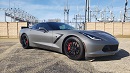
i had the r2c filters someone mentioned before, there are dry filters out there. on my vette, i have the AFe intake and they offer the oiled or dry filter as an option





 But that's modern vehicles for ya! Luckily, DTCs would provide some aid in identification of the problem, but anyone who's worked on cars a lot knows that DTCs are just a starting point, they don't often show root cause.