


Who tracks their Brembo-equipped Z?


Thread Starter
Registered User
Joined: Jul 2005
Posts: 86
Likes: 0
From: MA
 Who tracks their Brembo-equipped Z?
Good, maybe you have some insight into my problem.
I own a 2005 Nissan 350Z Anniversary Edition with the Brembo brakes.
Before my first DE event, I went ahead and installed Hawk HP+ pads and flushed/bled new ATE Super Blue fluid.
The first DE even was at NHIS, which is apparently a tough track on brakes (so I’ve heard). This, perhaps exacerbated by incorrect use of brakes (I’m guessing here, no one told me that I was using them incorrectly, but it was my first time on the track) made my brakes fade. I figured I didn’t buy the right compound and just finished the day on less-than-stellar brakes. Not unsafe, but soft pedal. This leads me to believe I either boiled the fluid, or got air into the system during hard braking. When I did my flush and bleed, I never did any ABS stops to flush out that reservoir. Looking at my brakes near the end of the day, though, I noticed a trickle of blue down each caliper. Not a lot, but enough to leave a track all the way down the caliper and leave some drops (not puddles) of baked fluid on my wheels.
Before the next track event, I did another bleed and tried to repeat the problem (probably going through a bunch of pad trying it) on a long and little-used road near my house (not interstate, but 65 mph speed limit). The best I could do was go from 90 to 30 mph over and over again as fast as I could. I went through a fair amount of cycles, but nothing approaching a 20-minute track session. No dice: clean calipers.
So off I went to my next event at Watkins Glen. I watched throughout the day as the problem repeated itself to a lesser extent. First the left rear had a bit of seepage, then it spread to all the calipers and greater amount of fluid. However, the pedal held up a lot better through the day. Still softened, but not near as bad. Also, the amount of fluid we’re talking about barely made the reservoir at the master drop at all (and that would include the volume used to replace the brake pad that I left all over the track) over the day.
So now to my speculation and hearsay.
The first thing I thought of is that I’d taken $1.60 worth of (nice, hard steel) screws and destroyed $4800 worth of (nice, soft aluminum) calipers. When I did the bleeds, I torqued all the bleed screws to 120 in-lb (10 ft-lb), as the specification in the service manual is 9-11 ft-lb. Fairly sure it's not a typo, since it's also specified in N-m and kg-m and the numbers jive. I’ve since called a couple dealerships to verify the torque number, and found that the people I’ve spoken to just hand-tighten them. A couple of mechanics (at local garages, not Nissan dealerships) have said that 10 ft-lb sounds high for bleeder valves, but then again they are not race mechanics.
Someone suggested that I could have gotten dirt in area where the bleeder seats against the caliper. I don’t know whether the fact that it happened to all 4 calipers means the dirt theory is more or less likely. I could argue either way.
So my next course of action is to examine the valves and caliper seats during the next flush, which will probably happen within the next month. Can anyone make suggestions as to how to minimize problems in the process? Can I do this inspection without emptying the caliper? Can I just relieve pressure with the bleeder, remove it, and wick up enough fluid so that I can see into the threaded hole to examine the seat? Any other suggestions on what to do/look for would be appreciated.
Any thoughts, comments, accusations of lunacy? The lunacy would refer to me insisting that I do everything myself. I consider myself organized, conscientious, and fairly handy with these types of things. This is, however, the first time I’ve done a flush/bleed/track.
Thanks in advance.
uwaeve
I own a 2005 Nissan 350Z Anniversary Edition with the Brembo brakes.
Before my first DE event, I went ahead and installed Hawk HP+ pads and flushed/bled new ATE Super Blue fluid.
The first DE even was at NHIS, which is apparently a tough track on brakes (so I’ve heard). This, perhaps exacerbated by incorrect use of brakes (I’m guessing here, no one told me that I was using them incorrectly, but it was my first time on the track) made my brakes fade. I figured I didn’t buy the right compound and just finished the day on less-than-stellar brakes. Not unsafe, but soft pedal. This leads me to believe I either boiled the fluid, or got air into the system during hard braking. When I did my flush and bleed, I never did any ABS stops to flush out that reservoir. Looking at my brakes near the end of the day, though, I noticed a trickle of blue down each caliper. Not a lot, but enough to leave a track all the way down the caliper and leave some drops (not puddles) of baked fluid on my wheels.
Before the next track event, I did another bleed and tried to repeat the problem (probably going through a bunch of pad trying it) on a long and little-used road near my house (not interstate, but 65 mph speed limit). The best I could do was go from 90 to 30 mph over and over again as fast as I could. I went through a fair amount of cycles, but nothing approaching a 20-minute track session. No dice: clean calipers.
So off I went to my next event at Watkins Glen. I watched throughout the day as the problem repeated itself to a lesser extent. First the left rear had a bit of seepage, then it spread to all the calipers and greater amount of fluid. However, the pedal held up a lot better through the day. Still softened, but not near as bad. Also, the amount of fluid we’re talking about barely made the reservoir at the master drop at all (and that would include the volume used to replace the brake pad that I left all over the track) over the day.
So now to my speculation and hearsay.
The first thing I thought of is that I’d taken $1.60 worth of (nice, hard steel) screws and destroyed $4800 worth of (nice, soft aluminum) calipers. When I did the bleeds, I torqued all the bleed screws to 120 in-lb (10 ft-lb), as the specification in the service manual is 9-11 ft-lb. Fairly sure it's not a typo, since it's also specified in N-m and kg-m and the numbers jive. I’ve since called a couple dealerships to verify the torque number, and found that the people I’ve spoken to just hand-tighten them. A couple of mechanics (at local garages, not Nissan dealerships) have said that 10 ft-lb sounds high for bleeder valves, but then again they are not race mechanics.
Someone suggested that I could have gotten dirt in area where the bleeder seats against the caliper. I don’t know whether the fact that it happened to all 4 calipers means the dirt theory is more or less likely. I could argue either way.
So my next course of action is to examine the valves and caliper seats during the next flush, which will probably happen within the next month. Can anyone make suggestions as to how to minimize problems in the process? Can I do this inspection without emptying the caliper? Can I just relieve pressure with the bleeder, remove it, and wick up enough fluid so that I can see into the threaded hole to examine the seat? Any other suggestions on what to do/look for would be appreciated.
Any thoughts, comments, accusations of lunacy? The lunacy would refer to me insisting that I do everything myself. I consider myself organized, conscientious, and fairly handy with these types of things. This is, however, the first time I’ve done a flush/bleed/track.
Thanks in advance.
uwaeve
My Brembos cry a bit some times too.
I just check them after each stint. Aluminium vs steel, thermal expension is not the same. Aluminium's being more, I'd expect that some time.
Bleeder valves are scary. I'm always afraid to overtight them and brake/strip something, or loose one under tightened.
I'd file that in the "normal problem" file.
Oh, and get real track pads.
I just check them after each stint. Aluminium vs steel, thermal expension is not the same. Aluminium's being more, I'd expect that some time.
Bleeder valves are scary. I'm always afraid to overtight them and brake/strip something, or loose one under tightened.
I'd file that in the "normal problem" file.
Oh, and get real track pads.
Thread Starter
Registered User
Joined: Jul 2005
Posts: 86
Likes: 0
From: MA
Man, I was hoping that by waiting a month and reposting I'd get someone new to bite. 
Just kidding, I appreciate your input as always, Kolia.
I understand about the CTE difference. Partially I'm antsy to have someone else validate that it's normal, or validate that I'm not the only tool torquing the bleeders that tight.
uwaeve
I concur about the pads. Just got some Ferodo 2500. Thinking about exchanging them for the 3000 before heading out. Any thoughts? Can I drive the 3000 compound to the track? If not, I may say "screw it" and just change out the pads there. Have to borrow a jack and a friend to bleed them though.
Just kidding, I appreciate your input as always, Kolia.
I understand about the CTE difference. Partially I'm antsy to have someone else validate that it's normal, or validate that I'm not the only tool torquing the bleeders that tight.
uwaeve
I concur about the pads. Just got some Ferodo 2500. Thinking about exchanging them for the 3000 before heading out. Any thoughts? Can I drive the 3000 compound to the track? If not, I may say "screw it" and just change out the pads there. Have to borrow a jack and a friend to bleed them though.
Registered User
Joined: Jul 2003
Posts: 216
Likes: 0
From: Novi, MI
I've had similar experiences at the track. The brake pedal seems to soften up during the day, and occasionally goes to the floor on the first application, but returns to normal on the second stomp. I also use HP+ pads (front only, stock in rear) but Castrol SRF brake fluid. I am 100% certain that the fluid is not boiling. In the cases where the pedal goes to the floor, it's never during the initial application of the brakes, but only after a long straight and subsequent brake application...if it were the pads, they should be gettng funny while the brakes are heating up. Since the Brembos are fixed calipers, there could be some amount of pad knock-back during the turn...but there shouldn't be much.
I've suspected the brake seals. When I disassembled the brakes (before storing it for the winter), I noticed the seals were not flush with the bores on some of the pistons. The out-of-place seals could be storing enough brake fluid to make the pedal soft. When I reset the pistons (while swapping pads for the drive home), it seems to fix the problem
This year, I'm going to replace the seals and try new 2-pc Stoptech rotors with Hawk Blues and see if the problem goes away.
I've suspected the brake seals. When I disassembled the brakes (before storing it for the winter), I noticed the seals were not flush with the bores on some of the pistons. The out-of-place seals could be storing enough brake fluid to make the pedal soft. When I reset the pistons (while swapping pads for the drive home), it seems to fix the problem
This year, I'm going to replace the seals and try new 2-pc Stoptech rotors with Hawk Blues and see if the problem goes away.
Sorry I missed your original post uwaeve.
Do you have any pictures of that? I might have some in my archives. I’d like to contact Brembo about it. My Italian is rusty, but should suffice to discuss with them.
archman350Z, from your description it does look like pads knock back. If it’s extreme, there are some fixes (like changing bearings) but we will have to live with it just like any GT driver out there. For you brake pads, the Hawk blues are pretty old and very abrasive to the rotors.. I’d hate for you to have to replace your StopTechs mid season because of that. There are some better and newer options available from Hawk. (http://www.hawkperformance.com/motor...unds/index.php) I was considering the DTC-70 or -60 but decided to go back with the Cobalt Friction Spec VR pads.
Do you have any pictures of that? I might have some in my archives. I’d like to contact Brembo about it. My Italian is rusty, but should suffice to discuss with them.
archman350Z, from your description it does look like pads knock back. If it’s extreme, there are some fixes (like changing bearings) but we will have to live with it just like any GT driver out there. For you brake pads, the Hawk blues are pretty old and very abrasive to the rotors.. I’d hate for you to have to replace your StopTechs mid season because of that. There are some better and newer options available from Hawk. (http://www.hawkperformance.com/motor...unds/index.php) I was considering the DTC-70 or -60 but decided to go back with the Cobalt Friction Spec VR pads.
I knew I had missed something this morning.
Yes, drive to the event with the track pads on, and back home too.
Friction occurs when electrons are exchanged between the pad and a layer of pad material deposited on the disc, not with the disc itself (adhesive mode). Track pads and street pads material are different and you don’t want your track pads to brake on street pad deposit and vise-versa. Ideally, you want to remove the old pad’s stuff and re-bed the new ones.
A quick way to do that is to drive around with track pads. Since they will be cold all the time, they will be really abrasive and simply cut through the old pad’s deposit. It will also cut through its own deposits (so long term city driving is not good for the rotors). So once you get to the track, you have fresh rotors, ready to be bedded-in during your first stint.
It’s not perfect (you still screw up your first run) but better than doing pit work.
Ideally, we’d have 2 sets of rotors, pre-bedded in with the street or track compound. We’d also have a semi with a full workshop…
Originally Posted by uwaeve
I concur about the pads. Just got some Ferodo 2500. Thinking about exchanging them for the 3000 before heading out. Any thoughts? Can I drive the 3000 compound to the track? If not, I may say "screw it" and just change out the pads there. Have to borrow a jack and a friend to bleed them though.
Friction occurs when electrons are exchanged between the pad and a layer of pad material deposited on the disc, not with the disc itself (adhesive mode). Track pads and street pads material are different and you don’t want your track pads to brake on street pad deposit and vise-versa. Ideally, you want to remove the old pad’s stuff and re-bed the new ones.
A quick way to do that is to drive around with track pads. Since they will be cold all the time, they will be really abrasive and simply cut through the old pad’s deposit. It will also cut through its own deposits (so long term city driving is not good for the rotors). So once you get to the track, you have fresh rotors, ready to be bedded-in during your first stint.
It’s not perfect (you still screw up your first run) but better than doing pit work.
Ideally, we’d have 2 sets of rotors, pre-bedded in with the street or track compound. We’d also have a semi with a full workshop…
The weeping calipers is not abnormal. I have an enthusiast, but replaced the front brakes with the stoptech 13" kit. I too get slight leakage. usually, the calipers are hot enough to bake the fluid and it leaves a white residue. I have made it a habit to check and retighten the bleeders at lunch time and then again before i leave the track (between the two morning and afternoon sessions, then again at the end of the day).
The HP+ are not track pads. Highly recommend searching here for alternatives. In my stoptech's, I'm using pagid blacks. Oranges are less aggressive and I would surmise have plenty of bite and temperature headroom for a beginner. I do not know if there is an offering to fit the brembos.
The other thing to keep in mind is knockback. It seems the hub design of the Z is fairly flexible, in conjunction with the location of the caliper (12 o'clock) exacerbates the problem. Hard cornering causes the hub to flex, pushing the pads back into the caliper. This also leads to a soft pedal on first application after the cornering. A tap of the pedal should move the pads back to the rotor. A second brake pedal push will provide normal pedal feel. If a second application still is mushy, knockback probably isn't the issue.
ahm
The HP+ are not track pads. Highly recommend searching here for alternatives. In my stoptech's, I'm using pagid blacks. Oranges are less aggressive and I would surmise have plenty of bite and temperature headroom for a beginner. I do not know if there is an offering to fit the brembos.
The other thing to keep in mind is knockback. It seems the hub design of the Z is fairly flexible, in conjunction with the location of the caliper (12 o'clock) exacerbates the problem. Hard cornering causes the hub to flex, pushing the pads back into the caliper. This also leads to a soft pedal on first application after the cornering. A tap of the pedal should move the pads back to the rotor. A second brake pedal push will provide normal pedal feel. If a second application still is mushy, knockback probably isn't the issue.
ahm
Trending Topics
Thread Starter
Registered User
Joined: Jul 2005
Posts: 86
Likes: 0
From: MA
Sorry I missed your original post uwaeve.
ANYhooo, am right on board with being scared of the bleeder valves.
No pictures of the problem, but I can photoshop it on some Brembos.

I already called Brembo. They said that any questions or issues I had needed to be taken up with Nissan. They said it was a Nissan-proprietary system. Haven't yet pursued it further. I figure someone at Brembo will eventually need to address it, I just need someone at Nissan to realize they don't know what the problem is, and give me the "OK" to call Brembo again. Haven't pursued it that far yet.
We’d also have a semi with a full workshop…
I was thinking about getting track rotors, but I would have to remove the calipers before every event to change the discs. Something I haven't done yet, taking the calipers off their mounting bolts. Plus, if I drove to the events, wouldn't the track pads just wipe away the transfer layer on my track-bedded rotors anyhow? I would have to either trailer the car with the bedded rotors and pads to the track, or change both pads and rotors at the track. In either case, I'd still have cold brakes for a lap.Kolia, do you have any experience with the Ferodo compounds? 2500 vs. 3000? Also, how far have you ever traveled east/north to go to a track event? It'd be great to see you at an event. I've made it as far west as Watkins Glen. Looks like a 9-hour drive from Ohio, though.
Amolaver, thanks for the info. I agree that the HP+ probably aren't track pads. I got nervous about the hype of "race pads" not stopping you when cold. I've lived with having pads worn down to the backing plates on another car, so I bet I could stop a car that a little lower frictional coefficient than normal when cold so I could get to the track. Again, no experience, so I would test it out. If I had a big problem, I'd just change back and change at the track. Do you have any experience with the Ferodo compounds?
Speaking of the hubs, have you guys that track your Z's ever replaced the hubs or cleaned/repacked the bearings? I had read that hubs should be considered a wear item on race cars (I realize we don't have race cars...) and that they're replaced fairly often. I realize you're not saying that the hubs are necessarily worn, just kind of loose in general. Just wondering if the hubs should be replaced after a certain number of track days. Also, I am (and will be) on street tires, so I'm not putting the magnitude of stress on the hub that race tires are able to.
Thanks to all for the input.
uwaeve
I don’t have personal experience with Ferodo. But the guys in Europe seemed to like them.
The Glen isn’t on my list of track for this year, but well with in my reach. I’m from Montreal, Qc. So it’s almost on the way home.
The Glen isn’t on my list of track for this year, but well with in my reach. I’m from Montreal, Qc. So it’s almost on the way home.
Originally Posted by uwaeve
Have you ever driven Tremblant? That's on my list of tracks to try to get to this year.
Thanks again for the help.
uwaeve
Thanks again for the help.
uwaeve

And I'm going again this year with the Boston Bimmer Club (BAB8) in August.
You should come, it's a great event


Joined: May 2002
Posts: 8,629
Likes: 1,394
From: Aurora, Colorado
Another Brembo Z
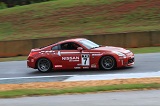
My Redline track model was one of the original pre-orders and has probably seen as many track days from '02-present as any 350Z in the country. I've used a variety of pads and materials and presently use Cobalt Friction's GT-Sport compound. Not as aggressive as some full-race pads, but they do nicely as a combo street/track package. I'm also using Valvoline Synpower DOT 4 fluid, which has also proved successful in my Nissan SCCA GT racecars. That's about it- I've only had problems towards the end of the day (mostly with modulation of braking forces; never an out-and-out failure) at particular tracks. Among the tracks I've had the Z at are Big Willow, California Speedway (long course), Buttonwillow (all in CA), Pueblo Motorsports Park, LaJunta Raceways, Second Creek Raceway, Mountain View (in CO) and Sandia Motorsports Park (in NM).
One factor that hasn'thad much discussion is the actual application of the brakes themselves. A driver without much high speed motorsport experience is MUCH more likely to overuse the brakes. A quick, but decisive application, is much more effective at both slowing the car down and moderating the overall generation and retention of heat in the brakes. If you're unfamiliar with the track you're driving, overuse of the brakes gets magnified even more! Knowing your braking zones and being able to cleve off just enough speed is clearly a powerful advantage. In my experience, the Brembos on the Z are perfectly suited for track use, but stopping a powerful, RWD, three and a half ton vehicle make it critical to not overuse the brakes. Easy to say, difficult to execute, I know.
I also believe that a careful bedding of new pads or rotors is critical in any track situation. After going through your brakes once again, if they continue to be a problem, I'd suggest utilizing some of the solutions that Nissan T2 racers have tried: front brake ducts and/or Ti brake shims (both available through Nissan Motorsports). Otherwise, the full race compounds (Hawk Blues or Cobalt Friction's VR) remain viable alternatives.
Good luck!
David Muramoto
Sport Z Magazine Motorsports Editor
One factor that hasn'thad much discussion is the actual application of the brakes themselves. A driver without much high speed motorsport experience is MUCH more likely to overuse the brakes. A quick, but decisive application, is much more effective at both slowing the car down and moderating the overall generation and retention of heat in the brakes. If you're unfamiliar with the track you're driving, overuse of the brakes gets magnified even more! Knowing your braking zones and being able to cleve off just enough speed is clearly a powerful advantage. In my experience, the Brembos on the Z are perfectly suited for track use, but stopping a powerful, RWD, three and a half ton vehicle make it critical to not overuse the brakes. Easy to say, difficult to execute, I know.
I also believe that a careful bedding of new pads or rotors is critical in any track situation. After going through your brakes once again, if they continue to be a problem, I'd suggest utilizing some of the solutions that Nissan T2 racers have tried: front brake ducts and/or Ti brake shims (both available through Nissan Motorsports). Otherwise, the full race compounds (Hawk Blues or Cobalt Friction's VR) remain viable alternatives.
Good luck!
David Muramoto
Sport Z Magazine Motorsports Editor
Last edited by dkmura; Mar 2, 2006 at 10:36 AM.
Originally Posted by dkmura
My Redline track model was one of the original pre-orders and has probably seen as many track days from '02-present as any 350Z in the country. I've used a variety of pads and materials and presently use Cobalt Friction's GT-Sport compound. Not as aggressive as some full-race pads, but they do nicely as a combo street/track package. I'm also using Valvoline Synpower DOT 4 fluid, which has also proved successful in my Nissan SCCA GT racecars. That's about it- I've only had problems towards the end of the day (mostly with modulation of braking forces; never an out-and-out failure) at particular tracks. Among the tracks I've had the Z at are Big Willow, California Speedway (long course), Buttonwillow (all in CA), Pueblo Motorsports Park, LaJunta Raceways, Second Creek Raceway, Mountain View (in CO) and Sandia Motorsports Park (in NM).
One factor that hasn'thad much discussion is the actual application of the brakes themselves. A driver without much high speed motorsport experience is MUCH more likely to overuse the brakes. A quick, but decisive application, is much more effective at both slowing the car down and moderating the overall generation and retention of heat in the brakes. If you're unfamiliar with the track you're driving, overuse of the brakes gets magnified even more! Knowing your braking zones and being able to cleve off just enough speed is clearly a powerful advantage. In my experience, the Brembos on the Z are perfectly suited for track use, but stopping a powerful, RWD, three and a half ton vehicle make it critical to not overuse the brakes. Easy to say, difficult to execute, I know.
I also believe that a careful bedding of new pads or rotors is critical in any track situation. After going through your brakes once again, if they continue to be a problem, I'd suggest utilizing some of the solutions that Nissan T2 racers have tried: front brake ducts and/or Ti brake shims (both available through Nissan Motorsports). Otherwise, the full race compounds (Hawk Blues or Cobalt Friction's VR) remain viable alternatives.
Good luck!
David Muramoto
Sport Z Magazine Motorsports Editor
One factor that hasn'thad much discussion is the actual application of the brakes themselves. A driver without much high speed motorsport experience is MUCH more likely to overuse the brakes. A quick, but decisive application, is much more effective at both slowing the car down and moderating the overall generation and retention of heat in the brakes. If you're unfamiliar with the track you're driving, overuse of the brakes gets magnified even more! Knowing your braking zones and being able to cleve off just enough speed is clearly a powerful advantage. In my experience, the Brembos on the Z are perfectly suited for track use, but stopping a powerful, RWD, three and a half ton vehicle make it critical to not overuse the brakes. Easy to say, difficult to execute, I know.
I also believe that a careful bedding of new pads or rotors is critical in any track situation. After going through your brakes once again, if they continue to be a problem, I'd suggest utilizing some of the solutions that Nissan T2 racers have tried: front brake ducts and/or Ti brake shims (both available through Nissan Motorsports). Otherwise, the full race compounds (Hawk Blues or Cobalt Friction's VR) remain viable alternatives.
Good luck!
David Muramoto
Sport Z Magazine Motorsports Editor
yeah I'm going to agree based on my readings from people who really push the crap out of their cars on the track.
however, even with semi race pads, Ti shims, air ducts, stoptech rotors, high temp brake fluid, and SS lines, at what hp level would the brembos no longer be suficient like if you were to go FI?
In hindsight I guess I wish I went with the stoptech kit, but I was thinking I was going to stay NA so I went ahead and upgraded my brembo brake components to save money and weight. Probably not a huge deal since I don't really track my car constantly or anything
Originally Posted by sentry65
yeah I'm going to agree based on my readings from people who really push the crap out of their cars on the track.
however, even with semi race pads, Ti shims, air ducts, stoptech rotors, high temp brake fluid, and SS lines, at what hp level would the brembos no longer be suficient like if you were to go FI?
In hindsight I guess I wish I went with the stoptech kit, but I was thinking I was going to stay NA so I went ahead and upgraded my brembo brake components to save money and weight. Probably not a huge deal since I don't really track my car constantly or anything
however, even with semi race pads, Ti shims, air ducts, stoptech rotors, high temp brake fluid, and SS lines, at what hp level would the brembos no longer be suficient like if you were to go FI?
In hindsight I guess I wish I went with the stoptech kit, but I was thinking I was going to stay NA so I went ahead and upgraded my brembo brake components to save money and weight. Probably not a huge deal since I don't really track my car constantly or anything
And like dkmura said, braking technique will go a long way to preserve your brakes.
At some point in modding our cars, we have to decide on what we want to do. A full race car or a street car? An open wheeler will be much cheaper and easier to maintain...
Joined: May 2002
Posts: 8,629
Likes: 1,394
From: Aurora, Colorado
Originally Posted by sentry65
yeah I'm going to agree based on my readings from people who really push the crap out of their cars on the track.
however, even with semi race pads, Ti shims, air ducts, stoptech rotors, high temp brake fluid, and SS lines, at what hp level would the brembos no longer be suficient like if you were to go FI?
In hindsight I guess I wish I went with the stoptech kit, but I was thinking I was going to stay NA so I went ahead and upgraded my brembo brake components to save money and weight. Probably not a huge deal since I don't really track my car constantly or anything
however, even with semi race pads, Ti shims, air ducts, stoptech rotors, high temp brake fluid, and SS lines, at what hp level would the brembos no longer be suficient like if you were to go FI?
In hindsight I guess I wish I went with the stoptech kit, but I was thinking I was going to stay NA so I went ahead and upgraded my brembo brake components to save money and weight. Probably not a huge deal since I don't really track my car constantly or anything
Hindsight is 20/20, so since you've already spent the money, go ahead and check your corner weights to be more informed. Take in a few more track days and adjust both the time you spend on-course and the intensity your driving with what you know your car can handle. One last suggestion: if possible, take one cool-down lap at the end of each session. Drive quickly enough to stay out of the way and off-line down the difficult sections, to allow the brakes to cool without hammering them to the end.
Last edited by dkmura; Mar 2, 2006 at 12:42 PM.
yeah i'm figuring my weight distribution is going to be close to stock actually
for the front of my car
vortech +80 lbs
SSV -10
ATS twin -20
headers and cats -25
hawker oddysey battery -20
bigger radiator, oil pan, oil cooler, sway bar, etc +15
removed misc stuff, and fiberglass hood -5
so i'll be gaining roughly 15 lbs up front over stock, but yeah the location of the vortech is in front of the wheels so it isn't simple math - corner balancing is the only way etc. I've only removed about 20 lbs from the rear specifically - unless i take out the spare
currently I have the tilton clutch which is 10 lbs lighter than the ATS clutch (in total) - so going FI will add really about 90 lbs to the front compared to my current setup. Oh well though, I still drive on the street 99% of the time compared to tracking and am looking forward to getting an additional 120-150 hp by the time i'm done tuning everything
for the front of my car
vortech +80 lbs
SSV -10
ATS twin -20
headers and cats -25
hawker oddysey battery -20
bigger radiator, oil pan, oil cooler, sway bar, etc +15
removed misc stuff, and fiberglass hood -5
so i'll be gaining roughly 15 lbs up front over stock, but yeah the location of the vortech is in front of the wheels so it isn't simple math - corner balancing is the only way etc. I've only removed about 20 lbs from the rear specifically - unless i take out the spare
currently I have the tilton clutch which is 10 lbs lighter than the ATS clutch (in total) - so going FI will add really about 90 lbs to the front compared to my current setup. Oh well though, I still drive on the street 99% of the time compared to tracking and am looking forward to getting an additional 120-150 hp by the time i'm done tuning everything
Last edited by sentry65; Mar 2, 2006 at 01:05 PM.

My stoptech instructions indicate that the bleeder screws should be tightened to 8 lb-in. That's a lot less than 10 lb-ft, so I'm not surprised some mechanics are questioning the torque specs you (uwaeve) stated.
I get some seepage at the bleeders too, but it's not that bad.
I get some seepage at the bleeders too, but it's not that bad.

A couple of thoughts on your brake situation...
Does the soft pedal feeling increase as you wear through a set of brake pads? Is it relatively consistent throughout a given session once everything comes up to temperature? Does it typically feel worse if you haven't used the brakes recently in the lap and feel better if the brakes were recently used?
If so, I suspect what you are feeling is pad knockback. It is not a bad idea to reach over with your left foot and bring the pads to the surface of the rotor on the straight away before hard braking zones. You can do this while your right foot is on the gas. That way when you hit the brakes, you know you will have a good solid pedal feel and you will have the confidence to go as deep as possible into a given corner.
As far as brake fluid goes, I use Ford Heavy duty. It is very cheap, readily available, and come in small containers. When I bleed my brakes (typically before each event), I make sure that I use a new container to minimize the amount of water in the fluid.
As others have mentioned, full race pads are best for track days because they operate in the higher temperature ranges that you experience on the track. Optimally you will want to trailer the car to the track or change the pads/rotors once you get to the track. If you drive your car to the track with race pads you will want to be very careful, because they typically don't work well when cold. In some cases, you need to allow 2-3x the normal stopping distance.
I have found that I typically have a little weeping out of the bleeder screws at the track. Just monitor it and be careful not to over tighten the bleeders.
Good luck!
-Rob
Does the soft pedal feeling increase as you wear through a set of brake pads? Is it relatively consistent throughout a given session once everything comes up to temperature? Does it typically feel worse if you haven't used the brakes recently in the lap and feel better if the brakes were recently used?
If so, I suspect what you are feeling is pad knockback. It is not a bad idea to reach over with your left foot and bring the pads to the surface of the rotor on the straight away before hard braking zones. You can do this while your right foot is on the gas. That way when you hit the brakes, you know you will have a good solid pedal feel and you will have the confidence to go as deep as possible into a given corner.
As far as brake fluid goes, I use Ford Heavy duty. It is very cheap, readily available, and come in small containers. When I bleed my brakes (typically before each event), I make sure that I use a new container to minimize the amount of water in the fluid.
As others have mentioned, full race pads are best for track days because they operate in the higher temperature ranges that you experience on the track. Optimally you will want to trailer the car to the track or change the pads/rotors once you get to the track. If you drive your car to the track with race pads you will want to be very careful, because they typically don't work well when cold. In some cases, you need to allow 2-3x the normal stopping distance.
I have found that I typically have a little weeping out of the bleeder screws at the track. Just monitor it and be careful not to over tighten the bleeders.
Good luck!
-Rob