


Powerlab GT35R 8lbs


 Good reason not to spend money on stupid fiberglass bumpers that are not wind tunnel tested.
Thread Starter
Registered User
Joined: Oct 2009
Posts: 507
Likes: 0
From: Davie

im still on stock 06 bumper with no heat issues at all neither but i bought the k2 remix bumper to try sumthin different... intercooler will be exposed to more air of course... think it'll make a noticable difference?

Registered User
Joined: Oct 2007
Posts: 1,891
Likes: 1
From: Chicago
Thread Starter
Registered User
Joined: Oct 2009
Posts: 507
Likes: 0
From: Davie
yea i think i remember reading some bumpers jus shredding apart at high speeds... i think i read alberto had a similar problem as well...
Got my ac recharged thursday.... like greengoblin said it was the best money ever spent
Car is running great... I have to give props to Intense for the design n reliability of this kit. I know in FI there's always a gamble but of course u can take extra precautions to minimize the BOOM...
Kit well designed, great install job by GreenGoblin and my tuner Roger @ Japtrix with a great safe conservative tune = lots n lots of fun!
I was very fortunate to have a great FI experience and now im into researching and learning as much to get a better understanding of how it all works.
Gotta love that i can freely smash on the gas pedal without the worries of something going wrong
*KNOCKS ON WOOD*
Got my ac recharged thursday.... like greengoblin said it was the best money ever spent
Car is running great... I have to give props to Intense for the design n reliability of this kit. I know in FI there's always a gamble but of course u can take extra precautions to minimize the BOOM...
Kit well designed, great install job by GreenGoblin and my tuner Roger @ Japtrix with a great safe conservative tune = lots n lots of fun!
I was very fortunate to have a great FI experience and now im into researching and learning as much to get a better understanding of how it all works.
Gotta love that i can freely smash on the gas pedal without the worries of something going wrong
*KNOCKS ON WOOD*

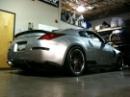


Says you. The 03-04 Nismo G35 sedan and 05-06 has a 0.26 drag coefficient. The stock bumper is made of several different parts and there is a front splitter on 05-06 sedans which is not used on fiberglass mock ups. All the fiberglass bumpers I've seen look like they resist air flow.
Get the aluminum lower cover. Problem solved.
yea i think i remember reading some bumpers jus shredding apart at high speeds... i think i read alberto had a similar problem as well...
Got my ac recharged thursday.... like greengoblin said it was the best money ever spent
Car is running great... I have to give props to Intense for the design n reliability of this kit. I know in FI there's always a gamble but of course u can take extra precautions to minimize the BOOM...
Kit well designed, great install job by GreenGoblin and my tuner Roger @ Japtrix with a great safe conservative tune = lots n lots of fun!
I was very fortunate to have a great FI experience and now im into researching and learning as much to get a better understanding of how it all works.
Gotta love that i can freely smash on the gas pedal without the worries of something going wrong
*KNOCKS ON WOOD*
Got my ac recharged thursday.... like greengoblin said it was the best money ever spent
Car is running great... I have to give props to Intense for the design n reliability of this kit. I know in FI there's always a gamble but of course u can take extra precautions to minimize the BOOM...
Kit well designed, great install job by GreenGoblin and my tuner Roger @ Japtrix with a great safe conservative tune = lots n lots of fun!
I was very fortunate to have a great FI experience and now im into researching and learning as much to get a better understanding of how it all works.
Gotta love that i can freely smash on the gas pedal without the worries of something going wrong
*KNOCKS ON WOOD*
Last edited by Andrei; Jul 25, 2010 at 10:11 PM.

but like stated, both sides will see that pressure, the only difference is one side gets the spring pressure so idk how that would effect it not working properly when 7psi is more than enough to hold that valve shut. i'm not an expert at it though.
tial said it only depends on the vac at idle so that's what i'm going by.

Thread Starter
Registered User
Joined: Oct 2009
Posts: 507
Likes: 0
From: Davie
some fun i had last night at the local hangout on 27
God I love my car
http://www.youtube.com/watch?v=SowO8BvtQPw
fully built b16 (minus sleeves i think) on 16lbs of boost also didnt have the passenger seat in..
my powerlab gt35r 8lbs 20' wheels on stretched tires with my buddy recording...
40 roll wit tires slippin but once i popped 3rd n got traction i started pullin
God I love my car
http://www.youtube.com/watch?v=SowO8BvtQPw
fully built b16 (minus sleeves i think) on 16lbs of boost also didnt have the passenger seat in..
my powerlab gt35r 8lbs 20' wheels on stretched tires with my buddy recording...
40 roll wit tires slippin but once i popped 3rd n got traction i started pullin


typical boosted B16 around 16psi is about mid 300whp @8000 rpms and runs mid 12s quarter. 250 ft-lbs trq FTL! 
http://www.honda-tech.com/showthread.php?t=1365747
Nice kill!
http://www.honda-tech.com/showthread.php?t=1365747
Nice kill!
Last edited by str8dum1; Jul 30, 2010 at 06:15 AM.
Thread Starter
Registered User
Joined: Oct 2009
Posts: 507
Likes: 0
From: Davie
Yea it was a fun race.. Also gotta consider in the weight factor... That lil rocket coupe he had i think I could've almost bench pressed that car!
Plus rollin on 20's wit stretched tires makes for an interesting ride soon as full boost kicks in
Anyway just enjoyin the hell out of my car for now
Plus rollin on 20's wit stretched tires makes for an interesting ride soon as full boost kicks in
Anyway just enjoyin the hell out of my car for now


off topic but good info:
http://auto.howstuffworks.com/nissan-350z-design1.htm
350Z Aerodynamics
In developing the 350Z's body, engineers spent lots of time in Nissan Technical Center's wind tunnel testing the 350Z aerodynamics. But not for the reasons you might think.
©2007 Publications International, Ltd.
The underside of the car was designed to be perfectly flat and reduce lift.
This was a sports car, bulging with muscularity and character -- not some bar-of-soap science experiment. The bragging rights for the car with the world's lowest coefficient of drag would have to wait.
Instead, the aerodynamic work was directed primarily at attaining zero body lift. Increased stability would be the benefit, with lower wind noise a pleasant side effect. By managing the airflow under the car, the tendency of the body to lift during high-speed driving was eliminated and the car felt as if it was driving in a vacuum. The precise handling experienced at low speeds could also be enjoyed at high speeds.
The myriad changes that resulted from this research were subtle, but important. For starters, the 350Z's floor was designed to be as flat as possible, with few pieces protruding and creating drag. The exhaust system was routed to hug the underbody, with the crossflow muffler laid out flat.
The fuel tank was tucked up under the floor beneath the luggage area. The front bumper and engine undercover were shaped to help compress the air and increase its velocity -- thus decreasing the pressure and creating a vacuum under the car, sucking it to the ground.
At the rear of the engine, undercover airflow was dispersed to reduce lift. Air was guided and further hustled along through floor side farings and underfloor deflectors. In addition to a rear diffuser to reduce rear lift, the Track model featured a small chin spoiler behind the bumper and an equally minimal deck spoiler at the rearmost edge of the hatch door.
Considering the not-inconsiderable bulges over its wheelhousings, the base 350Z netted a respectable 0.30 coefficient of drag. For the Track model, the Cd dropped to a rather slippery 0.29.
http://auto.howstuffworks.com/nissan-350z-design1.htm
350Z Aerodynamics
In developing the 350Z's body, engineers spent lots of time in Nissan Technical Center's wind tunnel testing the 350Z aerodynamics. But not for the reasons you might think.
©2007 Publications International, Ltd.
The underside of the car was designed to be perfectly flat and reduce lift.
This was a sports car, bulging with muscularity and character -- not some bar-of-soap science experiment. The bragging rights for the car with the world's lowest coefficient of drag would have to wait.
Instead, the aerodynamic work was directed primarily at attaining zero body lift. Increased stability would be the benefit, with lower wind noise a pleasant side effect. By managing the airflow under the car, the tendency of the body to lift during high-speed driving was eliminated and the car felt as if it was driving in a vacuum. The precise handling experienced at low speeds could also be enjoyed at high speeds.
The myriad changes that resulted from this research were subtle, but important. For starters, the 350Z's floor was designed to be as flat as possible, with few pieces protruding and creating drag. The exhaust system was routed to hug the underbody, with the crossflow muffler laid out flat.
The fuel tank was tucked up under the floor beneath the luggage area. The front bumper and engine undercover were shaped to help compress the air and increase its velocity -- thus decreasing the pressure and creating a vacuum under the car, sucking it to the ground.
At the rear of the engine, undercover airflow was dispersed to reduce lift. Air was guided and further hustled along through floor side farings and underfloor deflectors. In addition to a rear diffuser to reduce rear lift, the Track model featured a small chin spoiler behind the bumper and an equally minimal deck spoiler at the rearmost edge of the hatch door.
Considering the not-inconsiderable bulges over its wheelhousings, the base 350Z netted a respectable 0.30 coefficient of drag. For the Track model, the Cd dropped to a rather slippery 0.29.
Thread Starter
Registered User
Joined: Oct 2009
Posts: 507
Likes: 0
From: Davie
off topic but good info: http://auto.howstuffworks.com/nissan-350z-design1.htm
350Z Aerodynamics
In developing the 350Z's body, engineers spent lots of time in Nissan Technical Center's wind tunnel testing the 350Z aerodynamics. But not for the reasons you might think. ©2007 Publications International, Ltd.
The underside of the car was designed to be perfectly flat and reduce lift.
This was a sports car, bulging with muscularity and character -- not some bar-of-soap science experiment. The bragging rights for the car with the world's lowest coefficient of drag would have to wait. Instead, the aerodynamic work was directed primarily at attaining zero body lift. Increased stability would be the benefit, with lower wind noise a pleasant side effect. By managing the airflow under the car, the tendency of the body to lift during high-speed driving was eliminated and the car felt as if it was driving in a vacuum. The precise handling experienced at low speeds could also be enjoyed at high speeds. The myriad changes that resulted from this research were subtle, but important. For starters, the 350Z's floor was designed to be as flat as possible, with few pieces protruding and creating drag. The exhaust system was routed to hug the underbody, with the crossflow muffler laid out flat. The fuel tank was tucked up under the floor beneath the luggage area. The front bumper and engine undercover were shaped to help compress the air and increase its velocity -- thus decreasing the pressure and creating a vacuum under the car, sucking it to the ground. At the rear of the engine, undercover airflow was dispersed to reduce lift. Air was guided and further hustled along through floor side farings and underfloor deflectors. In addition to a rear diffuser to reduce rear lift, the Track model featured a small chin spoiler behind the bumper and an equally minimal deck spoiler at the rearmost edge of the hatch door. Considering the not-inconsiderable bulges over its wheelhousings, the base 350Z netted a respectable 0.30 coefficient of drag. For the Track model, the Cd dropped to a rather slippery 0.29.
350Z Aerodynamics
In developing the 350Z's body, engineers spent lots of time in Nissan Technical Center's wind tunnel testing the 350Z aerodynamics. But not for the reasons you might think. ©2007 Publications International, Ltd.
The underside of the car was designed to be perfectly flat and reduce lift.
This was a sports car, bulging with muscularity and character -- not some bar-of-soap science experiment. The bragging rights for the car with the world's lowest coefficient of drag would have to wait. Instead, the aerodynamic work was directed primarily at attaining zero body lift. Increased stability would be the benefit, with lower wind noise a pleasant side effect. By managing the airflow under the car, the tendency of the body to lift during high-speed driving was eliminated and the car felt as if it was driving in a vacuum. The precise handling experienced at low speeds could also be enjoyed at high speeds. The myriad changes that resulted from this research were subtle, but important. For starters, the 350Z's floor was designed to be as flat as possible, with few pieces protruding and creating drag. The exhaust system was routed to hug the underbody, with the crossflow muffler laid out flat. The fuel tank was tucked up under the floor beneath the luggage area. The front bumper and engine undercover were shaped to help compress the air and increase its velocity -- thus decreasing the pressure and creating a vacuum under the car, sucking it to the ground. At the rear of the engine, undercover airflow was dispersed to reduce lift. Air was guided and further hustled along through floor side farings and underfloor deflectors. In addition to a rear diffuser to reduce rear lift, the Track model featured a small chin spoiler behind the bumper and an equally minimal deck spoiler at the rearmost edge of the hatch door. Considering the not-inconsiderable bulges over its wheelhousings, the base 350Z netted a respectable 0.30 coefficient of drag. For the Track model, the Cd dropped to a rather slippery 0.29.