


0w40 users - higher oil pressure?


Thread Starter
Registered User
Joined: Sep 2010
Posts: 2
Likes: 0
From: San Diego, CA
 0w40 users - higher oil pressure?
Hey everyone! Just purchased a used 2008 350z and switched to synthetic; Mobil 1 0w40, after doing some research on these forums.
However, i'm noticing that my oil pressure seems to be running very high;
approximately 30-35psi @ idle
approximately 90psi @ 2k rpm
pinned at 120psi at 4k+ rpm
Could this be caused by the oil, or is it more likely due to a bad sending unit? For the guys that are running 0w40, are your psi numbers similar, or are they running lower?
However, i'm noticing that my oil pressure seems to be running very high;
approximately 30-35psi @ idle
approximately 90psi @ 2k rpm
pinned at 120psi at 4k+ rpm
Could this be caused by the oil, or is it more likely due to a bad sending unit? For the guys that are running 0w40, are your psi numbers similar, or are they running lower?

New Member
Joined: May 2009
Posts: 347
Likes: 0
From: Phoenix, AZ
Run what the car asks for: 5w-30. How long have you warmed it up before you check your pressure readings? It could be caused by a sensor, but we can't diagnose till we get more information. Those levels sound perfectly fine if the car has been on for 8.765 minutes, but if it's been on for an hour then they're high.

Run what the car asks for: 5w-30. How long have you warmed it up before you check your pressure readings? It could be caused by a sensor, but we can't diagnose till we get more information. Those levels sound perfectly fine if the car has been on for 8.765 minutes, but if it's been on for an hour then they're high.
op, like dirtbikr said, if the car is cold started the oil pressure will read higher due to the viscosity of the oil being thicker at lower temps. I wouldn't worry about it unless you over filled your oil, in which case that is not a good thing.
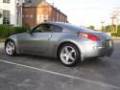


0w-40 has been proven to run better on our motors than the 5w30 through oil analysis.
op, like dirtbikr said, if the car is cold started the oil pressure will read higher due to the viscosity of the oil being thicker at lower temps. I wouldn't worry about it unless you over filled your oil, in which case that is not a good thing.
op, like dirtbikr said, if the car is cold started the oil pressure will read higher due to the viscosity of the oil being thicker at lower temps. I wouldn't worry about it unless you over filled your oil, in which case that is not a good thing.
Thread Starter
Registered User
Joined: Sep 2010
Posts: 2
Likes: 0
From: San Diego, CA
Thanks for the replies.... just some additional info;
Approximately 19,900 miles on the car. I'm in sales, so I drive from place to place all day; the car will see lots of engine starts and short trips when driving from account to account throughout day, but will also see some extended highway driving.
The pressures I gave are after initial warm-ups... On a cold start at idle, psi is at about 80.... after warm-up and some light driving, it settles in at around 30-35psi @ idle, which isnt concerning me. What is concerning is that it jumps to 90psi @ 2k rpm and pins 120psi at around 4k rpm.
Any of you guys running 0w40 and seeing pressures this high? I'm thinking that its got to be either the oil, or a bad sending unit, but i'm leaning towards the sending unit as I didnt think going from 5w30 to 0w40 could create such a dramatic oil pressure increase.
After doing more research after the fact, I found some posts that said running a heavier weight oil can cause all kinds of problems in addition to the added pressure strain on the oil system; the higher pressures can cause tolerances to widen, cause rings and gaskets to deform, etc etc.
This car is going to be my daily driver, and I usually drive close to 20k miles per year... I just want to make sure to keep the engine running like new for preferrably as long as I own the vehicle.
Also, I live in San Diego, so the car will not be seeing any freezing temperatures but will see warm weather frequently.
Approximately 19,900 miles on the car. I'm in sales, so I drive from place to place all day; the car will see lots of engine starts and short trips when driving from account to account throughout day, but will also see some extended highway driving.
The pressures I gave are after initial warm-ups... On a cold start at idle, psi is at about 80.... after warm-up and some light driving, it settles in at around 30-35psi @ idle, which isnt concerning me. What is concerning is that it jumps to 90psi @ 2k rpm and pins 120psi at around 4k rpm.
Any of you guys running 0w40 and seeing pressures this high? I'm thinking that its got to be either the oil, or a bad sending unit, but i'm leaning towards the sending unit as I didnt think going from 5w30 to 0w40 could create such a dramatic oil pressure increase.
After doing more research after the fact, I found some posts that said running a heavier weight oil can cause all kinds of problems in addition to the added pressure strain on the oil system; the higher pressures can cause tolerances to widen, cause rings and gaskets to deform, etc etc.
This car is going to be my daily driver, and I usually drive close to 20k miles per year... I just want to make sure to keep the engine running like new for preferrably as long as I own the vehicle.
Also, I live in San Diego, so the car will not be seeing any freezing temperatures but will see warm weather frequently.
Last edited by barrman; Sep 13, 2010 at 08:49 AM.


I'm curious to see if others are having the high pressure as the OP is experiencing with M1 0W-40.
Right now, I have German Castrol Synth 0W-30 and the pressure is much less when idling.
warming up - 90 psi
idling - 15 psi
accelerating - 120 psi
*From what I've read, 15psi @ idling is normal for our Z's.
Right now, I have German Castrol Synth 0W-30 and the pressure is much less when idling.
warming up - 90 psi
idling - 15 psi
accelerating - 120 psi
*From what I've read, 15psi @ idling is normal for our Z's.
Trending Topics

Don't overlook the oil pressure sender may be having issues. When you turn your key to the on position (engine off) does it register any reading? If it does read anything over 0, replace the sensor. If it reads 0, assume its functioning correctly and something else is causing the elevated pressures until something tells you otherwise. I don't believe that a 0-40 will read that high but it is possible (just sounds high). I've run a 20-50 with similar pressure readings to what you have and 10-40 was just about 5-10 psi higher than 5-30.
Last edited by Zazz93; Sep 13, 2010 at 10:26 AM.


I think you should check your facts buddy, as you are most definitely mistaken. I feel obligated to correct you in case people read this and believe that statement. It is the exact opposite of what you said.
As the engine get's hotter the oil gets thinner.
Please see the numbers below for 0w40
Vis @ 40°C, cSt 81
Vis @ 100°C, cSt 15.1
The lower the cSt the thiner the oil
Last edited by Colin_S; Sep 16, 2010 at 01:25 PM.
What Is Oil Viscosity?
Oil is rated by the Society of Automotive Engineers (SAE) for viscosity. Viscosity is a rating which describes the thickness of a fluid. Engines are designed to use oil rated at a certain viscosity. Viscosity is very important in preserving engine life and reducing wear-and-tear.
Viscometer
1. To determine viscosity a measured amount of oil is heated to 100 degrees Celsius (210 degrees Fahrenheit) and poured through a device called a viscometer. The time it takes the oil to flow through the viscometer determines the weight of the oil.
Oil Weight
2. Oil is often referred to in terms of weight. Oil weight is not to a measurement of ounces or pounds but viscosity. The terms weight and viscosity are interchangeable.
High vs. Low
3. High-viscosity oil will have a higher number and consequently take longer to flow out of a viscometer. Fifty-weight oil is thicker and will flow out of the viscometer more slowly than 20-weight oil.
Multi-viscosity
4. Modern oils sometimes have a multi-weight rating. Oil rated at 5W30 would be an example of multi-weight oil. Multi-viscosity oil is tested at colder temperatures as well as higher temperatures so it performs like 5-weight oil at colder temperatures and 30-weight oil at higher temperatures.
Why Multi-viscosity
5. When an engine is cold, 30-weight oil will flow slowly and not circulate quickly enough to limit damage to the engine. Having multi-viscosity oil in your engine will allow the oil to be thin enough to circulate readily in a cold engine yet retain its needed thickness when the engine warms.
Oil is rated by the Society of Automotive Engineers (SAE) for viscosity. Viscosity is a rating which describes the thickness of a fluid. Engines are designed to use oil rated at a certain viscosity. Viscosity is very important in preserving engine life and reducing wear-and-tear.
Viscometer
1. To determine viscosity a measured amount of oil is heated to 100 degrees Celsius (210 degrees Fahrenheit) and poured through a device called a viscometer. The time it takes the oil to flow through the viscometer determines the weight of the oil.
Oil Weight
2. Oil is often referred to in terms of weight. Oil weight is not to a measurement of ounces or pounds but viscosity. The terms weight and viscosity are interchangeable.
High vs. Low
3. High-viscosity oil will have a higher number and consequently take longer to flow out of a viscometer. Fifty-weight oil is thicker and will flow out of the viscometer more slowly than 20-weight oil.
Multi-viscosity
4. Modern oils sometimes have a multi-weight rating. Oil rated at 5W30 would be an example of multi-weight oil. Multi-viscosity oil is tested at colder temperatures as well as higher temperatures so it performs like 5-weight oil at colder temperatures and 30-weight oil at higher temperatures.
Why Multi-viscosity
5. When an engine is cold, 30-weight oil will flow slowly and not circulate quickly enough to limit damage to the engine. Having multi-viscosity oil in your engine will allow the oil to be thin enough to circulate readily in a cold engine yet retain its needed thickness when the engine warms.
http://www.valvolinecummins.com/Tips...l-Pressure.asp
What Is Oil Viscosity?
Oil is rated by the Society of Automotive Engineers (SAE) for viscosity. Viscosity is a rating which describes the thickness of a fluid. Engines are designed to use oil rated at a certain viscosity. Viscosity is very important in preserving engine life and reducing wear-and-tear.
Viscometer
1. To determine viscosity a measured amount of oil is heated to 100 degrees Celsius (210 degrees Fahrenheit) and poured through a device called a viscometer. The time it takes the oil to flow through the viscometer determines the weight of the oil.
Oil Weight
2. Oil is often referred to in terms of weight. Oil weight is not to a measurement of ounces or pounds but viscosity. The terms weight and viscosity are interchangeable.
High vs. Low
3. High-viscosity oil will have a higher number and consequently take longer to flow out of a viscometer. Fifty-weight oil is thicker and will flow out of the viscometer more slowly than 20-weight oil.
Multi-viscosity
4. Modern oils sometimes have a multi-weight rating. Oil rated at 5W30 would be an example of multi-weight oil. Multi-viscosity oil is tested at colder temperatures as well as higher temperatures so it performs like 5-weight oil at colder temperatures and 30-weight oil at higher temperatures.
Why Multi-viscosity
5. When an engine is cold, 30-weight oil will flow slowly and not circulate quickly enough to limit damage to the engine. Having multi-viscosity oil in your engine will allow the oil to be thin enough to circulate readily in a cold engine yet retain its needed thickness when the engine warms.
Oil is rated by the Society of Automotive Engineers (SAE) for viscosity. Viscosity is a rating which describes the thickness of a fluid. Engines are designed to use oil rated at a certain viscosity. Viscosity is very important in preserving engine life and reducing wear-and-tear.
Viscometer
1. To determine viscosity a measured amount of oil is heated to 100 degrees Celsius (210 degrees Fahrenheit) and poured through a device called a viscometer. The time it takes the oil to flow through the viscometer determines the weight of the oil.
Oil Weight
2. Oil is often referred to in terms of weight. Oil weight is not to a measurement of ounces or pounds but viscosity. The terms weight and viscosity are interchangeable.
High vs. Low
3. High-viscosity oil will have a higher number and consequently take longer to flow out of a viscometer. Fifty-weight oil is thicker and will flow out of the viscometer more slowly than 20-weight oil.
Multi-viscosity
4. Modern oils sometimes have a multi-weight rating. Oil rated at 5W30 would be an example of multi-weight oil. Multi-viscosity oil is tested at colder temperatures as well as higher temperatures so it performs like 5-weight oil at colder temperatures and 30-weight oil at higher temperatures.
Why Multi-viscosity
5. When an engine is cold, 30-weight oil will flow slowly and not circulate quickly enough to limit damage to the engine. Having multi-viscosity oil in your engine will allow the oil to be thin enough to circulate readily in a cold engine yet retain its needed thickness when the engine warms.
That is absolutely correct, however oil still does not get thicker when it gets hotter.
"it performs like 5-weight oil at colder temperatures and 30-weight oil at higher temperatures."
This is the key, but 30 weight oil at higher temperature is still thinner than 5-weight oil at colder temperatures.
Multi-viscosity
4. Modern oils sometimes have a multi-weight rating. Oil rated at 5W30 would be an example of multi-weight oil. Multi-viscosity oil is tested at colder temperatures as well as higher temperatures so it performs like 5-weight oil at colder temperatures and 30-weight oil at higher temperatures.
Why Multi-viscosity
5. When an engine is cold, 30-weight oil will flow slowly and not circulate quickly enough to limit damage to the engine. Having multi-viscosity oil in your engine will allow the oil to be thin enough to circulate readily in a cold engine yet retain its needed thickness when the engine warms.
4. Modern oils sometimes have a multi-weight rating. Oil rated at 5W30 would be an example of multi-weight oil. Multi-viscosity oil is tested at colder temperatures as well as higher temperatures so it performs like 5-weight oil at colder temperatures and 30-weight oil at higher temperatures.
Why Multi-viscosity
5. When an engine is cold, 30-weight oil will flow slowly and not circulate quickly enough to limit damage to the engine. Having multi-viscosity oil in your engine will allow the oil to be thin enough to circulate readily in a cold engine yet retain its needed thickness when the engine warms.
you just proved yourself wrong... it behaves "like" a 5weight oil at cold starts and a 30 weight at warm up - doesn't mean that it's thicker when warmed up vs cold start.. basic chemistry class would explain this.. all it means is that the oil doesnt get extremely thin when warmed up, but that doesnt mean its thicker when warm, it is thinner. Colin posted the viscosity numbers already at different temps
taken from here - http://members.themotoroilevaluator....dex.php?id=144
"Naturally, a "5 weight" oil would flow better than a "30 weight" oil. This would make it ideal for cold temperature operation.
Nevertheless, this is a profound misunderstanding of what the labeling means. The two numbers really have little to do with each other. The final number is based upon the kinematic viscosity of the oil at 100 degrees C,"
Last edited by itsjiggajames; Sep 16, 2010 at 01:47 PM.
For someone that spews sarcastic know it all statements all the time i'd expect more out of you
http://www.valvolinecummins.com/Tips...l-Pressure.asp
http://www.valvolinecummins.com/Tips...l-Pressure.asp
Thanks for the informative link. I agree completely.
I've seen the difference first hand, the pressure is notably higher with 20-50. Try it if you doubt it.