


Specifics of tire/wheels sizes vs performance

Thread Starter
Sponsor
Sport Z Magazine
Sport Z Magazine
Joined: Nov 2002
Posts: 6,086
Likes: 48
From: Oceanside Ca
 Specifics of tire/wheels sizes vs performance
I am still trying to narrow down my wheel and tires sizes. Maybe for now, I want to just discuss the size of tire width in relationship to performance. In otherwords, I do not want to get too distracted on 17 vs 18 vs 19" wheel size at the cost of not first discussing the optimal tire width for this car.
From a looks stand point, I like the 245 or 255 ft and 275 or 285 rear. What i am concerned is I might be selecting a size tire that may create more negatives than positives??? The factory tires are much smaller (225 ft and either 235 or 245 rears). Is this because of cost or are those tire sizes optimal for handling? Assuming the tire quality is the same, will a 285 tire out handle a 245? I noiced that some articles describe a larger tire "tracking" and "instead of moving accross the groves of the road, they were falling into the grooves"
Of course i want a good looking set up but I just want to get some feedback when bigger is not better. In porches, the turbo has much larger tires than a stock 911. Is that because of the HP or other reasons? I know some of you have had a number of tire combinations in past cars so maybe your advise can save me from getting the wrong size wheels/tires????
From a looks stand point, I like the 245 or 255 ft and 275 or 285 rear. What i am concerned is I might be selecting a size tire that may create more negatives than positives??? The factory tires are much smaller (225 ft and either 235 or 245 rears). Is this because of cost or are those tire sizes optimal for handling? Assuming the tire quality is the same, will a 285 tire out handle a 245? I noiced that some articles describe a larger tire "tracking" and "instead of moving accross the groves of the road, they were falling into the grooves"
Of course i want a good looking set up but I just want to get some feedback when bigger is not better. In porches, the turbo has much larger tires than a stock 911. Is that because of the HP or other reasons? I know some of you have had a number of tire combinations in past cars so maybe your advise can save me from getting the wrong size wheels/tires????

Guest
Posts: n/a
I have a BMW thats rides on 205/16/55 stock and i got some wheels for it over the summer, they are 19" two piece rims, i have 235/35/19 on the front and 265/30/19 on tha back.
Major differences are the ride is a lot nicer, very smooth on the road and quit, the big tires eat the grooves, i mean the roads here in colorado are bad anyways, i figure if you live somewhere were they have good roads you wont have those problems, the big tires did steel some of the acceleration, eventhough the rims are lighter than the stock ones, it has more rubber on the road to get going, now the handling on it is unbeatable, the set up makes it a lot nicer to go into corners faster, the handling is awesome with the rims and tires, and of course the looks on it are the killer. sooo its really up to you, i think 19" are gonna be fine but more on the ruf ride, usually the bigger the wheel the ruffer the ride gets, but the better the handling gets,
I'm getting my new Infiniti G35 coupe next month and i am gonna get probably 19" or even 20" rims on it, I like the looks of bigger wheels and when you get the bigger tires it definatly improves the handling.
I have an article, not sure where it is right now, but if you want it i'll find it for you, its a test on a BMW with 17", 18",and 19" and its shows the downsides and good sides on bigger wheels
regards
phil
Major differences are the ride is a lot nicer, very smooth on the road and quit, the big tires eat the grooves, i mean the roads here in colorado are bad anyways, i figure if you live somewhere were they have good roads you wont have those problems, the big tires did steel some of the acceleration, eventhough the rims are lighter than the stock ones, it has more rubber on the road to get going, now the handling on it is unbeatable, the set up makes it a lot nicer to go into corners faster, the handling is awesome with the rims and tires, and of course the looks on it are the killer. sooo its really up to you, i think 19" are gonna be fine but more on the ruf ride, usually the bigger the wheel the ruffer the ride gets, but the better the handling gets,
I'm getting my new Infiniti G35 coupe next month and i am gonna get probably 19" or even 20" rims on it, I like the looks of bigger wheels and when you get the bigger tires it definatly improves the handling.
I have an article, not sure where it is right now, but if you want it i'll find it for you, its a test on a BMW with 17", 18",and 19" and its shows the downsides and good sides on bigger wheels
regards
phil
Thread Starter
Sponsor
Sport Z Magazine
Sport Z Magazine
Joined: Nov 2002
Posts: 6,086
Likes: 48
From: Oceanside Ca
I do read the Tires & Wheels thread!
I read the Tires & Wheels thread everyday and if you read it, you will notice I post in it too. The questions I am asking are not being addressed there. I am asking about specific increases of performance due to tire width not which wheel looks nice and if I should get a 18 or 19 wheel. All of that is good to know as well but I also want to pick a good performing set of tires and wheels.
Registered User
Joined: Oct 2002
Posts: 82
Likes: 0
From: Montana
The dilemma you are talking about is "show vs. go". Big wheels always look more aesthetically pleasing than small wheels. Well, except when it's taken to the extreme. (23" SEMA chrome wagon wheels) And for the most part, smaller wheels are better for performance.
Choosing from currently available production street tires, a 16" or 17" wheel will, in most cases, out perform 18" and higher or a 15" and lower. WAGOS (With a grain of salt) Most cars are in this range of wheel sizes.
Why?
Three reasons. First, rims are heavier than tires. What does that mean? As the rim gets bigger and the aspect ratio gets lower you end up with a heavier wheel because you are adding bunches of aluminum where that fat aspect ratio once was. So not only is a super low aspect ratio wheel a better anchor it's also a better at being a flywheel. As I just mentioned, there is more material involved in a low aspect wheel, but the bigger problem is that more of that mass is located farther away from the center of the wheel. This increases the inertia of the wheel thus making it better at resisting rotational acceleration or deceleration.
The second reason is because of sidewalls. Big street tire sidewalls deflect more than narrow ones. This deflection makes it difficult for the contact patch to stay put. If the contact patch is not controlled neither is your car. The gains in tire composure are significant for a 50 or 45 series compared to a 70. but the gains are not near as significant beyond 45. In other words, the sidewall is stiff enough at 50 or 45.
Third. Width? Let me get this out of the way. More width does not necessarily equal more traction.
The maximum traction that a tire generates can be described by this simple equation.
F = L x Cf
Where F is the traction force, L is the load or weight on the tire and Cf is the coefficient of friction for the rubber and road.
Notice that there is no mention of surface area. What this equation does say is that if you load the tire with more weight or put stickier tires you will have more traction. This equation allows for a unbounded liner growth in traction force but rubber doesn't. When the traction force exceeds the physical limits of the rubber, the tire disintegrates. Too much force - the rubber deflects a.k.a Skreeeeeech. Too much sheer stress - chunks of rubber fly off. Too much temperature - it melts or burns. All of those conditions limit or decrease traction. So the only way to solve that is to put more or better rubber on the front line, hence wider, bigger or more expensive tires. Wider tires again contribute to the heavy problem, but also add wind resistance, further helping the car go slower.
Grassroots motorsports did a nice comparison of wheel sizes to track times that illustrates these three problems. It doesn't appear to be online and it's a back issue. Happy hunting.
It's a big compromise. Many people will have two sets of wheels to maximize show and go. Car manufacturers have the same problem. A Porsche might go faster on the track with smaller wheels but it wouldn't look very grand. A Honda might corner better with bigger wheels, but then it won't get good gas mileage.
koryo
Choosing from currently available production street tires, a 16" or 17" wheel will, in most cases, out perform 18" and higher or a 15" and lower. WAGOS (With a grain of salt) Most cars are in this range of wheel sizes.
Why?
Three reasons. First, rims are heavier than tires. What does that mean? As the rim gets bigger and the aspect ratio gets lower you end up with a heavier wheel because you are adding bunches of aluminum where that fat aspect ratio once was. So not only is a super low aspect ratio wheel a better anchor it's also a better at being a flywheel. As I just mentioned, there is more material involved in a low aspect wheel, but the bigger problem is that more of that mass is located farther away from the center of the wheel. This increases the inertia of the wheel thus making it better at resisting rotational acceleration or deceleration.
The second reason is because of sidewalls. Big street tire sidewalls deflect more than narrow ones. This deflection makes it difficult for the contact patch to stay put. If the contact patch is not controlled neither is your car. The gains in tire composure are significant for a 50 or 45 series compared to a 70. but the gains are not near as significant beyond 45. In other words, the sidewall is stiff enough at 50 or 45.
Third. Width? Let me get this out of the way. More width does not necessarily equal more traction.
The maximum traction that a tire generates can be described by this simple equation.
F = L x Cf
Where F is the traction force, L is the load or weight on the tire and Cf is the coefficient of friction for the rubber and road.
Notice that there is no mention of surface area. What this equation does say is that if you load the tire with more weight or put stickier tires you will have more traction. This equation allows for a unbounded liner growth in traction force but rubber doesn't. When the traction force exceeds the physical limits of the rubber, the tire disintegrates. Too much force - the rubber deflects a.k.a Skreeeeeech. Too much sheer stress - chunks of rubber fly off. Too much temperature - it melts or burns. All of those conditions limit or decrease traction. So the only way to solve that is to put more or better rubber on the front line, hence wider, bigger or more expensive tires. Wider tires again contribute to the heavy problem, but also add wind resistance, further helping the car go slower.
Grassroots motorsports did a nice comparison of wheel sizes to track times that illustrates these three problems. It doesn't appear to be online and it's a back issue. Happy hunting.
It's a big compromise. Many people will have two sets of wheels to maximize show and go. Car manufacturers have the same problem. A Porsche might go faster on the track with smaller wheels but it wouldn't look very grand. A Honda might corner better with bigger wheels, but then it won't get good gas mileage.
koryo
Thread Starter
Sponsor
Sport Z Magazine
Sport Z Magazine
Joined: Nov 2002
Posts: 6,086
Likes: 48
From: Oceanside Ca
Thanks Koryo, good post! To apply what you just outlined, what is the sweet spot for the Z. It sounds like 18's instead of 19's for performance because they are smaller (+ lighter) and if you used 19's, you would be going into a 30 or 35 series tire which would cause a rougher ride without a significant increase in performance? Do you think going with 255 fts and 285 rears will cause to much wind resistance and not increase handling significantly? Again, I like the show of those sizes but the go part is what i am uncertain about.
Registered User
Joined: Oct 2002
Posts: 82
Likes: 0
From: Montana
Time to put my money where my mouth is.
>Thanks Koryo, good post! To apply what you just outlined, what is the sweet spot for the Z. It sounds like 18's instead of 19's for performance because they are smaller (+ lighter) and if you used 19's, you would be going into a 30 or 35 series tire which would cause a rougher ride without a significant increase in performance?
yup. Also 18 inchers will fit over the bigger brakes and will be easier to find a combination that maintains the same wheel circumference. But I gotta say, the 19" TE37 Volks are my current Z wheel favorite. The extra wideness of 'em fills out the wheel well of the Z. But that's more of a show thing.
>Do you think going with 255 fts and 285 rears will cause to much wind resistance and not increase handling significantly?
The wind resistance statement was more about top speed than track driving. I don't really care about that, top speed that is. I do care about cornering. I would say that's probably a nice setup. However, in stock form the Z doesn't really have enough grunt to over power 245 rears at the track. I don't mean strip. 285 at the rear will defiantly look good though.
With 255 fronts you might not need to add camber to remove the push. I do plan on lowering the car a bit. So that will probably require camber adjustments anyway.
It's so early and everyone is very impatient to modify this car. I'm waiting for the dust to settle.
koryo
>Thanks Koryo, good post! To apply what you just outlined, what is the sweet spot for the Z. It sounds like 18's instead of 19's for performance because they are smaller (+ lighter) and if you used 19's, you would be going into a 30 or 35 series tire which would cause a rougher ride without a significant increase in performance?
yup. Also 18 inchers will fit over the bigger brakes and will be easier to find a combination that maintains the same wheel circumference. But I gotta say, the 19" TE37 Volks are my current Z wheel favorite. The extra wideness of 'em fills out the wheel well of the Z. But that's more of a show thing.
>Do you think going with 255 fts and 285 rears will cause to much wind resistance and not increase handling significantly?
The wind resistance statement was more about top speed than track driving. I don't really care about that, top speed that is. I do care about cornering. I would say that's probably a nice setup. However, in stock form the Z doesn't really have enough grunt to over power 245 rears at the track. I don't mean strip. 285 at the rear will defiantly look good though.
With 255 fronts you might not need to add camber to remove the push. I do plan on lowering the car a bit. So that will probably require camber adjustments anyway.
It's so early and everyone is very impatient to modify this car. I'm waiting for the dust to settle.
koryo
Trending Topics


Registered User
Joined: Sep 2002
Posts: 283
Likes: 0
From: Noblesville IN
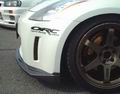
i'm looking at the 19" te37s but allso these other wheels...
what i'm adding to this thread however is a fact you overlooked, and to be honost i dont know much about. The handling characteristics of the car. sure you'll have good stick or good accel and such. but thats on a constant rate circle (aka skidpad) or dragstrip (go and stop)
the balance of the car is inherently understeering this i know. the car understeers like a mug.. whats this mean? it means its safe to drive if you dont know how to drive a rwd car yet.
once you do you'll hate it.. i'm looking to possibly do some 245/255 front tires and 265 -275 rears..
why the larger fronts? because they'll help negate the understeer from what i understand a larger rear tire (as a ratio to front tire width) promotes understeer, whereas a narrower rear tire (again as ratio) will promote oversteer finding the happy medium based upon the dynamics of the chassis is key.
i'll leave that to someone with track experience. and then i'll copy them
oh and some things i was looking at
what i'm adding to this thread however is a fact you overlooked, and to be honost i dont know much about. The handling characteristics of the car. sure you'll have good stick or good accel and such. but thats on a constant rate circle (aka skidpad) or dragstrip (go and stop)
the balance of the car is inherently understeering this i know. the car understeers like a mug.. whats this mean? it means its safe to drive if you dont know how to drive a rwd car yet.
once you do you'll hate it.. i'm looking to possibly do some 245/255 front tires and 265 -275 rears..
why the larger fronts? because they'll help negate the understeer from what i understand a larger rear tire (as a ratio to front tire width) promotes understeer, whereas a narrower rear tire (again as ratio) will promote oversteer finding the happy medium based upon the dynamics of the chassis is key.
i'll leave that to someone with track experience. and then i'll copy them
oh and some things i was looking at


Joined: May 2002
Posts: 1,253
Likes: 0
From: Sun Diego
I would think via what has been said, the 17 inchers are the money shot for performance. And also, someone said the 19's are wider so they will fill out the wells better. Well, a 275 is a 275 whether its on the 17 or 19 inch rims, so the width is still there, right? ANyway, wont the 17 inch be the best?!?!?!
Guest
Posts: n/a
Originally posted by roberto350z
BTW, I am sooooooo freaking crazy over those conneseur (sp)
BTW, I am sooooooo freaking crazy over those conneseur (sp)
The 275 should be fine on either wheel size, what you have to look out for is the height of the tire, so instead of getting like a 275/35/19 you probably wanna get like a 275/45/17 or maybe even 275/50/17.

Registered User
Joined: Sep 2002
Posts: 283
Likes: 0
From: Noblesville IN
Spikez513: thier actualy manufactured by rays wheels same ppl who produce volks, and gramlights, not sure if ther in america though.. i found htem at www.rayswheels.co.jp thier band name is arthur exchange or something like that
but same build and finish quality as volks
i wonder if thier also lightweight?
btw go to the yokohama.co.jp website to find those conneseurs
but same build and finish quality as volks
i wonder if thier also lightweight?
btw go to the yokohama.co.jp website to find those conneseurs

Registered User
Joined: Sep 2002
Posts: 237
Likes: 0
From: Canada
Jeff, although everything Koryo said was absolutely, undisputably correct I don't think it directly answered your original question. Everything Koryo said about more rotational mass and being father away from the centre to be worse for performance is true however if you keep the same wheel size but increase the width of the wheel and tyre, the performance vs. weight is almost always better. That's why when you see race cars (JGTC for example) the cars run with wide body kits to fit wider tires. The tire size is still 17' but the wheel width is more like 285's or 295's all round.
Having the same size wheel but much wider aspect means that your offset must be adjusted accordingly. That's why most racing wheels are built custom for teams to get a good setup that won't put extra stress on other parts. Unfortunately most companies aren't willing to custom build wheels for the general public so we usualy need to play the compromize game as they tend to build a bigger wheel as it gets wider. However if you had the money to build your own wheels from a company like Ray's or Forgeline, I'd always say wider is better!
Note: There is a point where the performance vs. weight is no longer an advantage with regards to tire width only. I beleive SCC magazine had a formula conjured up a few years ago to show this. But on a car like the 350Z, with it's weight vs. power, that point wouldn't be reached until the width was around 345's to 355's and higher.
Having the same size wheel but much wider aspect means that your offset must be adjusted accordingly. That's why most racing wheels are built custom for teams to get a good setup that won't put extra stress on other parts. Unfortunately most companies aren't willing to custom build wheels for the general public so we usualy need to play the compromize game as they tend to build a bigger wheel as it gets wider. However if you had the money to build your own wheels from a company like Ray's or Forgeline, I'd always say wider is better!
Note: There is a point where the performance vs. weight is no longer an advantage with regards to tire width only. I beleive SCC magazine had a formula conjured up a few years ago to show this. But on a car like the 350Z, with it's weight vs. power, that point wouldn't be reached until the width was around 345's to 355's and higher.
Thread Starter
Sponsor
Sport Z Magazine
Sport Z Magazine
Joined: Nov 2002
Posts: 6,086
Likes: 48
From: Oceanside Ca
So would larger tires hurt my performance?
So, based upon what you said, would having 18" 255/40 ft and 285 rears/35 decrease accelration? You seem to think it would improve handling right?
Registered User
Joined: Sep 2002
Posts: 283
Likes: 0
From: Noblesville IN
its a tradeoff game.
stiffer and harder means better handling on a track enviroment where you dont have to worry bout potholes and irregular road surfaces. however once you get on crap roads your performance you gained by beingable to keep the geometry correct is now lost because you cant keep the tire on the surface of the road.
same thing happesn with wider tires.. when you start using wider tires and are not on a perfect road surface you cant keep the balance point and scrub points of the tire inline and on the surface of the road. because small changes of camber will cause larger problems on wider tires because thers a limit to how much the sidewall will flex w/ normal pressure and weight of the vehicle...
with all of this i'm not answering any questions, just bringing more points to light..
basically you need to try a few things and find what suits you, your roads, your driving style and the setup of your car. unfortunatly i dont think there are many math formulas that could give us the perfect answer.... or is there?
i'm lookin back through my old technobable articles in Sport Compact Car and unfortuatly dont have the issuse about the scrub point and the whatever radius that basicaly describe mathematically the way the wheel / tire interact w/ a road across a arange of conditions
stiffer and harder means better handling on a track enviroment where you dont have to worry bout potholes and irregular road surfaces. however once you get on crap roads your performance you gained by beingable to keep the geometry correct is now lost because you cant keep the tire on the surface of the road.
same thing happesn with wider tires.. when you start using wider tires and are not on a perfect road surface you cant keep the balance point and scrub points of the tire inline and on the surface of the road. because small changes of camber will cause larger problems on wider tires because thers a limit to how much the sidewall will flex w/ normal pressure and weight of the vehicle...
with all of this i'm not answering any questions, just bringing more points to light..
basically you need to try a few things and find what suits you, your roads, your driving style and the setup of your car. unfortunatly i dont think there are many math formulas that could give us the perfect answer.... or is there?
i'm lookin back through my old technobable articles in Sport Compact Car and unfortuatly dont have the issuse about the scrub point and the whatever radius that basicaly describe mathematically the way the wheel / tire interact w/ a road across a arange of conditions
Registered User
Joined: Sep 2002
Posts: 237
Likes: 0
From: Canada
Re: So would larger tires hurt my performance?
Originally posted by Jeff Wisener
So, based upon what you said, would having 18" 255/40 ft and 285 rears/35 decrease accelration? You seem to think it would improve handling right?
So, based upon what you said, would having 18" 255/40 ft and 285 rears/35 decrease accelration? You seem to think it would improve handling right?
Originally posted by Jeff Wisener
The factory tires are much smaller (225 ft and either 235 or 245 rears). Is this because of cost or are those tire sizes optimal for handling?
The factory tires are much smaller (225 ft and either 235 or 245 rears). Is this because of cost or are those tire sizes optimal for handling?
Originally posted by Jeff Wisener
Assuming the tire quality is the same, will a 285 tire out handle a 245?
Assuming the tire quality is the same, will a 285 tire out handle a 245?
Originally posted by Jeff Wisener
I noiced that some articles describe a larger tire "tracking" and "instead of moving accross the groves of the road, they were falling into the grooves
I noiced that some articles describe a larger tire "tracking" and "instead of moving accross the groves of the road, they were falling into the grooves
Joined: May 2002
Posts: 1,253
Likes: 0
From: Sun Diego
just my 2c,
a 285/40-17 yields a 1% error. too fast meaning that your speedo will say 60mph, but youll actually be going 59.4.
This would mean that when you have 100,000 miles on the car, the odo may say something like 101,000.
A 285/35-18 gives you an error of 1.5%, so your car may have 1500 miles more on the odo than there really is. I veto this plan...its too much error for ME.
Finally, the least error of all is the 265/40-18 with an error of .4%, which is definitely the least error of all the combinations.
Everybody is raving about the 275/40-18, which has a 1.6% error. THIS error is on the other side of the spectrum, in that you will be going faster than what the speedo says, and thus when you have 100,000 on the car the odo will say 98,400. This sounds good for resell, but since the overall diameter is bigger, you will lose acceleration but gain fuel economy.
For me, I would chose the 265/40-18 so the miles and stuff were right...I mean, the 265's are 10.4" wide anyway!
a 285/40-17 yields a 1% error. too fast meaning that your speedo will say 60mph, but youll actually be going 59.4.
This would mean that when you have 100,000 miles on the car, the odo may say something like 101,000.
A 285/35-18 gives you an error of 1.5%, so your car may have 1500 miles more on the odo than there really is. I veto this plan...its too much error for ME.
Finally, the least error of all is the 265/40-18 with an error of .4%, which is definitely the least error of all the combinations.
Everybody is raving about the 275/40-18, which has a 1.6% error. THIS error is on the other side of the spectrum, in that you will be going faster than what the speedo says, and thus when you have 100,000 on the car the odo will say 98,400. This sounds good for resell, but since the overall diameter is bigger, you will lose acceleration but gain fuel economy.
For me, I would chose the 265/40-18 so the miles and stuff were right...I mean, the 265's are 10.4" wide anyway!
Registered User
Joined: Jul 2002
Posts: 273
Likes: 0
From: L.A.
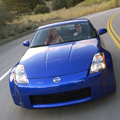
So, sorry if I make someone repeat themselves, but I am looking at these wheels:
Moda's 19x8. for a total of 1,156.00 I think they are good looking, and in my price range. Now what size tire would be good that wouldn't slow the car down too much on acceleration, be wide for added grip, and not mess with the speedo too much. Also any brand of tires out there? Also any opinons on this wheel would be appreciated. Thanks guys.
Moda's 19x8. for a total of 1,156.00 I think they are good looking, and in my price range. Now what size tire would be good that wouldn't slow the car down too much on acceleration, be wide for added grip, and not mess with the speedo too much. Also any brand of tires out there? Also any opinons on this wheel would be appreciated. Thanks guys.