opinions on compression


Thread Starter
Registered User
iTrader: (4)
Joined: Mar 2009
Posts: 671
Likes: 0
From: pittsburgh, PA
 opinions on compression
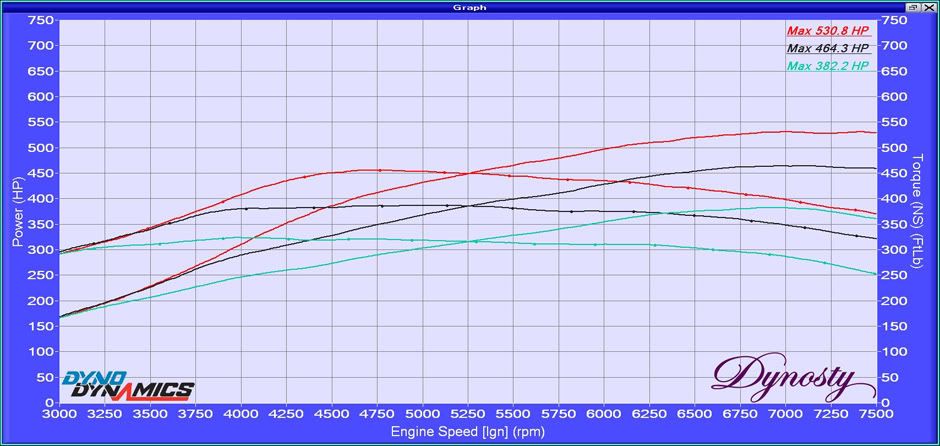
Hi all just looking for opinions about compression and greddy turbo kit...Im looking to get the most out of my built motor. I have cp 8.5-1 pistons now and have suffered a loss of bottom end as well as hp per psi. For example on 9 psi stock block I made 484whp at dynosty now with built block and lower comp 10psi i made only 464whp and 15psi 530whp same dyno. I believe that I could effectivly run a higher comp 9.5-1 or 10-1 lower boost and make more power. The reason Im looking into this is I have spun a bearing and motor is coming apart anyways. Also the greddy 20g kit boost potential isnt as high as most single kits so Im looking at making the most out of what I have. I'd like to add that i see many of the builds in s2k's and supras's running the higher comps that I'm suggesting to max gains and responsiveness..... opinions Please



What's wrong with running a couple more PSI of boost to make up for the lower compression? I'd be more concerned with octane thresholds on a high compression ratio than focusing on horsepower per PSI versus a stock block turbo setup.
What did Hal say about your question?
I'd be more concerned with octane thresholds on a high compression ratio than focusing on horsepower per PSI versus a stock block turbo setup.What did Hal say about your question?
Last edited by RudeG_v2.0; Jun 30, 2012 at 01:40 PM.
Thread Starter
Registered User
iTrader: (4)
Joined: Mar 2009
Posts: 671
Likes: 0
From: pittsburgh, PA
Well from my understanding the 20g potential on pump maxes around 20psi then its just hot air ... 20psi would be around 600whp. I'm looking to be more efficient. Havent asked Hal yet.
Thread Starter
Registered User
iTrader: (4)
Joined: Mar 2009
Posts: 671
Likes: 0
From: pittsburgh, PA
I do see where detonation as per the octane threshold could become an issue but I believe that the 9.5 or 10 would be low enough to avoid it ..I forgot to mention this is a vq35hr so stock compression is 10.6-1 .

Going from 10.3:1 (stock) compression to an 8.5:1 low compression engine you will need more boost to provide the same hp. That's normal.
If for some reason you were getting any lower hp than that I would wonder if the engine didn't have any other issues like excessive blow by due to improper break in or ring fit. The power your car was producing on Hal's dyno seems about normal for the PSI you were running. The big single kits on his dyno are getting low 500's around 16psi so you are right in the ballpark. Hal has tuned quite a few greddy 18g systems so just ask him what they are putting down for the same boost. The ones i have seen posted on the forums are around the same as yours.
From my understanding Hal has the record for pump gas (93) pulls on that dyno. With his HUGE single turbo he put down mid 600hp. I'm almost certain you aren't looking for a dragstrip monster setup like his. Running right at 600hp pumpgas on the greddy 20g is great power on 93 octane. If you want more than 600hp then meth injector or e85 would be needed.
as for your questions about compression ratio. Yes having a higher compression engine will produce more power with the same level of boost. The problem you are going to run into is you won't make more power due to the octane limits of your fuel. Fuel is your limiting factor, not your turbos, not your compression.
Just have hal set you up with the proper system. He knows engines and he knows tuning. His opinion matters greatly.
Thread Starter
Registered User
iTrader: (4)
Joined: Mar 2009
Posts: 671
Likes: 0
From: pittsburgh, PA
I get the fact that the lower comp allows for more boost because additional boost raises compression ..also the fact that octane is limiting the amount of boost I can run because detonation. Just looking to run less boost make same power and the ability to then if I want to run meth or a race gas to achive better numbers. I do drag race.. haven't got to go to the track with this built setup yet.
I get the fact that the lower comp allows for more boost because additional boost raises compression ..also the fact that octane is limiting the amount of boost I can run because detonation. Just looking to run less boost make same power and the ability to then if I want to run meth or a race gas to achive better numbers. I do drag race.. haven't got to go to the track with this built setup yet.
Boost is only a measure of backpressure and should not be thought of as a measure of horsepower as some of the ricers think. That old "how much boost are you running" means nothing because 30psi on a gt35 is WAY different than the air being forced into the engine from 30psi on a gt47.
Having higher pressure and lower boost with the same fuel WILL NOT increase the amount of power you can get out of that octane. The same way running lower compression and high boost will increase the octane limits of the fuel. In actuality there is slight reason to believe that a lower compression engine will give you more safety when working with a set level of octane.
Ok, so spell out exactly what your goals are here and not the theories for reaching those goals. I'm sure most of the more experienced users can chime in on their opinions and they will be very similar. I can tell you hal's recommendation will be around a 9:1 compression and then adjust the boost accordingly. That's why they make an engine package like that. It's a proven winning combo.
also, i'm not judging or trying to be mean by my statements. Just trying to understand what you want.
Last edited by binder; Jun 30, 2012 at 03:10 PM.
Trending Topics


Comp too low = bearing failure?
Sounds counter-intuitive to me. Others that have spun bearings don't seem to have a conclusive answer as to what is was. To me, it's got to come down to tolerances and lubrication delivery. Another thread on the go sounds like surprisingly sloppy tolerances are ok, and for lube, you need the correct weight of oil and to ensure that it's being delivered. I don't know, though. It sounds like many have suffered and no silver bullet has been found.
Sounds counter-intuitive to me. Others that have spun bearings don't seem to have a conclusive answer as to what is was. To me, it's got to come down to tolerances and lubrication delivery. Another thread on the go sounds like surprisingly sloppy tolerances are ok, and for lube, you need the correct weight of oil and to ensure that it's being delivered. I don't know, though. It sounds like many have suffered and no silver bullet has been found.
i hear people use bottom end, midrange, and top end all the time and with no consistency. I think mechanics and racers use it way different than the average car person.
bottom end, to me, is a waste of time. That is low rpm range in which i will never race in or go WOT in. Midrange is when any turbo system or race car comes on which is why people always talk about midrange or top end with respect to cars. Torque almost always peaks out in the midrange on modern engines as well. I never go WOT until at least 3500rpms. Anything below that is a waste of time unless it's off a dead launch and even then under 3500 is pretty low for a launch. The area under the curve is what wins races so getting torque up and holding it is more important.
If running a low compression engine was such a downfall in power then nobody would do it and it shows that it's an industry standard so there is a reason it is being used. Also, going from say 8.5:1 to 9.5:1 won't really be that significant of a change.
 [/IMG]
 [/IMG]

with 9.5:1 compression figure that 530 hp number to be about 540, 545 MAX compression dosnt provide as much power as people think 1 point in compression is good for 1-2% power difference. in some very very limited applications it could be good for as much as 4% but those are with custom pistons that maximize that particular engines squench, thats race only stuff. now with a 9.5:1 compression dont expect to go beyond 15 psi without meth, even with meth not gona go much higher. now on the other hand if you keep that 8.5:1 compression you still have some room left on the table you should be able to increase the boost beyond what its currently at. bottom line in a FI motor boost>compression until you max the FI source the compression is just to eek out that last little bit of power if you maxed your induction source and still have some room on the table before detonation.
our engines arnt like diesels where you can just keep upping the boost with high compression without worry. now if you wanna run e85 go for that 10:1 compression
your dynos show about 4% from compression but that can be alot of things got weather conditions?(or does hal correct those for a standard i dont know?) or heck can even have some spark advance left on the table 4/10ths of a degree can net you more then that.
also those supras and s2k's you are referring to are ALL running e85 to be able to run the compression they do, but as others have demonstrated your 20g kit still has ALOT left on the table before it runs out of breath.
our engines arnt like diesels where you can just keep upping the boost with high compression without worry. now if you wanna run e85 go for that 10:1 compression
your dynos show about 4% from compression but that can be alot of things got weather conditions?(or does hal correct those for a standard i dont know?) or heck can even have some spark advance left on the table 4/10ths of a degree can net you more then that.
also those supras and s2k's you are referring to are ALL running e85 to be able to run the compression they do, but as others have demonstrated your 20g kit still has ALOT left on the table before it runs out of breath.
Last edited by jerryd87; Jun 30, 2012 at 09:01 PM.

compression is determined by what kind of gas you have available to you. 8.5 to something like 8.8 wont make a big difference; However if you want to but to 9.5 i would consider e85 or c16 if you have the availability. The higher the octane the safer it is to boost. If your only doing pump gas (91-93 octane) i would recommend nothing over 9 comp (a meth kit could help you with more compression but your relying on more parts to work).
This is with turbos and twin turbos. Octane is the limiting factor if financials arent a burden; and of course more compression will always offer more horsepower.
This is with turbos and twin turbos. Octane is the limiting factor if financials arent a burden; and of course more compression will always offer more horsepower.
Last edited by Exemption; Jul 1, 2012 at 02:39 AM.
Thread Starter
Registered User
iTrader: (4)
Joined: Mar 2009
Posts: 671
Likes: 0
From: pittsburgh, PA
thanks for the input guys I've decided to stay with the cp pistons.....looking to cams now instead of the compression. On that note is anyone using the jwt c1 cams for the hr.
stock cams
Lift:
Intake/Exhaust : 10.5mm/10.5mm
Duration:
Intake/Exhaust: 248/248
Intake Open: 2º BTDC
Intake Close: 66º ABDC
Exhaust Open: 68º BBDC
Exhaust Close: 0º BTDC
Overlap: 2º
jwt
http://jimwolftechnology.com/custome...asp?PartID=489
stock cams
Lift:
Intake/Exhaust : 10.5mm/10.5mm
Duration:
Intake/Exhaust: 248/248
Intake Open: 2º BTDC
Intake Close: 66º ABDC
Exhaust Open: 68º BBDC
Exhaust Close: 0º BTDC
Overlap: 2º
jwt
http://jimwolftechnology.com/custome...asp?PartID=489
Last edited by Frosty87; Jul 1, 2012 at 02:49 AM.
thanks for the input guys I've decided to stay with the cp pistons.....looking to cams now instead of the compression. On that note is anyone using the jwt c1 cams for the hr.
stock cams
Lift:
Intake/Exhaust : 10.5mm/10.5mm
Duration:
Intake/Exhaust: 248/248
Intake Open: 2º BTDC
Intake Close: 66º ABDC
Exhaust Open: 68º BBDC
Exhaust Close: 0º BTDC
Overlap: 2º
jwt
http://jimwolftechnology.com/custome...asp?PartID=489
stock cams
Lift:
Intake/Exhaust : 10.5mm/10.5mm
Duration:
Intake/Exhaust: 248/248
Intake Open: 2º BTDC
Intake Close: 66º ABDC
Exhaust Open: 68º BBDC
Exhaust Close: 0º BTDC
Overlap: 2º
jwt
http://jimwolftechnology.com/custome...asp?PartID=489