


Tires and Understeer/Oversteer


Thread Starter
New Member


Joined: Dec 2006
Posts: 7,337
Likes: 204
From: Edina, Minnesota
 Tires and Understeer/Oversteer
There are many questions asked about wheels tires here, but most discussions seem to be about appearance (e.g., wheel size, tire width, “flush fitment,” etc.).
There is less discussion about performance (as related to brand, type, and size) on the “Wheels and Tires” forum.
One discussion that would be interesting is a report on tire sizing and type (class) that affects the Z’s handling. It would be very useful to hear from Z owners who can accurately report handling effects of different tire setups.
Pretty and attractive is fine, but many of us are also as interested in function as we are in form.
--Spike
There is less discussion about performance (as related to brand, type, and size) on the “Wheels and Tires” forum.
One discussion that would be interesting is a report on tire sizing and type (class) that affects the Z’s handling. It would be very useful to hear from Z owners who can accurately report handling effects of different tire setups.
Pretty and attractive is fine, but many of us are also as interested in function as we are in form.
--Spike
Last edited by Spike100; Nov 27, 2013 at 06:39 PM.

Thread Starter
New Member
Joined: Dec 2006
Posts: 7,337
Likes: 204
From: Edina, Minnesota
^^ Thank you for your interest and comments.
I’ll start the discussion that I hope continues because I believe there is valuable information to be gained here.
The following is taken from www.formula1.com:
“Oversteer and understeer are vital to understanding the way a car corners. They refer simply to the question of which end of the car runs out of grip first. In an understeer situation the front end breaks free first, the car running wide as centrifugal force takes over. Oversteer is where the back end of the car loses adhesion and tries to overtake the front - think in terms of a road car's 'handbrake skid'.
Understeer is inherently stable - once the car reduces speed sufficiently grip will be restored, which is why almost all road cars are set up to understeer at the limit of adhesion. But it also slows a car…”
My experience:
I replaced my stock front tires (225/45-18”) with tires sized at 245/40-18”. The effect was moving from understeer (that exists with 225.45-18” fronts) to oversteer (or even neutral steer). The car is more fun to drive, but handling is a little bit “tricky.”
--Spike
Hopefully others will contribute to this discussion.
I’ll start the discussion that I hope continues because I believe there is valuable information to be gained here.
The following is taken from www.formula1.com:
“Oversteer and understeer are vital to understanding the way a car corners. They refer simply to the question of which end of the car runs out of grip first. In an understeer situation the front end breaks free first, the car running wide as centrifugal force takes over. Oversteer is where the back end of the car loses adhesion and tries to overtake the front - think in terms of a road car's 'handbrake skid'.
Understeer is inherently stable - once the car reduces speed sufficiently grip will be restored, which is why almost all road cars are set up to understeer at the limit of adhesion. But it also slows a car…”
My experience:
I replaced my stock front tires (225/45-18”) with tires sized at 245/40-18”. The effect was moving from understeer (that exists with 225.45-18” fronts) to oversteer (or even neutral steer). The car is more fun to drive, but handling is a little bit “tricky.”
--Spike
Hopefully others will contribute to this discussion.

I've done this in the past with other cars.Put a replacement tire on with a bit more rubber surface on the road.Also,most were a tad lower in diameter.Same results as you.
You just have more footprint on the ground.The car appears to run flatter.
In addition,the results may change with different tire brands.The looks are better with what you describe.Function?I prefer the understeer.
If you have ever driven a Porsche,you'll know what I mean.
You just have more footprint on the ground.The car appears to run flatter.
In addition,the results may change with different tire brands.The looks are better with what you describe.Function?I prefer the understeer.
If you have ever driven a Porsche,you'll know what I mean.

I went from 225/50-17 front and 235/50-17 rear to 255/40/18 front and 275/40-18 rear. More rubber on the road definitely provided more traction. I felt the initial acceleration of the car was somewhat slower because of the extra weight of the tires and wheels. The understeer was less. Then I switched to 245/40-18 for the front. I felt the steering response was quicker. Although different brand tires, which do make a difference, both the 17 inch and 18 inch tires were max performance tires. After running on the 255 and 245s up front, I prefer the 245s because of the quicker steering response. Note the 255 and 245 tires were the same brand - Sumitomo HTRZ III.
Thread Starter
New Member
Joined: Dec 2006
Posts: 7,337
Likes: 204
From: Edina, Minnesota
^^Thanks for your observations. I agree with your comparison of 245’s and 255’s on the front (i.e., I notice that turning-response falls off once you go wider than 245 on the stock suspension).
Also... I notice bump-steer when going wider than 245 on the front.
--Spike
Also... I notice bump-steer when going wider than 245 on the front.
--Spike

Depends on where the car is at: street, drift, drag, road race, autox etc...
For daily- I swap out wheels/tires frequently (own multiple sets of wheels/tires) and recently changed out the rear 285 Nitto drag radials for not-so-sticky 255 General UHPs and actually love it. The car is more fun to drive for daily - on 18x9.5/10.5 +15 wheels.
Too much traction and width in the front takes away steering feel and too much grip in the rear makes the car feel too planted. I prefer square setup, with 255/35 sticky fronts and not so sticky 255/40 rears for daily.
For daily- I swap out wheels/tires frequently (own multiple sets of wheels/tires) and recently changed out the rear 285 Nitto drag radials for not-so-sticky 255 General UHPs and actually love it. The car is more fun to drive for daily - on 18x9.5/10.5 +15 wheels.
Too much traction and width in the front takes away steering feel and too much grip in the rear makes the car feel too planted. I prefer square setup, with 255/35 sticky fronts and not so sticky 255/40 rears for daily.
Trending Topics



Thread Starter
New Member
Joined: Dec 2006
Posts: 7,337
Likes: 204
From: Edina, Minnesota
In 1964/5 I drove a 912, which was the first “modern” Porsche body design. The 912 looked like a 911, but it had a 4 cylinder engine. It was shortly after that when Porsche released the 6 cylinder 911.
The early 912 and 911 Porsche was a handling nightmare. The 912 was awful, but the 911 (with more weight behind the rear wheels) was worse. The problem was the rear engine design that suspended the engine behind the rear wheels.
1960’sport cars typically had all four tires sized the same. That meant the heavily rear-weighted Porsche had excessive oversteer. Wet pavement would put even a conservative driver into a potential spin.
--Spike
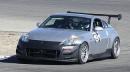
There is a lot more to it than just tires to get a neutral car. The earlier suspension. Still understeers with a square setup. The 04.5 is a little bit better, but still understeers because of the higher rear spring rate, but the added front bar to take some front traction away.

Thread
Thread Starter
Forum
Replies
Last Post