


tuning dls iridium speakers


 tuning dls iridium speakers
Hey guys i have an audiocontrol dqx 1/3octave going to my dls iridium 6.2's. Im trying to get them tuned right but im very new to this. Anybody know of a good tuning cd that will aid in the process or any advice would be great too im basically starting from scratch.

OH man i can write on this for hours (especially when it comes to parametric EQ's and PINK noise...none of which u will need for this)
Ideally you want a flat curve as to replicate the song exactly as it was recorded. To do so there is a very fundamental (easy to grasp) method that I have used in SQ set-ups many times.
All u need is a 1/3 octave test tone cd, a pencil, a sheet of graph-paper and a decibel meter from radioshak(or any decibal meter for that matter)
BEFORE U START!!!!!!!!
!!!!!MAKE SURE ALL SETTINGS ARE AT 0 (radio and eq)!!!!!
Essentially you will be making a graph based on the frequency of the note vs the decibel reading at your ideal listening volume.
Put in the CD and play a frequency...then mark it's dB level on your graph.....do this for all frequencies then graph and draw in the curve...
now comes the tuning.....leave the lowest point of the graph (let's say 2500hz) as "0" on the EQ on it's corresponding **** (or setting being you are using a digital 30-band EQ if i remember my part numbers). This way every frequency will be tweaked as a negative dB. That will allow you to raise the volume later and still retain most of the SQ you tuned for.
Now you simply lower the other frequencies (63hz, 80hz etc) by turning the associated **** so that it's point on the graph will be equal to the other points...that will create a flat curve (both visually on the graph and aurally) and the best SQ you can get w/o expensive machinery..
if i have lost you PM me.
Ideally you want a flat curve as to replicate the song exactly as it was recorded. To do so there is a very fundamental (easy to grasp) method that I have used in SQ set-ups many times.
All u need is a 1/3 octave test tone cd, a pencil, a sheet of graph-paper and a decibel meter from radioshak(or any decibal meter for that matter)
BEFORE U START!!!!!!!!
!!!!!MAKE SURE ALL SETTINGS ARE AT 0 (radio and eq)!!!!!
Essentially you will be making a graph based on the frequency of the note vs the decibel reading at your ideal listening volume.
Put in the CD and play a frequency...then mark it's dB level on your graph.....do this for all frequencies then graph and draw in the curve...
now comes the tuning.....leave the lowest point of the graph (let's say 2500hz) as "0" on the EQ on it's corresponding **** (or setting being you are using a digital 30-band EQ if i remember my part numbers). This way every frequency will be tweaked as a negative dB. That will allow you to raise the volume later and still retain most of the SQ you tuned for.
Now you simply lower the other frequencies (63hz, 80hz etc) by turning the associated **** so that it's point on the graph will be equal to the other points...that will create a flat curve (both visually on the graph and aurally) and the best SQ you can get w/o expensive machinery..
if i have lost you PM me.
Last edited by NoahzBurnt; Nov 9, 2007 at 02:27 PM.

Originally Posted by NoahzBurnt
OH man i can write on this for hours (especially when it comes to parametric EQ's and PINK noise...none of which u will need for this)
Ideally you want a flat curve as to replicate the song exactly as it was recorded. To do so there is a very fundamental (easy to grasp) method that I have used in SQ set-ups many times.
All u need is a 1/3 octave test tone cd, a pencil, a sheet of graph-paper and a decibel meter from radioshak(or any decibal meter for that matter)
BEFORE U START!!!!!!!!
!!!!!MAKE SURE ALL SETTINGS ARE AT 0 (radio and eq)!!!!!
Essentially you will be making a graph based on the frequency of the note vs the decibel reading at your ideal listening volume.
Put in the CD and play a frequency...then mark it's dB level on your graph.....do this for all frequencies then graph and draw in the curve...
now comes the tuning.....leave the lowest point of the graph (let's say 2500hz) as "0" on the EQ on it's corresponding **** (or setting being you are using a digital 30-band EQ if i remember my part numbers). This way every frequency will be tweaked as a negative dB. That will allow you to raise the volume later and still retain most of the SQ you tuned for.
Now you simply lower the other frequencies (63hz, 80hz etc) by turning the associated **** so that it's point on the graph will be equal to the other points...that will create a flat curve (both visually on the graph and aurally) and the best SQ you can get w/o expensive machinery..
if i have lost you PM me.
Ideally you want a flat curve as to replicate the song exactly as it was recorded. To do so there is a very fundamental (easy to grasp) method that I have used in SQ set-ups many times.
All u need is a 1/3 octave test tone cd, a pencil, a sheet of graph-paper and a decibel meter from radioshak(or any decibal meter for that matter)
BEFORE U START!!!!!!!!
!!!!!MAKE SURE ALL SETTINGS ARE AT 0 (radio and eq)!!!!!
Essentially you will be making a graph based on the frequency of the note vs the decibel reading at your ideal listening volume.
Put in the CD and play a frequency...then mark it's dB level on your graph.....do this for all frequencies then graph and draw in the curve...
now comes the tuning.....leave the lowest point of the graph (let's say 2500hz) as "0" on the EQ on it's corresponding **** (or setting being you are using a digital 30-band EQ if i remember my part numbers). This way every frequency will be tweaked as a negative dB. That will allow you to raise the volume later and still retain most of the SQ you tuned for.
Now you simply lower the other frequencies (63hz, 80hz etc) by turning the associated **** so that it's point on the graph will be equal to the other points...that will create a flat curve (both visually on the graph and aurally) and the best SQ you can get w/o expensive machinery..
if i have lost you PM me.

Flat curve?  This is the worst advice I've ever heard, flat freq response sounds like A$$... No disrespect NoahzBurnt
Back in the day when RTA testing was done is SQ comps, I had a completely separate EQ setting which typically scored a perfect 40 (basically a perfectly flat Freq response) and the car did and always will sound like A$$...
Tuning and SQ is also very subjective, the best advice that can be shared with a beginner is to follow the following three steps.
1- play with speaker placement first and (angling on the Mid-range and Tweets, and getting the Mid-bass drivers as far away from the listening positioning as possible while keeping the placement in front of the listener)
2- play with x-over points and find the points/slopes that work best in your car/placement. Phasing should also be experimented with at this point, try putting the driver/passenger side mid or mid range out of phase and see what that does for imaging, etc...
3- now your ready to tweak the system with your 1/3 octave eq... it's always best to cut freq and stay away from boost as much as possible. Given the driver selection, soft dome tweets for example, some boosting of the higher freq (18K and above) maybe required.
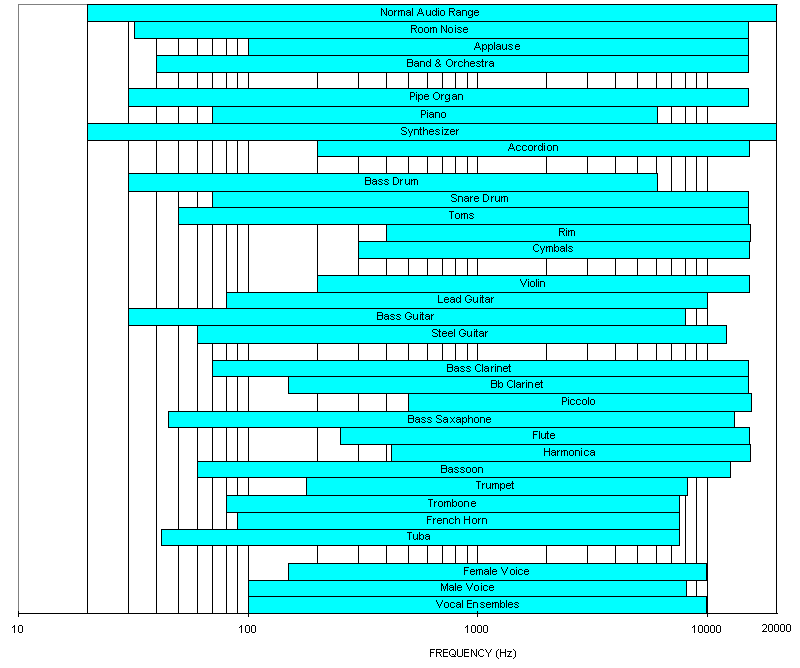
A good reference for you Novice/Amateur audiophiles out there is a book called ‘The Sound Engineers Pocket Book” edited by Michael Talbot-Smith and is put out by Focal Press. The information will give you a basic understanding for what you need to know. It covers in detail noise measurement, acoustics, loudspeakers, harmonic freq charts that show where various instruments and vocals are in relation freq and a host of other good info...
Another note that shall save you both time and frustration is a common mistake made by novice/amateur tuners, you Do NOT want to boost or cut frequencies above or below the dominant harmonic freq of the instrument/vocal - the ranges extend far past the fundamental harmonic frequency in mostly all cases…
Here’s the most basic general guidelines that I can provide to the forum:
- 500Hz to 800Hz will generally add body and warmth to vocals, especially male (I wouldn’t cut any of these freqs down, maybe add a point or two here)
- 3.5 to 6kHz vocal clarity range, caution, too much in this range will add sibilant to vocals (words with the letter ‘S’ will be too harsh and over pronounced.
- 60Hz to 100Hz range for more impact in the kick drum (more thump) and 1.5 kHz to 3 kHz for more “slap”
- use 150Hz to flat out the snare drum and 2kHz – 5kHz to and some attack and more crisp
- Tom Toms 150Hz to 2kHz
- Cymbals 2kHz to 5kHz – stay away from 10kHz to 12kHz for Cymbals, it’ll make them sound artificially and brittle…
- Bass guitar 100Hz – add more definition by adjusting the 1kHz to 2kHz… Stay away from any freq below 100Hz, this is a common novice/amateur mistake and it WILL make the sound muddy.
- 80Hz and 5kHz – Electric guitar
A big plus to the DLS speaker line is how well they respond to tuning with proper speaker placement & x-over points... I built the very first USA/North Americal DLS car serveral years ago and was very impressed with the line up. Here's some pics of that system:


This is the worst advice I've ever heard, flat freq response sounds like A$$... No disrespect NoahzBurnt Back in the day when RTA testing was done is SQ comps, I had a completely separate EQ setting which typically scored a perfect 40 (basically a perfectly flat Freq response) and the car did and always will sound like A$$...
Tuning and SQ is also very subjective, the best advice that can be shared with a beginner is to follow the following three steps.
1- play with speaker placement first and (angling on the Mid-range and Tweets, and getting the Mid-bass drivers as far away from the listening positioning as possible while keeping the placement in front of the listener)
2- play with x-over points and find the points/slopes that work best in your car/placement. Phasing should also be experimented with at this point, try putting the driver/passenger side mid or mid range out of phase and see what that does for imaging, etc...
3- now your ready to tweak the system with your 1/3 octave eq... it's always best to cut freq and stay away from boost as much as possible. Given the driver selection, soft dome tweets for example, some boosting of the higher freq (18K and above) maybe required.
A good reference for you Novice/Amateur audiophiles out there is a book called ‘The Sound Engineers Pocket Book” edited by Michael Talbot-Smith and is put out by Focal Press. The information will give you a basic understanding for what you need to know. It covers in detail noise measurement, acoustics, loudspeakers, harmonic freq charts that show where various instruments and vocals are in relation freq and a host of other good info...
Another note that shall save you both time and frustration is a common mistake made by novice/amateur tuners, you Do NOT want to boost or cut frequencies above or below the dominant harmonic freq of the instrument/vocal - the ranges extend far past the fundamental harmonic frequency in mostly all cases…
Here’s the most basic general guidelines that I can provide to the forum:
- 500Hz to 800Hz will generally add body and warmth to vocals, especially male (I wouldn’t cut any of these freqs down, maybe add a point or two here)
- 3.5 to 6kHz vocal clarity range, caution, too much in this range will add sibilant to vocals (words with the letter ‘S’ will be too harsh and over pronounced.
- 60Hz to 100Hz range for more impact in the kick drum (more thump) and 1.5 kHz to 3 kHz for more “slap”
- use 150Hz to flat out the snare drum and 2kHz – 5kHz to and some attack and more crisp
- Tom Toms 150Hz to 2kHz
- Cymbals 2kHz to 5kHz – stay away from 10kHz to 12kHz for Cymbals, it’ll make them sound artificially and brittle…
- Bass guitar 100Hz – add more definition by adjusting the 1kHz to 2kHz… Stay away from any freq below 100Hz, this is a common novice/amateur mistake and it WILL make the sound muddy.
- 80Hz and 5kHz – Electric guitar
A big plus to the DLS speaker line is how well they respond to tuning with proper speaker placement & x-over points... I built the very first USA/North Americal DLS car serveral years ago and was very impressed with the line up. Here's some pics of that system:
Last edited by Philthy; Nov 10, 2007 at 05:21 AM.
Originally Posted by sean1967
In a perfect world, shouldn't he skip using an EQ

Trending Topics
Thanks for all the help guys this is helping me learn quite a bit i really appreciate this. Philthy Thank you so much for breaking down the instruments etc. that helps alot and is really kinda what i need. Do you have somewhere or something that shows what each hz is compared to music. Like what you did for me but a little more elaborate? thanks so much once again.
Originally Posted by 16psibrick
philthy...are you somehow related to sounds impossible in any form or shape when they were around? 
Originally Posted by 2006350zSA
Thanks for all the help guys this is helping me learn quite a bit i really appreciate this. Philthy Thank you so much for breaking down the instruments etc. that helps alot and is really kinda what i need. Do you have somewhere or something that shows what each hz is compared to music. Like what you did for me but a little more elaborate? thanks so much once again.
Originally Posted by Philthy
Bill Acevedo who used to own Sounds Impossible is one of my best friends... We've worked on several car audio related projects in the past and still work together today...
wait a second, i just put two and two together, you are Phil Petracca arent you? hehe...i have acutally talked to you at a few shows way back, maybe gosh, 5-6 years ago, at places at carlisle and SVR when i was into the iasca scene a bit more...
hehe, i see you on here all the time but never realized when oyu were
we can probably trade some stories on a certain someone who used to compete in iasca with a certain nissan truck...
anyway...wow, great to have you on here...guys, we have one of the most successful sound quality competitors here on our forum
I only wish i had a chance to listen to his Benz from way back..
Yep, that's me So funny it's such a small world... Drop me a PM and let's catch up... Not sure if you have seen the latest version of the Benz, but it's doing really well and sounds better than ever.
So funny it's such a small world... Drop me a PM and let's catch up... Not sure if you have seen the latest version of the Benz, but it's doing really well and sounds better than ever.
Well Phil...no disrespect taken.,....I have competed in many SQ competitions and always got the best results using a flat curve (esp after using a parametic and pink noise to tune out a car's awkward acoustics...) a car's sound is completely subjective as some people love bass....i perfer to be able to differentiate between instruments and thier respective positions while listening to music....some people hate flat response curves....some people love them...it's like a **** vs *** debate
to each their own....but the best advice is just pick 5 sings of different genres...play these songs on a nice home theather or some other system that sounds the way u like.....then play them over and over and over till you tune your car to replicate the sound you want....
to each their own....but the best advice is just pick 5 sings of different genres...play these songs on a nice home theather or some other system that sounds the way u like.....then play them over and over and over till you tune your car to replicate the sound you want....

Thread
Thread Starter
Forum
Replies
Last Post
