


Project 600zilla - LS2+T56 350z swap


Glad to finally 'meet' you and best of luck with the build.


Thread Starter
Registered User
iTrader: (2)
Joined: Apr 2011
Posts: 104
Likes: 0
From: Las Vegas, NV
Here are some updates:
I wasn't able to stop by the shop on my trip, so no pics of cool stuff.
I got the custom oil dipstick and oil pan studs the other day.
I got an email saying my headers should be built by the end of the week and then goto ceramic coat next week. They said these newly revised headers netted an extra 13rhwp over their older design. They also sound better too. I can't wait!
Ordered some bushings and rear camber arms so I can install my coilovers pretty soon.
As soon as the coilovers go in, I've got a loaner diff to put in so mine can go get rebuilt.
Nothing picture worthy at the moment.
QTB, I haven't forgotten about oil pan baffle pics.
Here are the email instructions for those that requested:
"FUELED RACING LSZ MOUNT KIT INSTRUCTIONS
All hardware is shipped loose and must be tightened during installation.
Oil Pan:
The moroso oil pan is installed using the supplied moroso stud kit and oil pick up tube (see instructions from Moroso website if needed). It is a good idea to replace the oil pan gasket using an OEM gasket (reusing the old gasket may result in poor sealing). The oil pickup tube should be installed using thread locker and torqued to factory spec. (A common problem with LS engine failure relates to improper installation of the oil pickup tube). I have seen countless claims at GM involving this. Be sure the oil pickup tube is seated flat with oil pump before tightening.
Note: The engine mounts have been designed using a brand new OEM Nissan crosmember. If your crossmember is dented or damaged be sure to replace it. Once engine is installed, be sure the engine is sitting level in car and oil pan is parallel with the crossmember.
Please be sure to install the engine parallel to the crossmember.
The oil pan has two -10 fittings for the oil feed and return. The front fitting is the feed line to the oil filter and should be run to the IN port of the oil filter. The rear fitting on the oil pan is the return and should be run to the out port on the oil filter. Please verify that your plumbing is correct before starting the engine as severe damage may result. (It is your responsibility to make sure the direction of flow is correct on your particular application). If you are not using an accumulator or oil cooler the oil lines should be cut to 22 inches for feed line and 23 inches for return line. Remember to flush all lines before installation.
*If for any reason you do not feel comfortable making your oil lines we will be happy to make them for you free of charge. We prefer to give the customer the line uncut so if you are using an accumulator or oil cooler the line and fittings are still useful.
Oil filter relocation uses a PH8A or similar oil filter and should be mounted to the left side frame rail positioning the filter so that it just clears the sway bar mounts and crossmember. The exact positioning is not critical but should position the filter behind the radiator and in front of the alternator on the left frame rail. Use the included 3 Self tapping screws to mount the oil filter relocation housing to the side of the frame rail.
Clutch Master Cylinder:
(transmission must be removed from engine)
Start by removing the factory clutch slave cylinder pressure fitting from the slave cylinder by removing the small roll pin with a drift or punch of slightly smaller diameter. Install the pressure line fitting in its place and reinstall roll pin with small hammer until flush. Next remove the factory clutch bleeder fitting from the slave cylinder and replace with remote bleeder supplied in the clutch kit using the aluminum crush washer. route the bleeder through the bleeder hole and route the clutch pressure line out the pressure line hole. The pressure line should be routed away from headers or if you must run the line close to the headers be sure to use heat shielding material. We recommend that the line be ran directly up to the back of the intake manifold and then across to clutch master cylinder. Install the clutch master cylinder using the supplied bracket being sure to tighten all hardware as we ship the bracket only hand tight. At this point you need to remove the stock clutch pivot pin for the master cylinder and tap the existing threads to 5/16 -24 or swap the factory rod with the Wilwood rod. I prefer to tap the clutch pivot bracket as this ensures there is no slop in the clutch pedal. Other kits tell you to swap the rod and this is fine as well if you do not want to tap the bracket but there will be a small amount of play as the factory pivot ball is smaller than the wilwood pivot.
Engine and Transmission Mounts:
The engine mounts come marked with a L for left and a R for right. There are arrows pointing to F meaning front of engine or car and T meaning top of engine or car. The mounts should be installed with supplied bolts and torqued to factory specification using blue threadlocker.
The transmission mount is installed using factory Nissan transmission crossmember bolts for the crossmember and factory GM transmission mount bolts for the transmission mount. (Use factory torque specs for your application)
If using a T56 it is recommended that you trim the ears off of the top of the transmission to increase clearance between transmission and transmission tunnel.
There are two ways to install the LS into your Z. The first way is through the top and is the most difficult but if you do not have a lift its your only option. To install the engine through the top it will be necessary to lower the engine crossmember from frame rail to allow the oil pan to clear the steering rack during installation. Once the engine has been lowered into place you can reinstall the crossmember. (It is critical that you use the alignment hole to properly align the crossmember with the frame rail) The second method I feel is much easier and safer and that is to install the engine through the bottom of the car using a lift. Just install the engine and transmission to crossmember while the crossmember rests on a hydraulic table. next lower the car onto the engine keeping the steering shaft and shifter positioned properly as the car lowers into place.
To set the dip stick level:
Fill the oil pan until the oil level is just to the top of the sump while level. (As seen through dip stick bung on right side of oil pan). Once the oil level reaches the top of the sump or bottom of bung threads (not the top of bung threads) install dip stick using thread sealer and trim back side of dip stick to proper length. The dip stick is held in to the handle with one allen set screw.
Headers:
Installation of headers is easiest from the bottom after the engine has been installed. You can also install the headers before installing the engine if you are using a lift and installing the engine from below. (just guide the steering shaft to rack as you lower the lift)
Power steering:
The two machined power steering fittings should be installed into the steering rack itself (the fittings are machined so that the O-ring actually seats in the rack). The power steering fitting that has not been machined should be installed into the power steering pump. The pressure line should be installed with the 90 degree fitting at the pump and the straight fitting at the lower fitting on the rack. The return fitting on the rack should have the barbed fitting installed on it and the 3/8 hose on that barb fitting run to the reservoir. "
I wasn't able to stop by the shop on my trip, so no pics of cool stuff.
I got the custom oil dipstick and oil pan studs the other day.
I got an email saying my headers should be built by the end of the week and then goto ceramic coat next week. They said these newly revised headers netted an extra 13rhwp over their older design. They also sound better too. I can't wait!
Ordered some bushings and rear camber arms so I can install my coilovers pretty soon.
As soon as the coilovers go in, I've got a loaner diff to put in so mine can go get rebuilt.
Nothing picture worthy at the moment.
QTB, I haven't forgotten about oil pan baffle pics.
Here are the email instructions for those that requested:
"FUELED RACING LSZ MOUNT KIT INSTRUCTIONS
All hardware is shipped loose and must be tightened during installation.
Oil Pan:
The moroso oil pan is installed using the supplied moroso stud kit and oil pick up tube (see instructions from Moroso website if needed). It is a good idea to replace the oil pan gasket using an OEM gasket (reusing the old gasket may result in poor sealing). The oil pickup tube should be installed using thread locker and torqued to factory spec. (A common problem with LS engine failure relates to improper installation of the oil pickup tube). I have seen countless claims at GM involving this. Be sure the oil pickup tube is seated flat with oil pump before tightening.
Note: The engine mounts have been designed using a brand new OEM Nissan crosmember. If your crossmember is dented or damaged be sure to replace it. Once engine is installed, be sure the engine is sitting level in car and oil pan is parallel with the crossmember.
Please be sure to install the engine parallel to the crossmember.
The oil pan has two -10 fittings for the oil feed and return. The front fitting is the feed line to the oil filter and should be run to the IN port of the oil filter. The rear fitting on the oil pan is the return and should be run to the out port on the oil filter. Please verify that your plumbing is correct before starting the engine as severe damage may result. (It is your responsibility to make sure the direction of flow is correct on your particular application). If you are not using an accumulator or oil cooler the oil lines should be cut to 22 inches for feed line and 23 inches for return line. Remember to flush all lines before installation.
*If for any reason you do not feel comfortable making your oil lines we will be happy to make them for you free of charge. We prefer to give the customer the line uncut so if you are using an accumulator or oil cooler the line and fittings are still useful.
Oil filter relocation uses a PH8A or similar oil filter and should be mounted to the left side frame rail positioning the filter so that it just clears the sway bar mounts and crossmember. The exact positioning is not critical but should position the filter behind the radiator and in front of the alternator on the left frame rail. Use the included 3 Self tapping screws to mount the oil filter relocation housing to the side of the frame rail.
Clutch Master Cylinder:
(transmission must be removed from engine)
Start by removing the factory clutch slave cylinder pressure fitting from the slave cylinder by removing the small roll pin with a drift or punch of slightly smaller diameter. Install the pressure line fitting in its place and reinstall roll pin with small hammer until flush. Next remove the factory clutch bleeder fitting from the slave cylinder and replace with remote bleeder supplied in the clutch kit using the aluminum crush washer. route the bleeder through the bleeder hole and route the clutch pressure line out the pressure line hole. The pressure line should be routed away from headers or if you must run the line close to the headers be sure to use heat shielding material. We recommend that the line be ran directly up to the back of the intake manifold and then across to clutch master cylinder. Install the clutch master cylinder using the supplied bracket being sure to tighten all hardware as we ship the bracket only hand tight. At this point you need to remove the stock clutch pivot pin for the master cylinder and tap the existing threads to 5/16 -24 or swap the factory rod with the Wilwood rod. I prefer to tap the clutch pivot bracket as this ensures there is no slop in the clutch pedal. Other kits tell you to swap the rod and this is fine as well if you do not want to tap the bracket but there will be a small amount of play as the factory pivot ball is smaller than the wilwood pivot.
Engine and Transmission Mounts:
The engine mounts come marked with a L for left and a R for right. There are arrows pointing to F meaning front of engine or car and T meaning top of engine or car. The mounts should be installed with supplied bolts and torqued to factory specification using blue threadlocker.
The transmission mount is installed using factory Nissan transmission crossmember bolts for the crossmember and factory GM transmission mount bolts for the transmission mount. (Use factory torque specs for your application)
If using a T56 it is recommended that you trim the ears off of the top of the transmission to increase clearance between transmission and transmission tunnel.
There are two ways to install the LS into your Z. The first way is through the top and is the most difficult but if you do not have a lift its your only option. To install the engine through the top it will be necessary to lower the engine crossmember from frame rail to allow the oil pan to clear the steering rack during installation. Once the engine has been lowered into place you can reinstall the crossmember. (It is critical that you use the alignment hole to properly align the crossmember with the frame rail) The second method I feel is much easier and safer and that is to install the engine through the bottom of the car using a lift. Just install the engine and transmission to crossmember while the crossmember rests on a hydraulic table. next lower the car onto the engine keeping the steering shaft and shifter positioned properly as the car lowers into place.
To set the dip stick level:
Fill the oil pan until the oil level is just to the top of the sump while level. (As seen through dip stick bung on right side of oil pan). Once the oil level reaches the top of the sump or bottom of bung threads (not the top of bung threads) install dip stick using thread sealer and trim back side of dip stick to proper length. The dip stick is held in to the handle with one allen set screw.
Headers:
Installation of headers is easiest from the bottom after the engine has been installed. You can also install the headers before installing the engine if you are using a lift and installing the engine from below. (just guide the steering shaft to rack as you lower the lift)
Power steering:
The two machined power steering fittings should be installed into the steering rack itself (the fittings are machined so that the O-ring actually seats in the rack). The power steering fitting that has not been machined should be installed into the power steering pump. The pressure line should be installed with the 90 degree fitting at the pump and the straight fitting at the lower fitting on the rack. The return fitting on the rack should have the barbed fitting installed on it and the 3/8 hose on that barb fitting run to the reservoir. "

Registered User
Joined: Feb 2010
Posts: 290
Likes: 0
From: alabama
For the oil filter you will want it screw on from the bottom causing less of mess when doing a oil change.
I have also found that you can mount the filter in the drivers side fender well with some stock bolts and threaded holes on the frame rail. I personally hate the look of self tapping screws and im all about a cleaner engine bay.
I have also found that you can mount the filter in the drivers side fender well with some stock bolts and threaded holes on the frame rail. I personally hate the look of self tapping screws and im all about a cleaner engine bay.
Last edited by Brew_haha; Jan 12, 2012 at 09:36 AM.
Thread Starter
Registered User
iTrader: (2)
Joined: Apr 2011
Posts: 104
Likes: 0
From: Las Vegas, NV
Another update: Headers are built and out for coating. Waiting to do the suspension until I have some bushings ordered. Been out of town for work the past month so my focus has been on that. Still trying to figure out a transportation solution while the Z is down. An '05 Volvo S60R is calling my name. So is an Excursion with the 7.3 diesel engine (tow pig). Can't decide if cheap and dull is the way to go or nice and not so cheap. Decisions, decisions.

Thread Starter
Registered User
iTrader: (2)
Joined: Apr 2011
Posts: 104
Likes: 0
From: Las Vegas, NV
Update: Still waiting on swap kit parts (headers are the hold-up). Just bought DSS Pro axles, various solid bushings, rear camber arms, and 4.08 FD gears. Trying to find the time to do a bunch of suspension work. Kinda hard when work sends you to Reno for 2 weeks.
Thread Starter
Registered User
iTrader: (2)
Joined: Apr 2011
Posts: 104
Likes: 0
From: Las Vegas, NV
If I were going boosted, I would stick with the stock 3.53 gears but considering I'm sticking with the engine N/A, I think the 4.08 gears are going to help out. My freeway cruising MPG will suffer a little bit (the difference @ 80mph in 6th is ~300rpm). My LS2 really shines in the top end so the shorter gears will get me there quicker. If my math ends up being wrong, then I'll switch.
Registered User
Joined: Feb 2010
Posts: 290
Likes: 0
From: alabama
You left out the 3rd and most easiest way to install the LS into the Z.
Unbolt the headlights, core support, and front bumper and slide it right in. Deff the most easiest. Took about 2 hours to pull the vq and about a hr and a half to mount wire and fill the LS with fluids. No need to pull huge cross members, shocks and struts and all.
Unbolt the headlights, core support, and front bumper and slide it right in. Deff the most easiest. Took about 2 hours to pull the vq and about a hr and a half to mount wire and fill the LS with fluids. No need to pull huge cross members, shocks and struts and all.
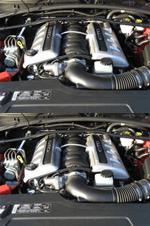

I'm running the 3.3 auto gears from a G35 and first and second are still a waste IMO. Even in a light pull out secod gear is a waste. I'm doing 1-3-5 most of the time around town just driving normally. 1-4 is easy as well, but the reassonance makes things rattle under load at such a low rpm.
im using an ls1 trans, so my gearing is a bit longer than the ls2 guys. im also bosted on a 3.3 rear end so id imagine i wouldnt be spinning asbad as snyper was. he had a 3.53 rear end on an ls2 trans and was sliding every which way.
Thread Starter
Registered User
iTrader: (2)
Joined: Apr 2011
Posts: 104
Likes: 0
From: Las Vegas, NV

