


Greddy Oil Seals Leaking????


Iono man, but it still catches oil and I dont get any smoke. + He is my tuner/engine builder so I'll take his word for it.
As I understand it the valve is closed under open throttle and open at idle. So if the return is connected to the plenum... that is why you are getting oil and pressurizing the crankcase.
As I understand it the valve is closed under open throttle and open at idle. So if the return is connected to the plenum... that is why you are getting oil and pressurizing the crankcase.
Last edited by Snow-G; Sep 19, 2008 at 03:12 PM.

That will still work since the crankcase pressure can never rise above atmosphere. You just cannot assure the direction of flow. Blow by gases under boost still get vented, but in this case, the driver's side vent can release oil directly into the engine bay (unless you have another catch can for that). The only point of having suction at one end is to create directional flow so that clean air comes in and the oil vapor goes out to the catch can.

Registered User
Joined: Oct 2005
Posts: 350
Likes: 0
From: Kuwait
Originally Posted by rcdash
That will still work since the crankcase pressure can never rise above atmosphere. You just cannot assure the direction of flow. Blow by gases under boost still get vented, but in this case, the driver's side vent can release oil directly into the engine bay (unless you have another catch can for that). The only point of having suction at one end is to create directional flow so that clean air comes in and the oil vapor goes out to the catch can.

i elaborated on this topic awhile back but you guys also know that negitive pressure/vacume on the crankcase is needed for positive piston ring seal. all who are running either the pcv side or the drivers side to the atmophere have induceed a "open loop" in there pcv system. some drag racers actually install electric or engine driven vacume pumps for the reason of keeping constant vacume on the crankcase. dyno results have shown increased power and less oil contamination/consumption due to better piston ring seal. the 03-04 svt cobra mustangs with the 32v s/c engine actually come factory with a electric driven vacume pump for this very reason. hotrod magizine did a article on crankcase scavenging and the positive effects of constant vacume on a crankcase. on one of there test engines they ended up picking up 5 hp due to applying constant crankcase vacume. i myself have played around with many crankcase vent setups "many of which some of you are running now". but the setup i am now running seems to work best of all the variants i have tried before.on the right side of the engine where the pcv valve was i am running a crank plug which delets the pcv valve "open fitting". from there i am running the line to a elitee engineering catch can then from there i have a line running to inlet side of the s/c just aft of my air cleaner tapped into my velocity stack, from the drvers side i have installed another catch can setup in the same manner " dual catch cans closed system" the s/c inlet provides a source of constant negitive pressure for the crankcase whether in idle, cruise or boost configuration. i have noticed less oil contamination between oil changes and less oil consumption as well with this setup due in part to better piston ring seal. also with this setup i do not have to worry about running additional check valves or having a pcv valve possibly sticking open under boost and pressurizing the crank case due to the line being plummbed back into the lower plennum. just my 
Last edited by JET MECH; Sep 21, 2008 at 10:30 AM.

Registered User
Joined: Oct 2005
Posts: 350
Likes: 0
From: Kuwait
JET MECH, ur idea is same as ARC Catch Can but ur using 2 cans, i`ve drilled an additional hole into the GReddy Catch Can and routed it into the Intake and the other two lines go to PCV,Driver Valve Cover. and of course capped the Lower Plenum. i guess this setup works close to OEM Specs 
Raj,
i`ve looked more into your Diagram its good, but you`ve missed one thing, you addressed the Intake line with a Check Valve to prevent the lower plenum from sucking Un-Metered Air, but what about the Air coming from the Small Breather Air Filter on the Driver Valve cover then going into the Line between the Two Valve covers, finally Exiting the PCV valve and going to the lower plenum, this is still UnMetered Air, your setup is good but you should caping off the lower plenum totally, this way you will still draw fresh air from the Driver side cover exiting from the PCV and u`ll catch the containments on the Catch Can and the Turbo`s will still suck Vacuum from the out line of the Catch Can helping the small breather air filter to suck more fresh air
Raj,
i`ve looked more into your Diagram its good, but you`ve missed one thing, you addressed the Intake line with a Check Valve to prevent the lower plenum from sucking Un-Metered Air, but what about the Air coming from the Small Breather Air Filter on the Driver Valve cover then going into the Line between the Two Valve covers, finally Exiting the PCV valve and going to the lower plenum, this is still UnMetered Air, your setup is good but you should caping off the lower plenum totally, this way you will still draw fresh air from the Driver side cover exiting from the PCV and u`ll catch the containments on the Catch Can and the Turbo`s will still suck Vacuum from the out line of the Catch Can helping the small breather air filter to suck more fresh air
Last edited by NETSHARK; Sep 21, 2008 at 03:35 PM.
blocked off lower plenum fitting, installed a catch for each side "dual catch cans", then plumbed each line exiting the catch cans to the inlet side of the supercharger. i have periodicaly checked my intercoller and plumbing for residual oil and none has been found ,this setup is working superbly!! all other setups i have configured has netted some type of oil in the ic,ic piping or the plenum. now there there is no oil to be found in these componets as well as my oil stays cleaner longer with nearly no oil consumption between oil changes. i am going to try and post some pics, i think that will explain things better.
Last edited by JET MECH; Sep 21, 2008 at 01:35 PM.
I'm trying to figure out what to do about this for the STS kit. There's no source of vacuum under boost unless I would run a line all of the way back to the turbo inlet. Maybe I should start looking for a vacuum pump like you were talking about JET?
Netshark, you are right, since the driver's side vent on my setup is an open breather, I am drawing in unmetered air. That's ok for me since I'm not using the MAF; MAP only setup here. I should have made a point to mention that - sorry about that - tunnel vision.
Jet Mech, the problem with turbos is that just behind the filter, there is very little vacuum at idle (because the throttle body is nearly closed). I like the concept of vacuum all the time on both sides and I tried to implement this with another port in the catch can, but that's when I had a little disaster. It wasn't in the design, but I had the hose going to the plenum kink after it got hot (wasn't using R7 or R9 fuel injection hose) and crankcase pressure had no place to go at idle. I was just sitting there watching my car idle and saw the pressure gauge I had rigged (yes I actually had one in the engine bay for catch can pressure) drop to 0. I was like WTF - where did my vacuum go? I didn't know what was going on. Less than 10 seconds later my car turned into the space shuttle at idle. Bad, bad, bad... So I decided to redesign so that the driver's side breather was my "safety release" in case anything went wrong anywhere else. The bottom line is if you experience more blow by than the evac system can handle, you will pressurize the crankcase. Any closed/sealed system faces this risk. By having the driver side breather, I can pretty much guarantee the crankcase will never pressurize. If you want to be sure you are not drawing in unmetered air, connect the driver's side to the intake, post-MAF. The only downside is that you may end up blowing oil into the intake system though that usually shouldn't happen. In fact my driver's side breather (and surrounding engine bay) has remained relatively clean and oil free - so I presume I have not overloaded the evac system thus far.
With twin turbos, we can draw vacuum from the exhaust pipes with a properly designed nipple, but no other source is constant that I can think of... So you have to use 2 sources. Plenum at idle and intake after air filter during boost.
Jet Mech, the problem with turbos is that just behind the filter, there is very little vacuum at idle (because the throttle body is nearly closed). I like the concept of vacuum all the time on both sides and I tried to implement this with another port in the catch can, but that's when I had a little disaster. It wasn't in the design, but I had the hose going to the plenum kink after it got hot (wasn't using R7 or R9 fuel injection hose) and crankcase pressure had no place to go at idle. I was just sitting there watching my car idle and saw the pressure gauge I had rigged (yes I actually had one in the engine bay for catch can pressure) drop to 0. I was like WTF - where did my vacuum go? I didn't know what was going on. Less than 10 seconds later my car turned into the space shuttle at idle. Bad, bad, bad... So I decided to redesign so that the driver's side breather was my "safety release" in case anything went wrong anywhere else. The bottom line is if you experience more blow by than the evac system can handle, you will pressurize the crankcase. Any closed/sealed system faces this risk. By having the driver side breather, I can pretty much guarantee the crankcase will never pressurize. If you want to be sure you are not drawing in unmetered air, connect the driver's side to the intake, post-MAF. The only downside is that you may end up blowing oil into the intake system though that usually shouldn't happen. In fact my driver's side breather (and surrounding engine bay) has remained relatively clean and oil free - so I presume I have not overloaded the evac system thus far.
With twin turbos, we can draw vacuum from the exhaust pipes with a properly designed nipple, but no other source is constant that I can think of... So you have to use 2 sources. Plenum at idle and intake after air filter during boost.
Last edited by rcdash; Sep 22, 2008 at 06:46 AM.
Originally Posted by JonnyC
I'm trying to figure out what to do about this for the STS kit. There's no source of vacuum under boost unless I would run a line all of the way back to the turbo inlet. Maybe I should start looking for a vacuum pump like you were talking about JET?
Originally Posted by rcdash
Air inlet should still be a vacuum source under boost - not familiar with the kit's design (other than being remote mount) so not sure how hard it is to tap between the air filter and the compressor inlet.
Originally Posted by NETSHARK
I Got a GReddy Catch Can and i`ve drilled it for an additional line, so now new line is connected to the Intake, the other two lines one is connected to the Driver side and the other one is to the PCV valve on the pass side and i`ve capped the Lower Plenum, is this a bad idea ? my setup is similar to the ARC Catch Can so am i on the OK side ?
Last edited by rcdash; Sep 22, 2008 at 06:59 AM.



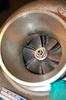
The check valve is a one way valve, restricting air flow in one direction or does it act like a simple filter? If it is a 1 way valve, which way are you allowing the air to flow?

Ebay.
Its a 3/8" check valve, you want to look for something with a relatively low cracking (ie. opening) pressure so that the vacuum from the plenum will open it, but able to withstand whatever boost pressure you run plus a cushion so that it will be able to stop positive plenum pressure from getting to the PCV valve when you are boosting. Oil/fuel resistance of the diaphragm is also important as some of those substances are bound to get by the catch can.
I got this one from an ebay vendor who sells parts for those questionable hydrogen assist or whatever setups. Works great. It was ~ $.99.
Its a 3/8" check valve, you want to look for something with a relatively low cracking (ie. opening) pressure so that the vacuum from the plenum will open it, but able to withstand whatever boost pressure you run plus a cushion so that it will be able to stop positive plenum pressure from getting to the PCV valve when you are boosting. Oil/fuel resistance of the diaphragm is also important as some of those substances are bound to get by the catch can.
I got this one from an ebay vendor who sells parts for those questionable hydrogen assist or whatever setups. Works great. It was ~ $.99.
Bringing this back up...
Spoils - do you not have any idle issues, such as a high-idle or other symptoms of a vacuum leak? With the breather on the driver's side crankcase, you would think the intake manifold would be able to suck in a decent amount of unmetered and unregulated air through the passenger side PCV.
I actually just went ahead and purchased some check valves like you have from here - http://www.usplastic.com/catalog/var...riant_id=64175
Spoils - do you not have any idle issues, such as a high-idle or other symptoms of a vacuum leak? With the breather on the driver's side crankcase, you would think the intake manifold would be able to suck in a decent amount of unmetered and unregulated air through the passenger side PCV.
I actually just went ahead and purchased some check valves like you have from here - http://www.usplastic.com/catalog/var...riant_id=64175