


Cornerweighting question


Thread Starter
Registered User
Joined: Feb 2004
Posts: 193
Likes: 0
From: Raleigh, NC
 Cornerweighting question
For those who installed coil-overs, and properly set them up via corner-weighting:
1. What ratios did you use front-to-rear? Did you keep it stock?
2. Do you corner-weight factoring in the driver's weight and full tank as well?
3. Anything else to know?
Thanks in advance
1. What ratios did you use front-to-rear? Did you keep it stock?
2. Do you corner-weight factoring in the driver's weight and full tank as well?
3. Anything else to know?
Thanks in advance

I'd love to see guys post their corner weight numbers to. I recall seeing one post where numbers were given, a Jic setup I believe, but the search feature is down,..............still.

Registered User
Joined: Jun 2002
Posts: 194
Likes: 1
From: indianapolis
I put a jic suspension on with 3/4" drop
last May and cornerweighted after the install. Here were my results: NO driver and tank 3/4 full
Total weight 3384 Front 54% Rear 46% Left 51%(drivers left) Right 49%.
Actual weight per corner LF 941 RF 888 LR 787 RR 768
Ideal weight per corner LF 933 RF 894 LR 795 RR 762
I was so damn close to ideal that I didn't change a thing. Center of gravity is !/2" to the left of the gear shift.
Hope this helps
Total weight 3384 Front 54% Rear 46% Left 51%(drivers left) Right 49%.
Actual weight per corner LF 941 RF 888 LR 787 RR 768
Ideal weight per corner LF 933 RF 894 LR 795 RR 762
I was so damn close to ideal that I didn't change a thing. Center of gravity is !/2" to the left of the gear shift.
Hope this helps
Thread Starter
Registered User
Joined: Feb 2004
Posts: 193
Likes: 0
From: Raleigh, NC
Re: I put a jic suspension on with 3/4" drop
Originally posted by Clyde
last May and cornerweighted after the install. Here were my results: NO driver and tank 3/4 full
Total weight 3384 Front 54% Rear 46% Left 51%(drivers left) Right 49%.
Actual weight per corner LF 941 RF 888 LR 787 RR 768
Ideal weight per corner LF 933 RF 894 LR 795 RR 762
I was so damn close to ideal that I didn't change a thing. Center of gravity is !/2" to the left of the gear shift.
Hope this helps
last May and cornerweighted after the install. Here were my results: NO driver and tank 3/4 full
Total weight 3384 Front 54% Rear 46% Left 51%(drivers left) Right 49%.
Actual weight per corner LF 941 RF 888 LR 787 RR 768
Ideal weight per corner LF 933 RF 894 LR 795 RR 762
I was so damn close to ideal that I didn't change a thing. Center of gravity is !/2" to the left of the gear shift.
Hope this helps
Thanks again.

Registered User
Joined: Jun 2003
Posts: 50
Likes: 0
From: Seattle, WA
My corner-balancing results from one of my E46 BMWs installed with H&R coilovers.
http://www.e46fanatics.com/members/J...nerbalance.htm
http://www.e46fanatics.com/members/J...nerbalance.htm
Trending Topics
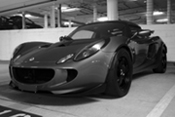

When I had my car cornerweighted, we matched the diagonal weights. My car really needs to be cornerweighted again though since the addition of my roll bar. Weight with 11-12 gallons, no spare tire, no driver, and a roll bar was 3240 (as of last Saturday).
Thread Starter
Registered User
Joined: Feb 2004
Posts: 193
Likes: 0
From: Raleigh, NC
Originally posted by John
When I had my car cornerweighted, we matched the diagonal weights. My car really needs to be cornerweighted again though since the addition of my roll bar. Weight with 11-12 gallons, no spare tire, no driver, and a roll bar was 3240 (as of last Saturday).
When I had my car cornerweighted, we matched the diagonal weights. My car really needs to be cornerweighted again though since the addition of my roll bar. Weight with 11-12 gallons, no spare tire, no driver, and a roll bar was 3240 (as of last Saturday).

I'm also a newb to this cornerweighting issue. Is there anyone who could give a 3 minute orientation on the basics here? IE: Once the cornerweights are determined, how does that affect damping and/or rebound settings? Do the weights influence the optimal amount of drop?

Registered User
Joined: Jun 2002
Posts: 51
Likes: 0
From: greensboro, nc
my car was done today driverside front 992lbs 52.3%
front 913lbs 47.6%
driverside rear 873lbs 50.1%
rear 784lbs 49.9%
this is with me in the car 280lbs ( i am a big boy ) and 3/4 tank of gas. i had korman autoworks do the corner weighting and alighnment set. for anyone interested my alighnment was set at
front camber 2.3 degrees
front toe 0
rear camber 2.0 degrees
rear toe 1.5mm
and my car by its self weighed in at 3283lbs with 3/4 tank of gas and no driver. i was shocked, i expected it to weigh in around 3100 - 3150. i guess that was wishfull thinking. and i am going to try out these settings this weekend at VIR so if anyone is bored sat or sun come out and check out the track and some quick cars.
front 913lbs 47.6%
driverside rear 873lbs 50.1%
rear 784lbs 49.9%
this is with me in the car 280lbs ( i am a big boy ) and 3/4 tank of gas. i had korman autoworks do the corner weighting and alighnment set. for anyone interested my alighnment was set at
front camber 2.3 degrees
front toe 0
rear camber 2.0 degrees
rear toe 1.5mm
and my car by its self weighed in at 3283lbs with 3/4 tank of gas and no driver. i was shocked, i expected it to weigh in around 3100 - 3150. i guess that was wishfull thinking. and i am going to try out these settings this weekend at VIR so if anyone is bored sat or sun come out and check out the track and some quick cars.
Thread Starter
Registered User
Joined: Feb 2004
Posts: 193
Likes: 0
From: Raleigh, NC
Matt, thanks for the great information since I have the exact same car. Where did you get it set up at? I live in Raleigh and I don't think there is anyone here that can do it properly.
Does it cost anything to come to VIR to just spectate? I guess you guys will be doing the South Course, because I'm pretty sure the real fast vehicles (motorcycles ) will be on the North Course for the weekend.
I'll definitely be there since the weather looks to be perfect on Saturday. What time are the cars going to be on track?
Regards,
Jeffrey
Does it cost anything to come to VIR to just spectate? I guess you guys will be doing the South Course, because I'm pretty sure the real fast vehicles (motorcycles
) will be on the North Course for the weekend. I'll definitely be there since the weather looks to be perfect on Saturday. What time are the cars going to be on track?
Regards,
Jeffrey
Registered User
Joined: Jun 2002
Posts: 51
Likes: 0
From: greensboro, nc
my work was done at kormans autoworks in greensboro. we will be running all day sat & sun with time trials being in the afternoon. i think we are having parade laps as well. and spectators are free.


I really don't have a technical explanation for it other than the person who did my cornerweighting recommended it and he's a very seasoned road racer. I'll see if I can dig up some info on that theory...

Registered User
Joined: Jul 2002
Posts: 1,510
Likes: 1
From: Santa Cruz, CA
Guys, here is some general theory:
Remember that three points determine a plane. Once you add the fourth point you are overconstraining the system. This is why tripods are so stable and whey cheap tables at restauraunts are always tipping (one of the legs is too short and not quite touching the floor). So, in a car we have 4 tires that are springloaded so they all touch the floor, but the springs will apply different forces depending on their initial preload (if you really shorten one up, it will apply less load like the short leg of the table)
Now, in addition to the actual number of contact points, you also need to take into account the CG of the car. If all your wheels were perfectly level, you could easily take the weights and calculate where the car's CG is and vice versa. For track driving, you'd probably want the car to have a CG slightly off-center (side to side), so when the driver got in the CG would move to the center of the car. Also, most people consider 50-50 front-rear weight distribution to be ideal (whether that is actually the case is probably debatable). Unfortunately, we are not able to significantly change the position of the CG since that is determined by the car's layout and design. Instead, the goal of cornerweighting is to "even out the legs" of the car so it isn't tippy like a cheap table (or an expensive table on an uneven floor).
I'm not sure exactly how the calculations are done (since I haven't looked them up yet), but I'm guessing that after you measure the forces on each wheel, you can perform some type of comparison of different sets of wheels, and determine where the CG "should" be if all the wheels were level. Then you can go adjust your spring perches to bring the numbers into line. At the end of it all, you have a car that has all the springs balanced as much as possible so your tires are evenly loaded as much as possible.
Eh, here's a REAL explanation:
http://www.grmotorsports.com/cornerweight.html
-D'oh!
Remember that three points determine a plane. Once you add the fourth point you are overconstraining the system. This is why tripods are so stable and whey cheap tables at restauraunts are always tipping (one of the legs is too short and not quite touching the floor). So, in a car we have 4 tires that are springloaded so they all touch the floor, but the springs will apply different forces depending on their initial preload (if you really shorten one up, it will apply less load like the short leg of the table)
Now, in addition to the actual number of contact points, you also need to take into account the CG of the car. If all your wheels were perfectly level, you could easily take the weights and calculate where the car's CG is and vice versa. For track driving, you'd probably want the car to have a CG slightly off-center (side to side), so when the driver got in the CG would move to the center of the car. Also, most people consider 50-50 front-rear weight distribution to be ideal (whether that is actually the case is probably debatable). Unfortunately, we are not able to significantly change the position of the CG since that is determined by the car's layout and design. Instead, the goal of cornerweighting is to "even out the legs" of the car so it isn't tippy like a cheap table (or an expensive table on an uneven floor).
I'm not sure exactly how the calculations are done (since I haven't looked them up yet), but I'm guessing that after you measure the forces on each wheel, you can perform some type of comparison of different sets of wheels, and determine where the CG "should" be if all the wheels were level. Then you can go adjust your spring perches to bring the numbers into line. At the end of it all, you have a car that has all the springs balanced as much as possible so your tires are evenly loaded as much as possible.
Eh, here's a REAL explanation:
http://www.grmotorsports.com/cornerweight.html
-D'oh!

Thread
Thread Starter
Forum
Replies
Last Post

