


is mine LSD?


Thread Starter
Registered User
Joined: Feb 2006
Posts: 75
Likes: 0
From: South Florida
 is mine LSD?
alrite i did a search for LSD and came up with nothing, but this is still probably a repost, so sorry. I have an 06' manual base model and was wandering if it does in fact have lsd, and what exactly lsd does compared to the regular drive. i have no traction control or anything, AND both tires burn when i spin them so it sounds to me like i do have it. But i dont know. Thanks
Thanks
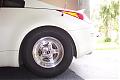



Base still without LSD for '06... included with the models above though.
http://www.config.nissanusa.com/redi...r=2006&lang=en
http://www.config.nissanusa.com/redi...r=2006&lang=en
Trending Topics

Registered User
Joined: Dec 2005
Posts: 264
Likes: 0
From: Southern California
If you want to learn more about what a limited slip differential is and how it works, check out this link.
http://www.popularmechanics.com/auto...tml?page=3&c=y
http://www.popularmechanics.com/auto...tml?page=3&c=y
Registered User
Joined: Dec 2005
Posts: 264
Likes: 0
From: Southern California
Here's some more info on the subject:
Limited Slip Differentials
What is a limited slip differential?
The purpose of any differential is to allow the drive wheels to turn at different rates from each other. The main reason one wheel has to turn at a different speed than another is that when turning a corner, the inside wheel needs to spin at a slower rate than the outside wheel because the inside wheel follows a smaller arc. If the two wheels were locked at the same speed, one or both of the wheels would have to break traction in order to be able to go around a corner.
Most vehicles come with an "open" (aka "peg leg") differential that basically does its job of allowing the wheels to spin at different rates. The biggest problem with this is if one of the drive wheels slips, an open differential sends more power to the slipping wheel, not less (it is the path of least resistance). This is most noticeable when one is stuck in the snow: one drive wheel will spin, and the other one will just sit.
From a performance standpoint, this means when one is cornering and the wheel on the inside of the turn is being unweighted and begins to slip under power, much of the power will go to it, causing it to spin more, which may cause understeer (a front end push to the outside of the turn) in FWD cars. The wheel on the outside of the turn, which is being weighted and therefore has more traction, does not receive as much power, so the power is wasted on the spinning inside wheel. Also, when launching aggressively off the line, when one wheel begins to spin, it will receive the bulk of the power, causing it to spin more.
Now, limited slip differentials (LSDs)(they come in all different configurations, and not all are called LSDs [torsen diffs for example] but we will call them all LSDs to simplify things) use a mechanical, hydraulic or electronic mechanism to supply power to the wheels that grip, not just the wheels that slip (yes, just like in the Subaru ads). As the name implies, they provide only a limited amount of slip between the driven wheels. So, when cornering, the outside wheel will get its fair share of power, lessening understeer and allowing one to power out of corners better. Torque steer is also lessened, and wheelspin on aggressive launches is minimized.
But the key feature of LSDs is that they still allow the drive wheels on either side of the vehicle to turn at different speeds, which is why we have differentials in the first place. A drag racing trick is to weld an open peg leg differential together so that both wheels are locked and receive equal power. This makes for great drag launches, but trying to go around corners, even very slowly, is extremely difficult, and can break axles as the outside wheels fight the inside wheels.
So the end result with an LSD is better handling and accelleration. And a much lighter wallet if you are buying one for a car that does not have one already.
Limited Slip Differentials
What is a limited slip differential?
The purpose of any differential is to allow the drive wheels to turn at different rates from each other. The main reason one wheel has to turn at a different speed than another is that when turning a corner, the inside wheel needs to spin at a slower rate than the outside wheel because the inside wheel follows a smaller arc. If the two wheels were locked at the same speed, one or both of the wheels would have to break traction in order to be able to go around a corner.
Most vehicles come with an "open" (aka "peg leg") differential that basically does its job of allowing the wheels to spin at different rates. The biggest problem with this is if one of the drive wheels slips, an open differential sends more power to the slipping wheel, not less (it is the path of least resistance). This is most noticeable when one is stuck in the snow: one drive wheel will spin, and the other one will just sit.
From a performance standpoint, this means when one is cornering and the wheel on the inside of the turn is being unweighted and begins to slip under power, much of the power will go to it, causing it to spin more, which may cause understeer (a front end push to the outside of the turn) in FWD cars. The wheel on the outside of the turn, which is being weighted and therefore has more traction, does not receive as much power, so the power is wasted on the spinning inside wheel. Also, when launching aggressively off the line, when one wheel begins to spin, it will receive the bulk of the power, causing it to spin more.
Now, limited slip differentials (LSDs)(they come in all different configurations, and not all are called LSDs [torsen diffs for example] but we will call them all LSDs to simplify things) use a mechanical, hydraulic or electronic mechanism to supply power to the wheels that grip, not just the wheels that slip (yes, just like in the Subaru ads). As the name implies, they provide only a limited amount of slip between the driven wheels. So, when cornering, the outside wheel will get its fair share of power, lessening understeer and allowing one to power out of corners better. Torque steer is also lessened, and wheelspin on aggressive launches is minimized.
But the key feature of LSDs is that they still allow the drive wheels on either side of the vehicle to turn at different speeds, which is why we have differentials in the first place. A drag racing trick is to weld an open peg leg differential together so that both wheels are locked and receive equal power. This makes for great drag launches, but trying to go around corners, even very slowly, is extremely difficult, and can break axles as the outside wheels fight the inside wheels.
So the end result with an LSD is better handling and accelleration. And a much lighter wallet if you are buying one for a car that does not have one already.
Last edited by Durden76; Mar 9, 2006 at 11:07 AM.
Thread Starter
Registered User
Joined: Feb 2006
Posts: 75
Likes: 0
From: South Florida
according to the comment above and the popular mechanics page what i seem to have is a limited slip diff. this is just an educated guess and my amature opinion, but my car displays all the symptoms of being LSD. i also called the dealer and they are looking into it.

yeah, you have lsd, the nissan magic fairy suddenly decide to bless your base Z and only your base Z with LSD. as much as you would like to fool yourself into thinking you have LSD, sadly you dont. Much like I fool myself into thinking my Z came stock with boost, sadly I dont.


Registered User
Joined: Sep 2005
Posts: 173
Likes: 0
From: Appleton, WI
Here's what we do to test our Jeeps... jack up the whole rear end, and spin one tire forward by hand. If the tire on the opposite side spins the same direction, you have LSD and it's in working condition. If it spins the opposite direction, it's an open diff. Our stock LSD has clutch packs, and yours is a viscous coupled LSD, but I think it should work the same way.
Thread Starter
Registered User
Joined: Feb 2006
Posts: 75
Likes: 0
From: South Florida
i never said i have it, i said i seem to have it but its just a guess. i'm just answering questions people ask, and stating what my car does. How about i just leave it at i dont have LSD and thank you for all of you comments. My mind is now at ease. Safe driving.

 Lsd...


Thread
Thread Starter
Forum
Replies
Last Post
CFAUVEL
Exterior & Interior
3
Oct 1, 2015 03:20 PM
