


Interesting Point on HFC/Test Pipe Rasp


 Interesting Point on HFC/Test Pipe Rasp
I previously began a thread on my Kinetix HFC's and the vibration/rasp that I was experiencing from it here:
https://my350z.com/forum/intake-exha...netix-hfc.html
I had a chance to talk to a representative at Kinetix Racing about this issue. A few things were cleared up:
1. Heat shields under body, located above HFC's / Testpipes have been removed by many 350Z owners and none have reported back with negative results. Removing the heat shields allows added clearance between items and vehicle chassis
2. Kinetix Racing and other HFC companies have been producing the "bracketless" design for about 5 years now, and only a handful of warranties have been reported during this time. I was assured that the bracketless design was not going to be the cause of any cracks or damage to the catalytic converters.
3. The "Rasp" that HFC/Test Pipe owners complain about around 2750rpm is quite common due to the design of the component and the increase in exhaust gas velocity.
My 2004 350Z with polyurethane engine mounts and transmission mount and TorqueSolutions polyurethane exhaust bushings not only exhibits an exhaust "rasp" but adds a tremendous amount of vibration at only that RPM, whether holding the speed in neutral, on accel, or decel. After having the vehicle in the air we found the Nismo S-tune Catback exhaust vibrating at that engine speed so heavily it literally was a blur to the human eye. The vibration was matched at the transmission and then the engine and throughout the body of the vehicle.
This leads us to believe that the vibration actually stems from the engine/trans itself and is more apparent to 350Z owners when they replace the factory cats with aftermarket components. It sounds like "rasp" is created at this engine speed due to the design of the cats, due to the vibration that is transmitted into the exhaust. Whether the Nismo Y-pipe is causing further issues is still to be determined.
*NOTE* We found TWO factory harmonics dampeners on the end of the transmission housing (near the shifter linkage). This confirms that even Nissan had an issue with transmission vibrations - adding the TorqueSolutions transmission mount basically negates those dampening effects.
*NOTE* We checked Ignition Timing throughout the RPM range and were able to confirm using a scan tool that the engine's Knock sensor was not seeing the increased vibration as detonation and therefore no timing was being pulled. Good to know for 350Z's with poly mounts.
Hope this helps and if anyone has more to add, go for it!
https://my350z.com/forum/intake-exha...netix-hfc.html
I had a chance to talk to a representative at Kinetix Racing about this issue. A few things were cleared up:
1. Heat shields under body, located above HFC's / Testpipes have been removed by many 350Z owners and none have reported back with negative results. Removing the heat shields allows added clearance between items and vehicle chassis
2. Kinetix Racing and other HFC companies have been producing the "bracketless" design for about 5 years now, and only a handful of warranties have been reported during this time. I was assured that the bracketless design was not going to be the cause of any cracks or damage to the catalytic converters.
3. The "Rasp" that HFC/Test Pipe owners complain about around 2750rpm is quite common due to the design of the component and the increase in exhaust gas velocity.
My 2004 350Z with polyurethane engine mounts and transmission mount and TorqueSolutions polyurethane exhaust bushings not only exhibits an exhaust "rasp" but adds a tremendous amount of vibration at only that RPM, whether holding the speed in neutral, on accel, or decel. After having the vehicle in the air we found the Nismo S-tune Catback exhaust vibrating at that engine speed so heavily it literally was a blur to the human eye. The vibration was matched at the transmission and then the engine and throughout the body of the vehicle.
This leads us to believe that the vibration actually stems from the engine/trans itself and is more apparent to 350Z owners when they replace the factory cats with aftermarket components. It sounds like "rasp" is created at this engine speed due to the design of the cats, due to the vibration that is transmitted into the exhaust. Whether the Nismo Y-pipe is causing further issues is still to be determined.
*NOTE* We found TWO factory harmonics dampeners on the end of the transmission housing (near the shifter linkage). This confirms that even Nissan had an issue with transmission vibrations - adding the TorqueSolutions transmission mount basically negates those dampening effects.
*NOTE* We checked Ignition Timing throughout the RPM range and were able to confirm using a scan tool that the engine's Knock sensor was not seeing the increased vibration as detonation and therefore no timing was being pulled. Good to know for 350Z's with poly mounts.
Hope this helps and if anyone has more to add, go for it!
Last edited by 04DaytonaZee; Sep 10, 2013 at 03:45 PM.


Interesting thought, but when running something like ART pipes the rasp is pretty much non-existent. I've since switched from my art pipe to test pipes, and the rasp around that rpm range is back. I also have poly tranny bushings and whiteline rear diff bushings. Seems that it's really primarily the exhaust that causes it.
Your case could be unique. Still an interesting concept...
Your case could be unique. Still an interesting concept...

Registered User
Joined: Jan 2008
Posts: 1,580
Likes: 2
From: Tampa, FL
Interesting, I think it has something to do with how well the exhaust gasses from both banks merge in the Y-pipe. ART pipes alone will not eliminate rasp, I know because my little brothers first set up was AAM test pipes with Nismo exhaust and then switched to ART pipes, rasp stayed about the same.
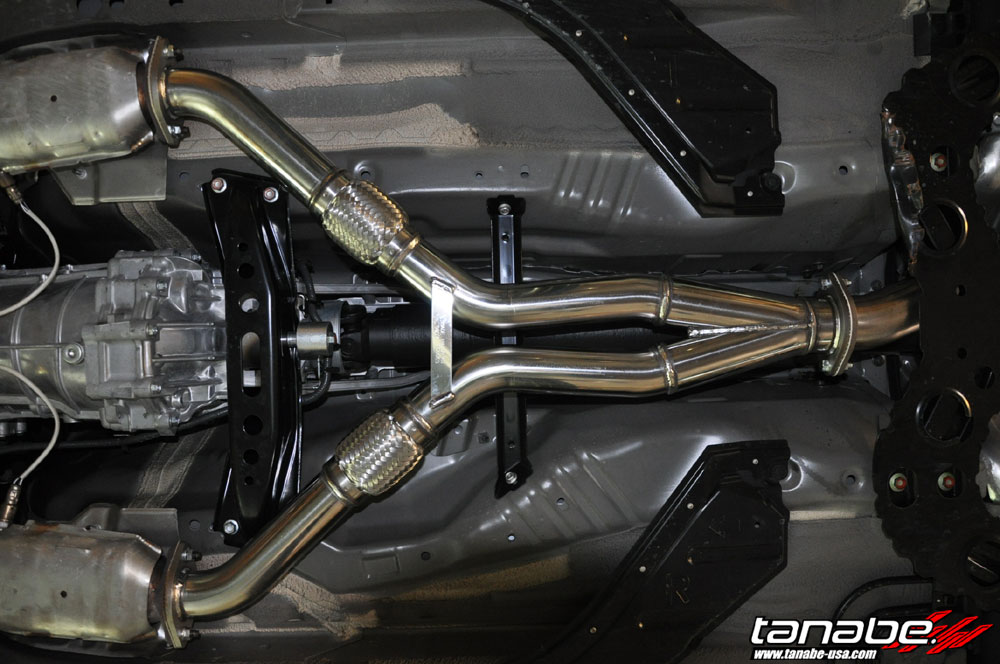
My previous set up (before long tubes) was AAM test pipes, Motordyne XYZ Y-pipe with resonator and the rest was Nismo. I found that the resonated Y-pipe helped tremendously.
Funny this thread came up today because Ive been researching Y-pipes since I got to work this morning lol. after installing the long tubes my Motordyne Y-pipe fits like complete **** so now I'm very interested in the SOHO Motorsports Y-pipe, I'll copy/paste their explanation below.
"The unique collector in our y-pipe helps minimize any turbulence that may occur as the two exhaust flows merge together into one. Many y-pipes on the market today just force the two flows together creating excessive turbulence and therefore decreased power. This clumsy transition is also one of the main causes for the dreaded rasp on VQ's. On the SOHO Motorsports exhaust system the gases come together into one stream as the piping diameter gradually increases with the use of our unique cone that increases from 2.5 inches in diameter to 3 inches in diameter over an 8 inch span. With this design the inlets side of the y pipe is 2.5 inches in diameter and the exit is 3 inches in diameter. Allowing the pipe to remain at 2.5 inches in diameter until the merger and then gradually increasing the overall diameter of the pipe to 3 inches creates a vacuum effect making exhaust gases reach a state of higher pressure at the beginning of the collector and in turn a lower pressure at the larger end. As with anything in dynamics, the path of least resistance is the path best chosen and with the overall diameter of the collector gradually increasing with the use of our unique cone the exhaust gases will tend to bring the higher state gases into the lower state therefore gradually merging in the smoothest transition possible as it exits the y-pie into our amazing sounding single exit cat back exhaust."

My previous set up (before long tubes) was AAM test pipes, Motordyne XYZ Y-pipe with resonator and the rest was Nismo. I found that the resonated Y-pipe helped tremendously.
Funny this thread came up today because Ive been researching Y-pipes since I got to work this morning lol. after installing the long tubes my Motordyne Y-pipe fits like complete **** so now I'm very interested in the SOHO Motorsports Y-pipe, I'll copy/paste their explanation below.
"The unique collector in our y-pipe helps minimize any turbulence that may occur as the two exhaust flows merge together into one. Many y-pipes on the market today just force the two flows together creating excessive turbulence and therefore decreased power. This clumsy transition is also one of the main causes for the dreaded rasp on VQ's. On the SOHO Motorsports exhaust system the gases come together into one stream as the piping diameter gradually increases with the use of our unique cone that increases from 2.5 inches in diameter to 3 inches in diameter over an 8 inch span. With this design the inlets side of the y pipe is 2.5 inches in diameter and the exit is 3 inches in diameter. Allowing the pipe to remain at 2.5 inches in diameter until the merger and then gradually increasing the overall diameter of the pipe to 3 inches creates a vacuum effect making exhaust gases reach a state of higher pressure at the beginning of the collector and in turn a lower pressure at the larger end. As with anything in dynamics, the path of least resistance is the path best chosen and with the overall diameter of the collector gradually increasing with the use of our unique cone the exhaust gases will tend to bring the higher state gases into the lower state therefore gradually merging in the smoothest transition possible as it exits the y-pie into our amazing sounding single exit cat back exhaust."

The transition from two banks into one bank for the y-pipe is a large contributing factor as to why rasp is created. Gases give off a harmonic tone when they are enclosed inside a pipe, wether gas is in a turbulant state or a laminar state, a distinct tone will be given off.


Interesting, I think it has something to do with how well the exhaust gasses from both banks merge in the Y-pipe. ART pipes alone will not eliminate rasp, I know because my little brothers first set up was AAM test pipes with Nismo exhaust and then switched to ART pipes, rasp stayed about the same.
My previous set up (before long tubes) was AAM test pipes, Motordyne XYZ Y-pipe with resonator and the rest was Nismo. I found that the resonated Y-pipe helped tremendously.
Funny this thread came up today because Ive been researching Y-pipes since I got to work this morning lol. after installing the long tubes my Motordyne Y-pipe fits like complete **** so now I'm very interested in the SOHO Motorsports Y-pipe, I'll copy/paste their explanation below.
"The unique collector in our y-pipe helps minimize any turbulence that may occur as the two exhaust flows merge together into one. Many y-pipes on the market today just force the two flows together creating excessive turbulence and therefore decreased power. This clumsy transition is also one of the main causes for the dreaded rasp on VQ's. On the SOHO Motorsports exhaust system the gases come together into one stream as the piping diameter gradually increases with the use of our unique cone that increases from 2.5 inches in diameter to 3 inches in diameter over an 8 inch span. With this design the inlets side of the y pipe is 2.5 inches in diameter and the exit is 3 inches in diameter. Allowing the pipe to remain at 2.5 inches in diameter until the merger and then gradually increasing the overall diameter of the pipe to 3 inches creates a vacuum effect making exhaust gases reach a state of higher pressure at the beginning of the collector and in turn a lower pressure at the larger end. As with anything in dynamics, the path of least resistance is the path best chosen and with the overall diameter of the collector gradually increasing with the use of our unique cone the exhaust gases will tend to bring the higher state gases into the lower state therefore gradually merging in the smoothest transition possible as it exits the y-pie into our amazing sounding single exit cat back exhaust."

My previous set up (before long tubes) was AAM test pipes, Motordyne XYZ Y-pipe with resonator and the rest was Nismo. I found that the resonated Y-pipe helped tremendously.
Funny this thread came up today because Ive been researching Y-pipes since I got to work this morning lol. after installing the long tubes my Motordyne Y-pipe fits like complete **** so now I'm very interested in the SOHO Motorsports Y-pipe, I'll copy/paste their explanation below.
"The unique collector in our y-pipe helps minimize any turbulence that may occur as the two exhaust flows merge together into one. Many y-pipes on the market today just force the two flows together creating excessive turbulence and therefore decreased power. This clumsy transition is also one of the main causes for the dreaded rasp on VQ's. On the SOHO Motorsports exhaust system the gases come together into one stream as the piping diameter gradually increases with the use of our unique cone that increases from 2.5 inches in diameter to 3 inches in diameter over an 8 inch span. With this design the inlets side of the y pipe is 2.5 inches in diameter and the exit is 3 inches in diameter. Allowing the pipe to remain at 2.5 inches in diameter until the merger and then gradually increasing the overall diameter of the pipe to 3 inches creates a vacuum effect making exhaust gases reach a state of higher pressure at the beginning of the collector and in turn a lower pressure at the larger end. As with anything in dynamics, the path of least resistance is the path best chosen and with the overall diameter of the collector gradually increasing with the use of our unique cone the exhaust gases will tend to bring the higher state gases into the lower state therefore gradually merging in the smoothest transition possible as it exits the y-pie into our amazing sounding single exit cat back exhaust."
Trending Topics

Thread
Thread Starter
Forum
Replies
Last Post
Lt_Ballzacki
Brakes & Suspension
39
Aug 6, 2021 06:19 AM
